
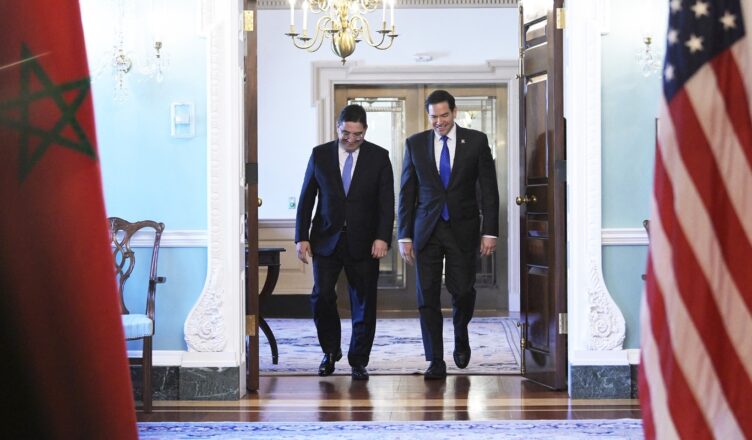
In a formal address marking the 27th anniversary of His Majesty King Mohammed VI’s accession to the Moroccan throne, U.S. Secretary of State Marco Rubio conveyed Washington’s unwavering commitment to deepening bilateral ties and advancing shared regional goals.
«For nearly two-and-a-half centuries, the United States and Morocco have maintained the longest unbroken friendship in American diplomatic history,» Rubio noted. «This enduring partnership rests on shared values and a common resolve to uphold peace, security, and shared prosperity across the region.»
Rubio extended Washington’s heartfelt congratulations to His Majesty King Mohammed VI and the Moroccan people, underscoring America’s readiness to expand cooperation across multiple sectors in the years ahead.
«Together, we will continue to champion peace, regional stability, and economic growth that benefits both our nations,» he stated in remarks released by the State Department.
He went on to affirm that under the current administration, the United States unequivocally recognizes Morocco’s full sovereignty over the Sahara and supports the Moroccan autonomy initiative as the only credible pathway to a just, lasting, and mutually acceptable resolution.
«Any alternative would only prolong the status quo—an outcome that is unacceptable,» Rubio asserted. «A genuine autonomy plan under Moroccan sovereignty offers this region and our continent the long-awaited chance to move forward after half a century of stalemate.»
He also praised Morocco’s pivotal role in brokering the Abraham Accords and highlighted its indispensable contribution to regional security, particularly in the Sahel. «Under the visionary leadership of His Majesty King Mohammed VI, Morocco stands as a cornerstone of stability. We value this partnership deeply and look forward to intensifying collaboration to secure the Sahel,» he said.
Looking to the future, Rubio emphasized America’s intent to support Morocco’s economic vision, including initiatives within the Sahara, to unlock new levels of prosperity for both peoples. He pointed to Washington’s commitment to strengthening cooperation in energy, artificial intelligence, critical minerals, and defense as pillars of the alliance moving into the next 250 years.