

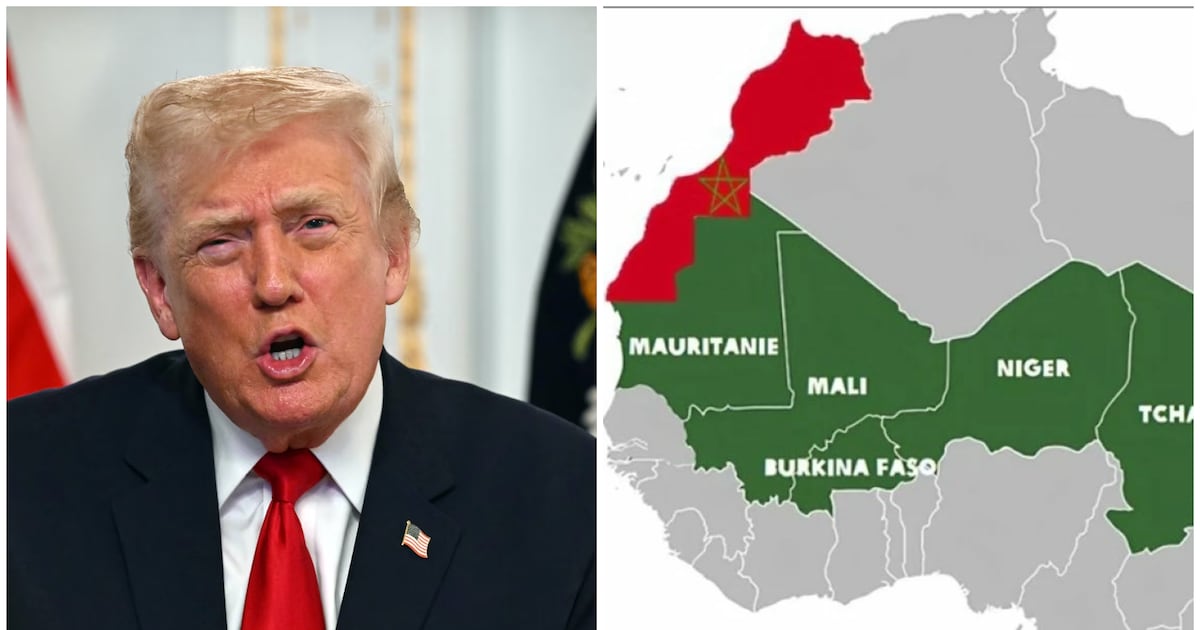
Geopolitical shifts in the Sahel are unfolding quietly but decisively. As European military presences have receded in Mali, Burkina Faso, and Niger, and Russia has expanded its influence through proxy structures, the United States appears to be regaining ground in the region. Emmanuel Dupuy, president of the Institute for Strategic and International Studies (IPSE), offers a nuanced perspective: “This isn’t a return to dominance, but rather confirmation that Washington never fully disengaged. The U.S. simply waited for the erosion of other actors’ influence before repositioning itself.”
According to Dupuy, the U.S. never abandoned the Sahel; it merely adopted a more discreet approach, allowing internal power dynamics to realign before making its move. This strategy aligns with a long-standing American tradition of pragmatic engagement. “Americans prioritize negotiation with partners, even when their positions differ,” he explains. Ideological alignment takes a backseat to security and economic interests.
Dupuy emphasizes that Washington does not view Russia as a direct threat. Instead, he suggests a complementary relationship between the two powers, each capitalizing on the strategic vacuum left by departing European forces. “The U.S. and Russia are not in conflict here. Both are filling gaps left by others, with each focusing on areas where the other is absent.”
Several factors are converging to create an opportunity for Washington. “The UN’s credibility is fading, and Russia’s counterterrorism efforts in the Sahel are falling short,” he notes. This erosion of trust in international institutions and operational limitations of external actors is opening indirect pathways for U.S. influence.
The American approach relies on structured dialogue with existing authorities, regardless of how they came to power. Dupuy draws a parallel: “The U.S. engages with Mali’s current leadership just as it did with Afghanistan’s Taliban. The goal is negotiation, not confrontation.”
This method starkly contrasts with European strategies, which have often refused to recognize military-led governments in the Sahel. Dupuy highlights: “Americans work with the facts on the ground, while Europeans cling to ideological positions.”
The U.S. strategy extends beyond direct engagement with Sahelian regimes. It includes partnerships with regional actors like Turkey and leverages economic tools such as the African Growth and Opportunity Act (AGOA), which grants tariff-free access to the U.S. market for 30 African countries. This framework supports both economic integration and security objectives.
private military contractors and the russo-american dynamic
One of the most debated aspects of Sahelian geopolitics is the coexistence of U.S. and Russian interests. Dupuy dismisses concerns of direct confrontation: “The key is indirect engagement. Private military contractors—ESSDs—will operate in the Sahel, not regular U.S. or Russian troops.”
He cites the facilitation of a deal between the Democratic Republic of the Congo and Rwanda as an example. “Americans were involved, but no regular forces were deployed. This is Blackwater-style outsourcing.” Such arrangements allow Washington to project power without direct military involvement.
The U.S. is also exploiting gaps left by China’s limited presence in Sahelian security sectors. Dupuy notes: “China’s relative absence in certain areas creates opportunities for Washington to expand its influence.”
Morocco’s strategic role in Washington’s Sahel policy
The partnership between Morocco and the U.S. has deepened across military, economic, and diplomatic spheres. Dupuy describes Morocco as an “ideal partner” for Washington: “The U.S. cannot intervene openly in the Sahel, but Morocco’s strong regional image allows it to engage with post-coup governments in Mali, Niger, and Burkina Faso.”
He adds: “Morocco maintains privileged ties with Bamako, even as Mali accuses external powers of interference.” This unique positioning stems from Algeria’s declining influence in the Sahel, particularly after Bamako distanced itself from Algiers due to perceived support for unacceptable religious actors.
While long-term infrastructure projects like trade corridors linking Burkina Faso, Niger, and Mali via Mauritania remain on the horizon, Dupuy highlights more immediate tools of influence. “Since 2015, the Mohammed VI Institute has trained imams from across the region, promoting a moderate, Maliki-Sufi Islam. This soft power tool is highly effective.”
Morocco also offers economic integration prospects, including access to Atlantic ports and investments in banking, telecommunications, and industry. Dupuy underscores: “Morocco’s strategic status as a non-NATO major ally since 2016 reflects its role in a Mediterranean-Atlantic-African triangle.”
This partnership is not limited to the Sahel. Dupuy points to Morocco’s consistent advocacy for Euro-Mediterranean integration since the 1995 Barcelona Declaration, reinforcing its credibility as a stable interlocutor.
Algeria’s shrinking leverage in the Sahel
Algeria’s influence in the Sahel appears to be waning. Dupuy questions Algiers’ remaining cards: “Honestly, I don’t see any.” He argues that Algeria’s diplomatic maneuvering, particularly on the Western Sahara issue, has failed to alter regional power dynamics.
Dupuy notes that Algeria’s attempts to promote alternative energy projects have stalled, and its diplomatic initiatives often serve to maintain the status quo rather than shift the balance. He cites the Madrid meeting as a turning point, where discussions shifted from ideological debates to practical implementation—local governance, economic development, maritime zones, and agricultural production.
In this evolving landscape, the Sahel is no longer just a battleground for security rivalries. It has become a space for strategic realignment, where extractive interests, military outsourcing, religious diplomacy, and trade corridors intersect. Washington is recalibrating its approach, and Morocco is emerging as a pivotal player at the crossroads of the Atlantic, Mediterranean, and African continent.