
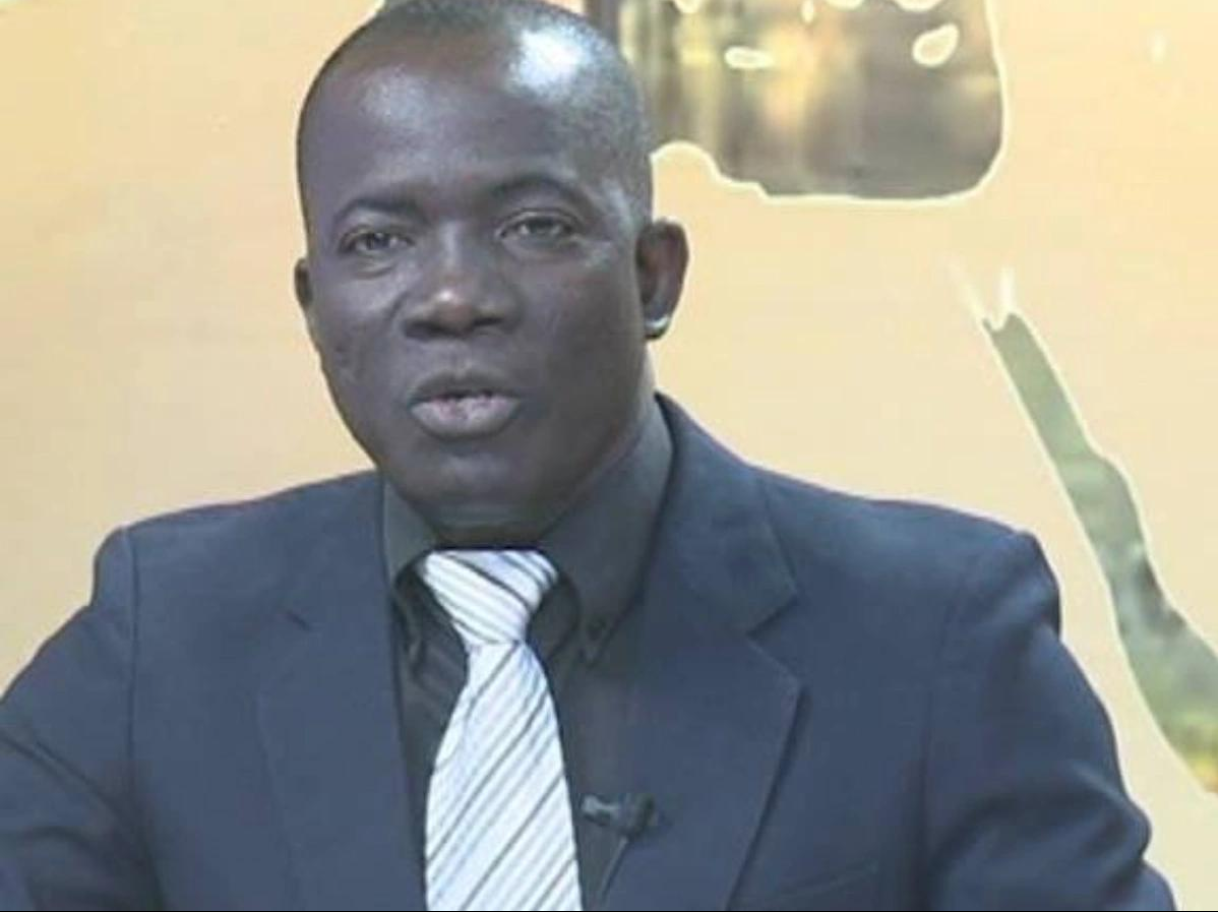
As Niger grapples with a deepening political and security crisis, the release of journalist Serge Mathurin Adou has sparked urgent questions about the future of press freedom in the country. After more than two years in detention on charges of undermining state security, Adou walked free on November 11, 2026—yet the circumstances of his case continue to cast a long shadow over the media landscape.
From detention to freedom: a fragile victory for Nigerien journalism
Serge Mathurin Adou, a Nigerien-Ivorian journalist who worked for private broadcaster Canal 3 Niger, was released after 846 days behind bars. His case had drawn international attention, with human rights organizations and media watchdogs condemning the legal proceedings as politically motivated. While his family and colleagues welcome the news, the relief is tempered by lingering doubts: Was this release a genuine step toward justice, or simply a calculated move in a broader crackdown on dissent?
The questions extend beyond Adou himself. Since his initial disappearance on September 1, 2024, following a police summons in Niamey, his case had become emblematic of the dangers faced by journalists in Niger. His detention was followed by a 24-month prison sentence handed down in November 2025—far shorter than the two decades prosecutors had demanded. Yet the legal process raised red flags, particularly regarding the lack of due process and the use of vaguely defined security charges to silence critical voices.
Adou’s case also took an unexpected turn when neighboring Burkina Faso publicly named him in September 2024 as part of a purported conspiracy to destabilize the military junta led by Captain Ibrahim Traoré. Though the allegations were never substantiated in Niger, they served to complicate his legal defense and fuel suspicions of cross-border judicial manipulation.
Press freedom in Niger: a downward spiral since the 2023 coup
The challenges facing Niger’s media did not begin with Serge Mathurin Adou’s arrest—they have intensified since the July 26, 2023, military takeover led by General Abdourahamane Tiani. The regime’s consolidation of power has coincided with a systematic erosion of civic freedoms, with the press bearing the brunt of restrictions.
Under the new authorities, journalism in Niger has become a high-risk profession. Independent reporting on security issues, political dissent, or even routine governance is increasingly met with arrests, media suspensions, and self-censorship. Cases like those of journalist Samira Sabou, commentator Ousmane Toudou, and publisher Soumana Maïga have become cautionary tales within newsrooms, serving as stark reminders of the consequences of crossing red lines.
The crackdown has extended beyond individuals to entire institutions. In January 2024, the government suspended the Maison de la presse, a key professional organization for journalists. International broadcasters such as RFI, France 24, and later the BBC have also faced bans, further isolating Niger’s media landscape from global perspectives.
RSF rankings: a damning indictment of Niger’s media climate
The deteriorating conditions for journalists in Niger are starkly reflected in the Reporters Without Borders (RSF) World Press Freedom Index. The country plummeted from 83rd place in 2025 to 120th in 2026, a 37-place drop in just one year—a decline unmatched in the Sahel region. RSF explicitly links this collapse to the military takeover, citing economic strangulation of outlets, arbitrary arrests, and systemic pressure on reporters.
This ranking is not merely a statistical footnote; it signals a broader crisis. For Niger’s citizens, it raises a pressing question: In a nation facing jihadist insurgencies and political instability, how can democracy function without a free press to hold power to account?
Beyond Adou: the unanswered questions for Niger’s media
Serge Mathurin Adou’s release is undeniably a personal triumph for those who campaigned for his freedom. Yet it remains a symbolic gesture rather than a structural shift. Other journalists remain behind bars, and those still working face impossible choices: to report critically and risk imprisonment, or to stay silent and preserve their safety.
The post-coup environment demands urgent scrutiny. While the government cites national security as justification for its actions, the line between legitimate counterterrorism and repression of dissent grows thinner by the day. International observers argue that a free press is not a luxury—it is a cornerstone of any functioning democracy, especially in fragile states.
For Niger’s journalists, the path forward is fraught with uncertainty. Adou’s freedom offers a glimmer of hope, but without systemic reforms, the next detainee may not be as fortunate. The stakes could not be higher: the very fabric of Niger’s democracy depends on it.
Key takeaways from Serge Mathurin Adou’s case
- Adou spent 846 days in prison after being charged with undermining state security—a charge widely criticized as a tool for silencing dissent.
- His case was complicated by unproven allegations from Burkina Faso, highlighting the risks of cross-border judicial entanglements.
- Since the 2023 military coup, Niger has seen increased arrests, media suspensions, and self-censorship, with the Maison de la presse and international broadcasters among the casualties.
- RSF’s 2026 ranking places Niger 37 places lower than the previous year, reflecting a severe deterioration in press freedom.
- While Adou’s release is welcome, the broader media climate remains dire, raising questions about whether true reform is possible under the current regime.