
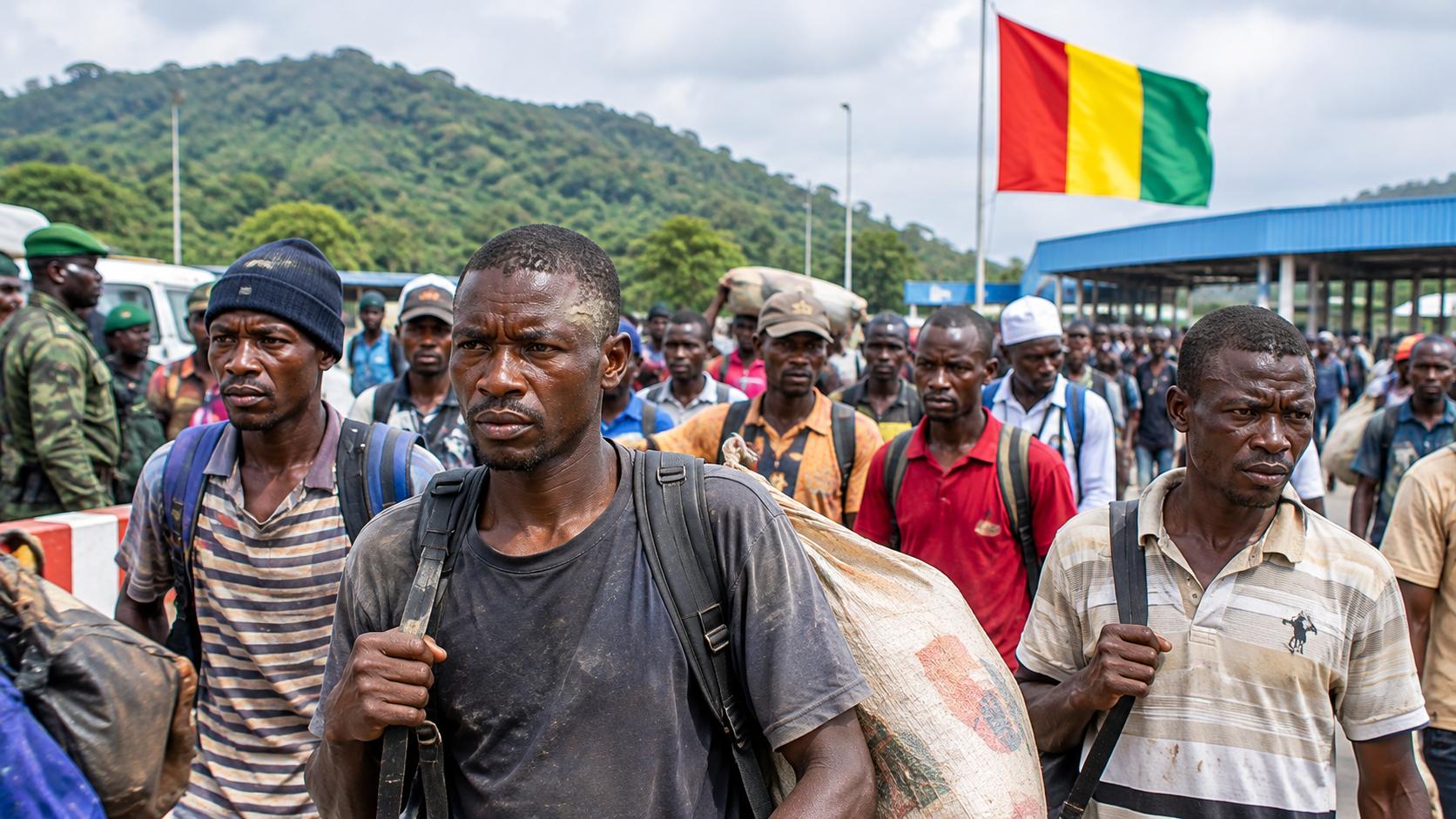
Across the Sahel, the promise of shared sovereignty and regional integration often crumbles under the weight of sudden expulsions and uncoordinated crackdowns. Nowhere has this been more evident than in the abrupt deportation of hundreds of Malian gold miners by neighboring Guinea, leaving Bamako scrambling to respond to a humanitarian and political crisis it neither anticipated nor prepared for. The episode exposes a painful truth: behind the rhetoric of state control lies a system ill-equipped to manage the very citizens it claims to protect.
When the state learns of its own citizens through the media
The first act of this unfolding drama played out not in government chambers, but in transit camps and border zones, where Malian authorities first became aware of the expulsions through media reports and desperate phone calls. These were not just numbers on a spreadsheet—they were men, women, and families who had crossed into Guinea in search of better prospects in informal gold mining, only to be rounded up and sent back without warning, coordination, or even basic procedural safeguards.
For a transitional government that has staked its legitimacy on the absolute control of national territory, the revelation was as humiliating as it was sudden. The so-called ‘axis of sovereignty’ between Bamako and Conakry cracked under pressure, proving that regional solidarity fades fast when gold dust and profit margins are at stake.
From official announcements to makeshift solutions
Once the shock subsided, the real work began—not in addressing the root causes of the crisis, but in damage control. The government scrambled to roll out a ‘rapid response’ plan, promising immediate care and reintegration. But what does such a plan look like when implemented from scratch under enormous time pressure?
- Logistics of last resort: With no permanent reception centers, no reliable registration systems, and no pre-existing coordination with Guinean authorities, officials resorted to stopgap measures. Makeshift tents were hastily erected at border crossings, overloaded trucks ferried returnees back inland, and symbolic aid kits—rice, water, basic medicine—were distributed, all in the name of optics for national broadcasts.
- No roadmap for reintegration: Handing a meal and a first-aid kit to exhausted miners is one thing; offering them sustainable livelihoods is entirely another. Many returned to Mali with nothing but a sense of abandonment, thrust back into rural precarity or lawless zones where formal employment barely exists. There was no plan to reintegrate them into the formal economy, no training programs, no job creation initiatives—just a vague promise of support that evaporated as quickly as it was made.
The hollow myth of sovereign social protection
This border crisis lays bare the contradiction at the heart of many Sahelian governments’ social policies. They decry external interference in summits and conferences, sign mutual defense charters with revolutionary flourish, yet fail spectacularly when it comes to protecting their own citizens from expulsion abroad.
The much-heralded ‘rapid response plan’ is nothing more than a public relations stunt—a watered-down response to a humanitarian wildfire. Instead of addressing the structural causes of migration and economic vulnerability, authorities default to crisis management, treating displaced miners as a disposable variable in a larger narrative of state control.
What emerges is a portrait of governance in crisis mode: improvisation masquerading as policy, reactive measures passing for solutions, and a refusal to acknowledge that sovereignty means more than control—it means protection, foresight, and responsibility.
What’s next for Mali’s expelled miners?
The road ahead is uncertain. Without systemic changes in border management, economic opportunities, and social protections, the cycle of displacement will continue. These miners will return to the margins—literally and economically—where the state’s presence is weakest and its promises most hollow. For now, they remain casualties of a system that values rhetoric over reality, control over care, and appearances over action.