
The World Health Organization (WHO) had issued a serious warning just days prior, highlighting an Ebola surge that was intensifying at an exceptional rate and urging a significant scale-up in the health response. Authorities in the Democratic Republic of Congo (DRC) have since reported a total of 3,874 confirmed cases and 1,751 fatalities linked to this ongoing epidemic. This current crisis follows the nation’s deadliest Ebola outbreak between 2018 and 2020, which claimed approximately 2,300 lives from 3,500 recorded infections.
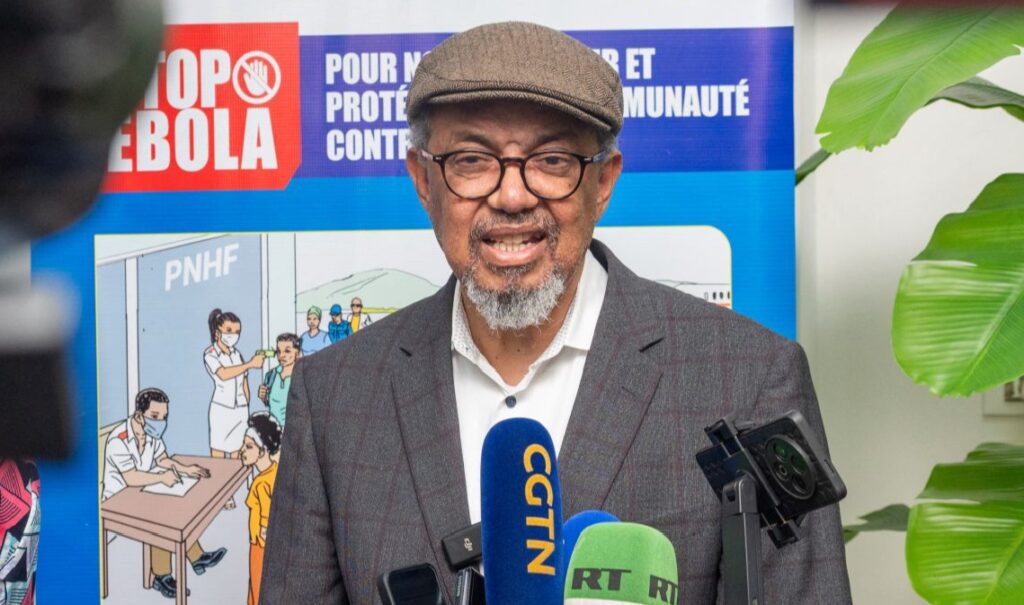
The Director-General of the WHO, Tedros Adhanom Ghebreyesus, arrived in Kinshasa, the capital of the DRC, on Tuesday. His schedule included discussions with Congolese President Félix Tshisekedi on Wednesday, as confirmed by a WHO representative in Kinshasa, who did not provide further details.
Mr. Ghebreyesus had previously visited Ituri, a region in the northeast and the current epicenter of the epidemic, in late May. Nearly 90% of all reported cases originated from this area. The current surge is attributed to the Bundibugyo variant of Ebola, for which there are currently no established vaccines or treatments. This particularly challenging DRC Ebola outbreak is impacting regions characterized by a fragile state presence and severely underdeveloped health infrastructure.
“The epidemic unfortunately continues to spread at a pace that is outstripping our capacity to respond,” stated Tarik Jasarevic, a WHO spokesperson, during a press briefing in Geneva on Tuesday. He appealed for increased financial support and additional resources, specifically to bolster treatment capabilities, expand field investigation teams, and enhance safe burial practices.
Ebola, a virus transmitted through contact with bodily fluids that leads to hemorrhagic fever, has tragically claimed over 15,000 lives across Africa during the past five decades. The current Ebola outbreak has expanded over the last two months, affecting five distinct provinces within the DRC: Ituri, Nord-Kivu, Sud-Kivu, Haut-Uélé, and Tshopo.
In a significant development on Tuesday, Canada granted authorization to the American pharmaceutical giant Moderna to commence clinical trials for a vaccine specifically targeting the Bundibugyo strain of Ebola. Furthermore, the vaccine lauded by the WHO as “the most promising,” known as “rVSV Bundibugyo,” is also slated for development by Singapore-based Hilleman Laboratories.
Late in July, the first volunteer received an initial dose of another Bundibugyo vaccine, developed by Oxford University in the United Kingdom, which utilizes technology similar to the AstraZeneca COVID-19 vaccine. Concurrently, several initiatives are underway to rapidly test potential treatments against the Bundibugyo strain, including the antiviral medications remdesivir and obeldesivir, alongside a monoclonal antibody designated MBP134.
The DRC officially declared its 17th Ebola epidemic on May 15, following a delay of several weeks, impacting its vast territory home to over 100 million residents.