
What really happened inside the Grand Mosque when panic erupted
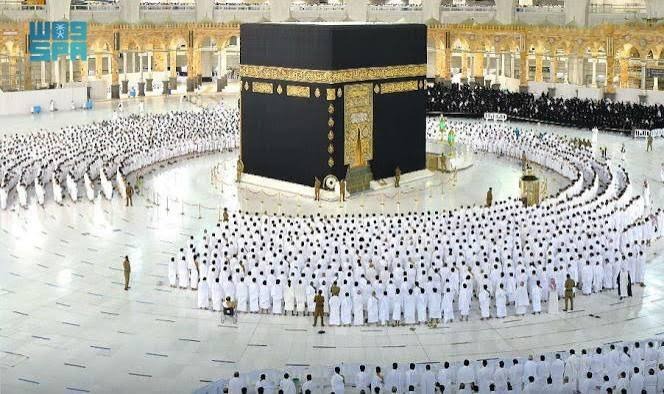
Just before midnight in Mecca, the sacred tawaf rituals around the Kaaba came to an abrupt halt. The harmonious flow of over 20,000 pilgrims was shattered by sudden shouts near the main entrance to the Masjid al-Haram courtyard. Within minutes, heavily armed security forces and plainclothes agents converged on a single individual whose erratic behavior had escalated into a crisis.
The viral rumor that sent shockwaves across the Muslim world
Before official clarification could reach local and international observers, social media had already ignited. Clips captured from upper-level galleries showed a chaotic retreat of worshippers, followed by the immediate lockdown of the area by emergency teams. Various regional news channels and online platforms began circulating reports of a foiled suicide bombing underway inside the holiest sanctuary in Islam. According to unverified accounts, a man allegedly approached the Kaaba while wearing an explosive belt, whose detonation mechanism reportedly malfunctioned at the last moment.
The mere speculation that explosives might have penetrated the site sent tremors across the Middle East and beyond. For several tense hours, fear gripped millions: not only had the explosion not occurred—but the possibility of a catastrophe within the most heavily guarded religious site on Earth was enough to chill even the most hardened observers.
From behavior crisis to media frenzy: the anatomy of a false alarm
By dawn, Saudi authorities broke their usual silence with a formal statement from the Ministry of the Interior. The narrative was unequivocal: no bomb, no explosive device, and no terrorist plot were involved. According to security forces, the disruption was caused by an individual experiencing severe mental distress, who harassed pilgrims, shouted inflammatory slogans, and triggered dangerous stampedes.
The suspect was detained within seconds by onsite patrols before the situation spiraled. Claims of an explosive vest or failed bomb are entirely baseless.
Yet this incident reveals a growing vulnerability: in today’s info-war environment, even minor security interventions can be weaponized. In a geopolitically tense region, short clips or out-of-context security footage can be manipulated in minutes to construct a narrative of narrowly avoided disaster—one that could have profound effects on faith, travel, and regional stability.
The fortress at the center of Islam’s holiest site
The Grand Mosque is not just a place of worship—it is a fortress of preparedness. Its multilayered security architecture is designed to neutralize threats long before they materialize into crises:
- 24/7 surveillance: Over 10,000 high-definition cameras blanket every square meter of the mosque, feeding into AI-powered command centers that analyze behavior, detect anomalies, and enable real-time response.
- Perimeter fortification: Multiple layers of access control screen pilgrims and visitors, with biometric screening and physical checks to prevent unauthorized objects from entering the sanctuary.
- Rapid response corps: Elite units—trained in counter-terrorism and crowd control—are positioned to intervene within 60 seconds anywhere in the mosque complex.
This infrastructure reflects decades of painful lessons: from the 1979 militant takeover of the Grand Mosque by Juhayman al-Otaybi to repeated foiled plots by extremist networks. The Saudi monarchy’s legitimacy as Custodian of the Two Holy Mosques hinges entirely on its ability to maintain flawless security in a city visited by millions every year.
Not an attack—but a warning of a new era in holy-site defense
With dawn prayers echoing through the marble corridors, life inside the Grand Mosque returned to normal. Cleaning crews removed all traces of the night’s disturbance, and the rhythmic footsteps of pilgrims resumed. The psychological scars, however, remained.
This was not a terror attack. But it served as a stark case study in modern asymmetric threats: social media misinformation, psychological stress under mass crowds, and the rapid mobilization of fear in a hyper-connected world. The line between tranquility and turmoil inside Islam’s holiest site now depends as much on physical barriers as on digital vigilance. The message from Mecca is clear—security is no longer just about preventing attacks, but about controlling the narrative before fear takes control.