

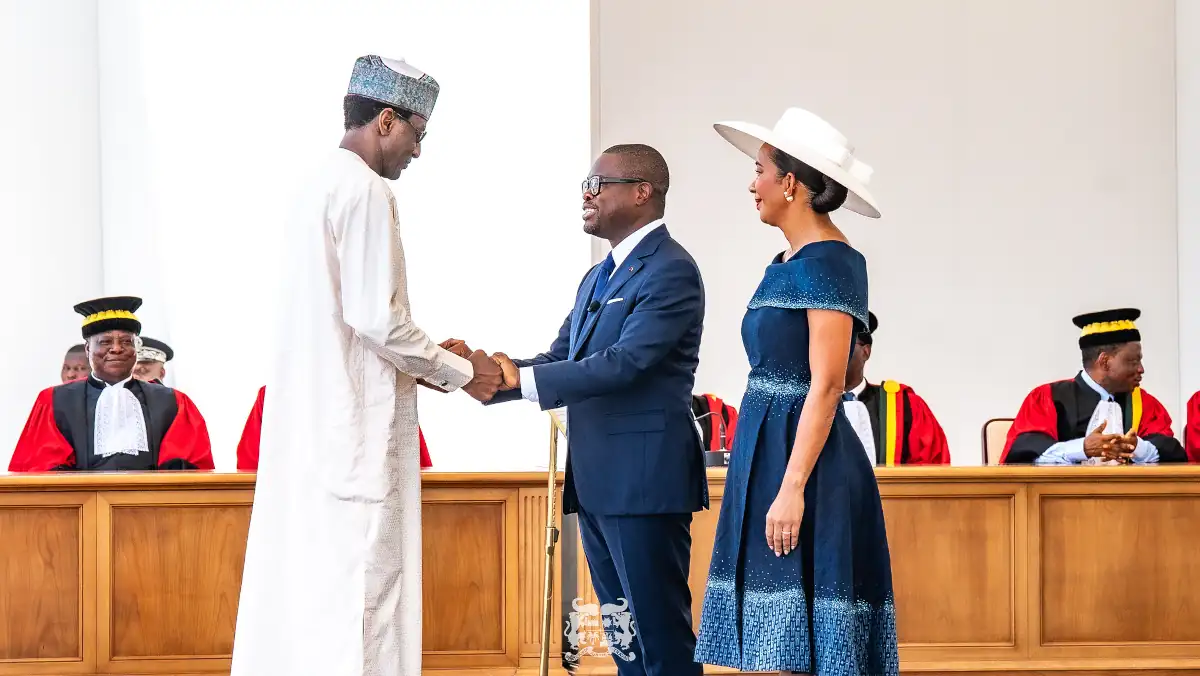
Cotonou witnessed a landmark moment on May 24, 2026, as the nation marked not only the official swearing-in of President Romuald Wadagni but also a symbolic gathering of political and diplomatic figures that could signal a turning point in Beninese politics.
The ceremony’s guest list read like a roll call of the nation’s political history, drawing together former presidents, opposition leaders, and representatives from neighboring West African states. Among the most notable attendees were former presidents Nicéphore Soglo and Boni Yayi, whose presence underscored a rare moment of unity in a country long divided by political tensions.
Their attendance sent a powerful message—one of institutional recognition and republican stability. Even as President Soglo had actively campaigned against Wadagni during the election, his presence alongside the new leader demonstrated a willingness to prioritize national cohesion over past conflicts.
Political thaw signals new era for Benin
The political climate in Benin had grown increasingly strained over recent years, with disputes over institutional reforms, election conditions, and opposition figures facing legal challenges or exile. The 2019 legislative elections and debates over party system reforms had deepened divisions, making the sight of once-opposition figures gathered around the new president all the more significant.
The inclusion of opposition leaders in the inauguration ceremony was more than symbolic—it represented a deliberate choice to embrace dialogue over confrontation. The image of Boni Yayi witnessing Romuald Wadagni take the oath of office stood in stark contrast to years of political strife, suggesting a gradual return to stability in Benin’s democratic process.
Diplomatic unity in a fractured region
The ceremony also drew strong diplomatic representation, particularly from nations within the Alliance of Sahel States (AES). Delegations from Niger, Burkina Faso, and Mali joined counterparts from Nigeria and Togo, signaling a potential shift in regional relations.
This diplomatic turnout comes at a critical time. The Sahel faces escalating security threats, political transitions in neighboring military-led governments, and shifting alliances within ECOWAS. Benin, though stable compared to its neighbors, has grappled with terrorism in its northern regions, making regional cooperation essential.
The presence of these delegations suggests renewed confidence in Benin’s institutional stability. While internal political fractures remain, the country’s reputation as a stable democracy in a volatile region appears to have bolstered its diplomatic standing.
Can symbolism translate into lasting change?
Analysts caution that the moment’s significance must extend beyond ceremonial gestures. Romuald Wadagni inherits an economy transformed by reform but still burdened by deep political divides. His challenge will be to maintain governance progress while rebuilding trust between institutions, opposition groups, and civil society.
The inauguration succeeded in bringing together factions that had long operated in adversarial political silos. In a West African landscape marred by democratic backsliding and instability, this display of unity sets a notable precedent. Whether it heralds a lasting era of reconciliation remains to be seen—but for now, the message is clear: Benin is charting a new course.