
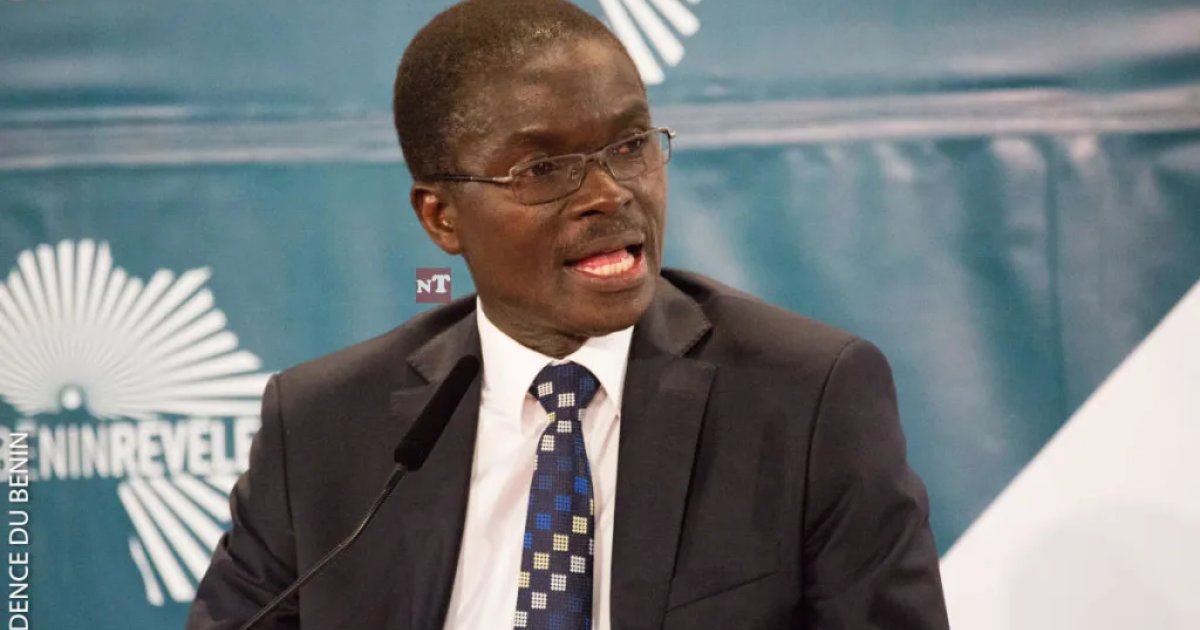
Bénin: Sehouéto urges political actors to base Senate debates on facts, not bias
A spirited discussion on the rule of law and political alternation in Africa unfolded in Cotonou on August 6, 2026, during an event organized by the Institute of Artisans for Justice and Peace (IAJP/Co). At the heart of the exchanges was the newly established Senate, with former minister and parliamentarian Lazare Maurice Sehouéto emerging as a key voice advocating for measured discourse.
Sehouéto, a prominent figure in Beninese politics, framed the Senate not as a divisive force but as a stabilizing institution essential for deepening democracy. His remarks came in response to growing skepticism from some quarters about the upper chamber’s role, particularly from former parliamentarian Kamel Bio Sika Ouassagari, who questioned the scope of its powers.
Senate as a democratic safeguard
In a robust defense of the institution, Sehouéto emphasized that the Senate should be evaluated based on its legal framework rather than speculative concerns. He argued that bicameralism—of which the Senate is a cornerstone—has long served as a structural solution for nations navigating periods of institutional fragility.
The former lawmaker drew parallels with historical precedents to illustrate his point:
- France: The Fifth Republic was born out of a need to curb the chronic instability of previous regimes, introducing checks and balances to ensure continuity.
- Germany: Post-World War II, Germany adopted a bicameral system to embed safeguards against authoritarian excesses and reinforce the rule of law.
These examples, he noted, demonstrate how second chambers can act as stabilizing forces during transitional or turbulent times.
Beyond rhetoric: a call for constructive dialogue
Sehouéto cautioned against rushing to judgment or resorting to unfounded criticism of the Senate, particularly as it begins its work. He posited that the upper chamber’s primary mission is to foster political cohesion, strengthen national unity, and provide a secure foundation for the country’s development trajectory.
The former minister concluded by urging political leaders and civil society to engage in rigorous, fact-based discussions. He stressed that progress depends on moving past caricatures and embracing objective analysis as the nation moves forward with this new democratic experiment.