
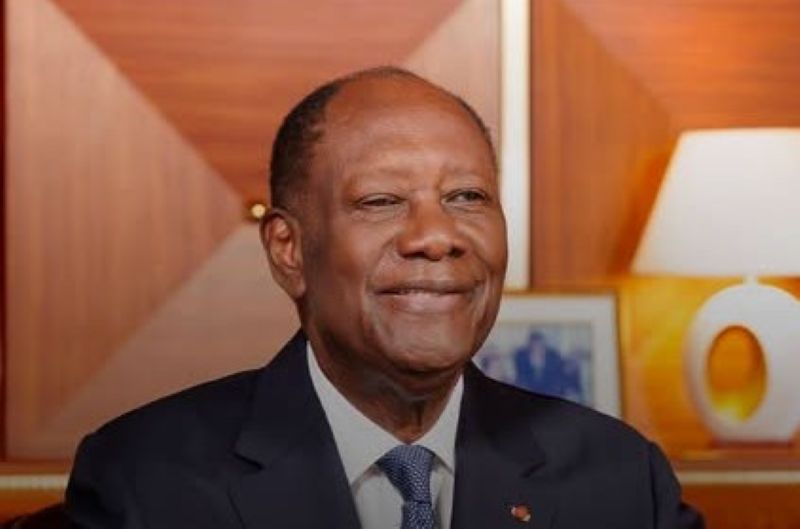
Côte d’Ivoire: President Ouattara’s vision for inclusive growth and governance
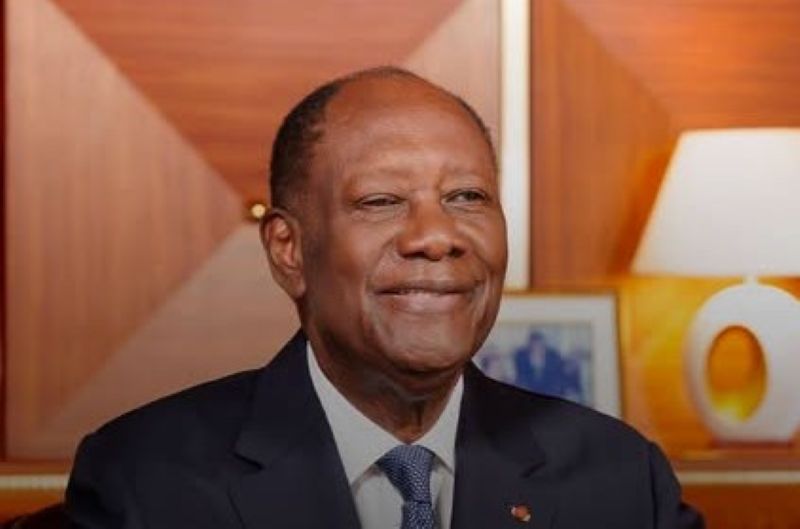
As Côte d’Ivoire marks 66 years of independence, President Alassane Dramane Ouattara has outlined a bold new vision for the nation. His address to the country transcends conventional economic or security narratives, focusing instead on two critical pillars: accelerating national transformation while deepening the rule of law.
The president frames this vision around the ambitious concept of a « Greater Côte d’Ivoire », a term that signals a shift from incremental progress to a transformative national project. But this vision raises a fundamental question: how can Côte d’Ivoire leverage its economic momentum and political stability to create shared prosperity for all its citizens?
Building a Greater Côte d’Ivoire: Beyond Infrastructure
The call for a « Greater Côte d’Ivoire » is not merely rhetorical. It represents a concerted effort to unite government institutions, businesses, political parties, civil society, traditional leaders, religious groups, and the diaspora around a common national project. The president’s language underscores a departure from partisan divides, emphasizing collective action as the driving force behind progress.
This ambition arrives at a time when Côte d’Ivoire boasts one of the most dynamic economies in West Africa. Major investments are underway in infrastructure, transportation, energy, and port capacity, positioning the country as a regional logistics hub. The new 2026-2030 National Development Plan is designed to propel the nation to the next level of growth, with clear targets for economic diversification and social inclusion.
Yet, the success of this plan cannot be gauged solely by the skyline of Abidjan or the completion of new highways. True progress will require reducing regional disparities, creating opportunities for youth, and ensuring that economic growth translates into tangible improvements in daily life for all Ivorians. The « Greater Côte d’Ivoire » vision must therefore evolve from a slogan into a lived reality for every community.
Development with Justice: The Limits of State Action
The president’s televised address delivered a critical message: while Côte d’Ivoire must modernize and expand its cities, the state’s actions must remain within the bounds of the law. Recent operations in high-risk zones—particularly those aimed at addressing flood risks and disaster preparedness—have raised concerns over irregular displacements, such as those reported in Koumassi.
President Ouattara has made it clear that such operations must adhere to legal frameworks. Investigations are underway, and accountability will be enforced where laws have been violated. This stance sends a powerful signal: Côte d’Ivoire’s development cannot be built on a foundation of administrative arbitrariness or disregard for citizens’ rights.
A modernizing state can—and must—act decisively to protect lives and property. However, it must do so through transparent, accountable processes. The president’s emphasis on the rule of law reflects a broader commitment: Côte d’Ivoire’s growth must be both rapid and just, ensuring that no citizen is left behind in the pursuit of progress.
The Litmus Test: Cohesion and Credibility
Côte d’Ivoire stands at a crossroads. The nation’s ability to balance economic ambition with social justice will define its next chapter. The president’s vision of a « Greater Côte d’Ivoire » will only gain credibility if it delivers on two fronts: inclusive growth and institutional integrity.
For the union nationale to succeed, every segment of society must see itself as a stakeholder in this national project. Similarly, the rule of law must be more than a constitutional principle—it must be a lived reality, applied uniformly across all state actions. The president’s message is clear: Côte d’Ivoire’s transformation must prioritize both speed and fairness, ensuring that progress benefits all, not just a privileged few.
The « Greater Côte d’Ivoire » will be measured not by the scale of its infrastructure or the speed of its economic growth, but by its ability to align public power, justice, and inclusion. This is the true test of whether Côte d’Ivoire is entering a new era—or merely repeating the mistakes of the past.