
Did procedural changes undermine Brazil’s 2026 election results?
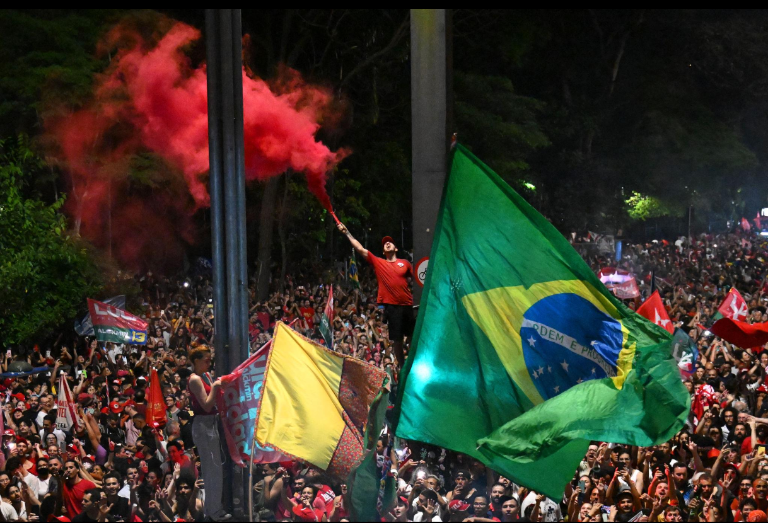
Brazil woke to a political standoff after Luiz Inácio Lula da Silva clinched a historic fourth term—yet his opponent, Flávio Bolsonaro, has refused to concede, alleging irregularities that could upend the outcome.
The October 25 presidential vote saw Lula secure 51.79% of valid ballots, beating Flávio Bolsonaro by over four million votes. Official results from the Superior Electoral Court (TSE) confirmed Lula’s 64.2 million votes to Bolsonaro’s 59.8 million. But within hours, the conservative senator vowed to challenge the election, citing last-minute voting extensions ordered by the Supreme Court.
Why is Flávio Bolsonaro demanding a new vote?
The controversy centers on a controversial Supreme Court ruling that extended polling hours until 7 p.m. BRT in certain districts due to logistical hurdles, including transportation delays in Bahia and São Paulo. Critics argue the late change disrupted fairness, particularly in areas where polls had already closed.
Flávio Bolsonaro’s team contends the decision violated electoral equality, declaring, “Under these circumstances, we cannot accept the results.” His legal team has filed for annulment, though concrete evidence of fraud remains unsubstantiated. Notably, Bolsonaro’s campaign had itself previously requested extended voting hours due to flooding in southern regions—adding complexity to the dispute.
Lula’s victory amid deepening political divides
Lula’s re-election marks a landmark in Brazilian politics: at 80, he becomes the first president since Getúlio Vargas to serve non-consecutive fourth terms, having previously governed from 2003–2010 and returned in 2023. His campaign pivoted on social welfare achievements and poverty reduction, countering Bolsonaro’s early first-round lead.
Yet the election underscores Brazil’s stark polarization. Flávio Bolsonaro, son of former President Jair Bolsonaro (currently jailed for coup plotting), embodies a right-wing movement emphasizing traditional values and security. His refusal to concede reignites fears over institutional trust—a concern amplified by Brazil’s history of political instability.
What’s next for Brazil’s democracy?
The Superior Electoral Court has validated Lula’s win, but Bolsonaro’s legal challenge raises pivotal questions: Can procedural disputes invalidate an election? And how will Brazil’s fractured Congress—where conservative factions hold significant sway—impact Lula’s governance?
Lula has struck a conciliatory tone, vowing to govern for all Brazilians despite deep divisions. Yet his agenda may face resistance from a Congress dominated by conservative forces, potentially stalling economic and social reforms.
The coming weeks will test Brazil’s judicial system as courts weigh Bolsonaro’s arguments. One certainty remains: while Lula’s victory is official, the legal battle has introduced a new era of uncertainty for Latin America’s largest democracy.