
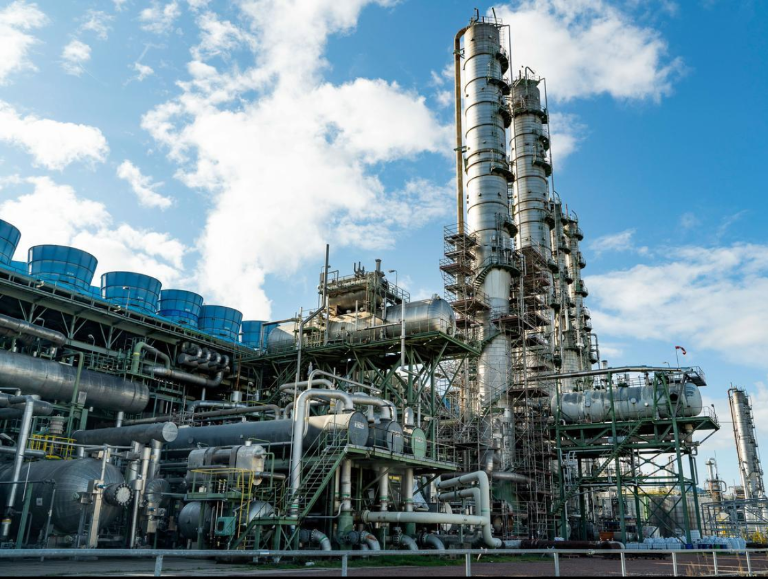
With a looming strategic dilemma facing the West African region’s fertilizer supply chain, one nation stands at the crossroads of a potential industrial revolution. The question on every policymaker’s and investor’s mind is clear: Can Togo’s phosphate reserves become the catalyst for regional self-sufficiency in fertilizers? This is not merely an economic proposition—it is a geopolitical imperative that could redefine agricultural productivity across the Economic Community of West African States (ECOWAS).
Why the ECOWAS phosphate industrialization plan hinges on Togo
In a bold regional initiative spanning 2026 to 2030, ECOWAS has earmarked a staggering 1.45 trillion West African CFA francs to develop a phosphate-based fertilizer industry. Togo, long recognized for its phosphate-rich deposits, has been selected as a key industrial hub within this transformative program. The stakes could not be higher: reducing the subregion’s crushing reliance on imported fertilizers while unlocking unprecedented value from its natural resources.
The project transcends national boundaries. While Togo will host critical infrastructure, the strategy is fundamentally a community-wide endeavor, designed to integrate phosphate processing into a broader industrial ecosystem. This means the success or failure of the initiative will depend less on Lomé’s efforts alone and more on the collective will of ECOWAS member states to collaborate on financing, technology transfer, and market integration.
From raw material to regional industrial powerhouse
Togo’s phosphate deposits, mined for decades, have historically been exported in their raw form—leaving billions in potential value untapped. The ECOWAS plan seeks to change this narrative by prioritizing local transformation. The vision? A vertically integrated industry where phosphate is refined into high-value intermediates and finished fertilizers tailored to West Africa’s unique agricultural landscapes.
This industrial leap would deliver multiple dividends:
- Economic diversification: Moving beyond commodity exports to establish a high-value manufacturing sector.
- Job creation: New industries demand specialized skills, from chemical engineering to logistics, creating sustainable employment opportunities.
- Agricultural resilience: Regionally produced fertilizers could be formulated to match soil and crop requirements, enhancing crop yields and reducing vulnerability to global price shocks.
- Supply chain strengthening: Local production reduces dependency on distant suppliers, ensuring more reliable access to inputs for farmers.
Yet raw potential alone is insufficient. The real test lies in execution: securing investment, building infrastructure, and forging unbreakable supply chains.
Mobilizing over 1.45 trillion CFA francs: A public-private balancing act
The ECOWAS investment blueprint demands unprecedented financial mobilization. Of the total 1.45 trillion CFA francs allocated for 2026–2030, 1.19 trillion CFA francs are expected from the private sector. Public contributions, including from Togo, account for just 239.5 billion CFA francs. This imbalance underscores a critical reality: the project’s viability depends on Togo’s—and the region’s—ability to attract international investors, commercial banks, and industrial partners.
For Togo, the challenge is twofold. First, it must present a compelling value proposition: a stable regulatory environment, competitive energy costs, and clear incentives for industrial players. Second, it must coordinate closely with ECOWAS to ensure that regional policies—such as tariff harmonization and cross-border infrastructure—are in place to support seamless operations.
Time is of the essence. The 2026 launch window is approaching, and feasibility studies, land allocation, and pilot plant designs must be finalized soon.
The agricultural game-changer: Reducing fertilizer import dependence
West Africa currently imports over 70% of its fertilizers, exposing farmers to volatile international markets and supply disruptions. The ECOWAS phosphate strategy aims to turn this dependency into an opportunity for self-sufficiency.
By establishing regional processing hubs—like the one planned in Togo—and decentralized blending units near agricultural zones, the project seeks to:
- Lower costs by eliminating import markups and logistics overhead.
- Improve fertilizer accessibility for smallholder farmers, who form the backbone of the region’s agriculture.
- Customize fertilizer formulations to match local soil types and crop patterns, enhancing nutrient efficiency.
- Stabilize food security by ensuring consistent availability of agricultural inputs.
This pivot from import dependency to local production could redefine the region’s agricultural landscape, boosting productivity and rural incomes.
From vision to reality: What’s next for Togo and ECOWAS?
The ECOWAS phosphate initiative represents more than an industrial project—it is a litmus test for regional integration and economic sovereignty. For Togo, the path forward requires:
- Clear policy roadmaps: Defining investment incentives, land use regulations, and environmental safeguards.
- Strategic partnerships: Engaging global fertilizer manufacturers, engineering firms, and financial institutions.
- Timeline accountability: Establishing milestones for infrastructure completion, pilot production, and full-scale operations by 2030.
- Continuous stakeholder engagement: Ensuring alignment among ECOWAS institutions, national governments, and private actors.
The window to act is narrow, but the stakes could not be greater. If Togo and ECOWAS succeed, the phosphate industry could become a cornerstone of West Africa’s industrial renaissance—driving growth, reducing import bills, and empowering farmers across the region. If they fail, the region risks remaining hostage to global fertilizer markets, with little control over its agricultural destiny.
The question is no longer theoretical: Will Togo’s phosphate reserves ignite a West African industrial revolution? The answer will be written not in speculation, but in steel, concrete, and the first bags of locally produced fertilizer rolling off the assembly line.