

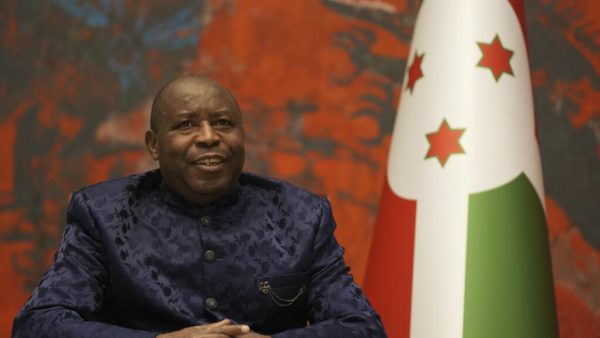
As the Democratic Republic of the Congo grapples with deepening political instability, a delegation of opposition leaders and religious figures has converged in Bujumbura for high-stakes consultations. The meeting, led by Burundian President Évariste Ndayishimiye—who also holds the rotating presidency of the African Union—aims to address the escalating crisis gripping the country’s institutions, security, and constitutional order.
With tensions at a boiling point, the coalition behind the planned July 8 protest, known as Article 64 (C64), has postponed its demonstration to July 22. The decision follows the invitation extended by the Burundian leader, who sees the discussions as a critical opportunity to foster dialogue amid the growing unrest in Kinshasa.
Diverse voices unite in Bujumbura for urgent talks
The gathering includes prominent figures from the C64 coalition, alongside delegates from the National Episcopal Conference of Congo (CENCO), the Church of Christ in Congo (ECC), and the Religious Platform, which represents revivalist churches. Among the attendees is Ejiba Yamampia, a key representative of the revivalist movement, underscoring the broad-based nature of these discussions.
« The presence of bishops, pastors, and revivalist leaders alongside the full C64 coalition highlights the gravity of the moment. These consultations are not just symbolic—they carry the weight of the Congolese people’s aspirations for stability. »
The agenda includes private sessions with religious leaders before a joint audience with C64 representatives. A plenary meeting will then bring together all parties under the mediation of President Ndayishimiye, who has made it clear that collective engagement is non-negotiable.
C64’s conditions met ahead of postponed march
The opposition coalition had insisted on being received as a unified bloc—a demand that was fully accommodated by the Burundian delegation. This concession underscores the urgency and significance of the talks, which have already yielded tangible outcomes, including the rescheduling of the protest.
« Separate meetings were never on the table. The coalition’s unity is our strength, and that unity will be preserved in these discussions. This was a firm requirement, and it has been met without compromise. »
In their official statement, opposition figures such as Martin Fayulu, Moïse Katumbi, Jean-Marc Kabund, Delly Sesanga, and Augustin Matata Ponyo emphasized their commitment to exploring every avenue that could reinforce constitutional integrity. They framed their participation as a strategic move to elevate the concerns of the Congolese people, particularly the threats to democracy and national cohesion.
African Union prioritizes dialogue in Congo’s crisis
This mediation effort builds on President Ndayishimiye’s recent state visit to Kinshasa, where he and President Félix Tshisekedi reaffirmed their shared determination to uphold institutional stability amid persistent security challenges in eastern DRC. The Burundian leader has repeatedly called for political actors to prioritize dialogue over confrontation, while praising the Congolese government’s demonstrated openness to engagement.
As the consultations in Bujumbura draw to a close, all eyes now turn to July 22—the rescheduled date for the C64 march. The coalition’s primary objective remains unchanged: to advocate for constitutional order and present a formal memorandum to President Tshisekedi, outlining the pressing needs and priorities of the Congolese population.