
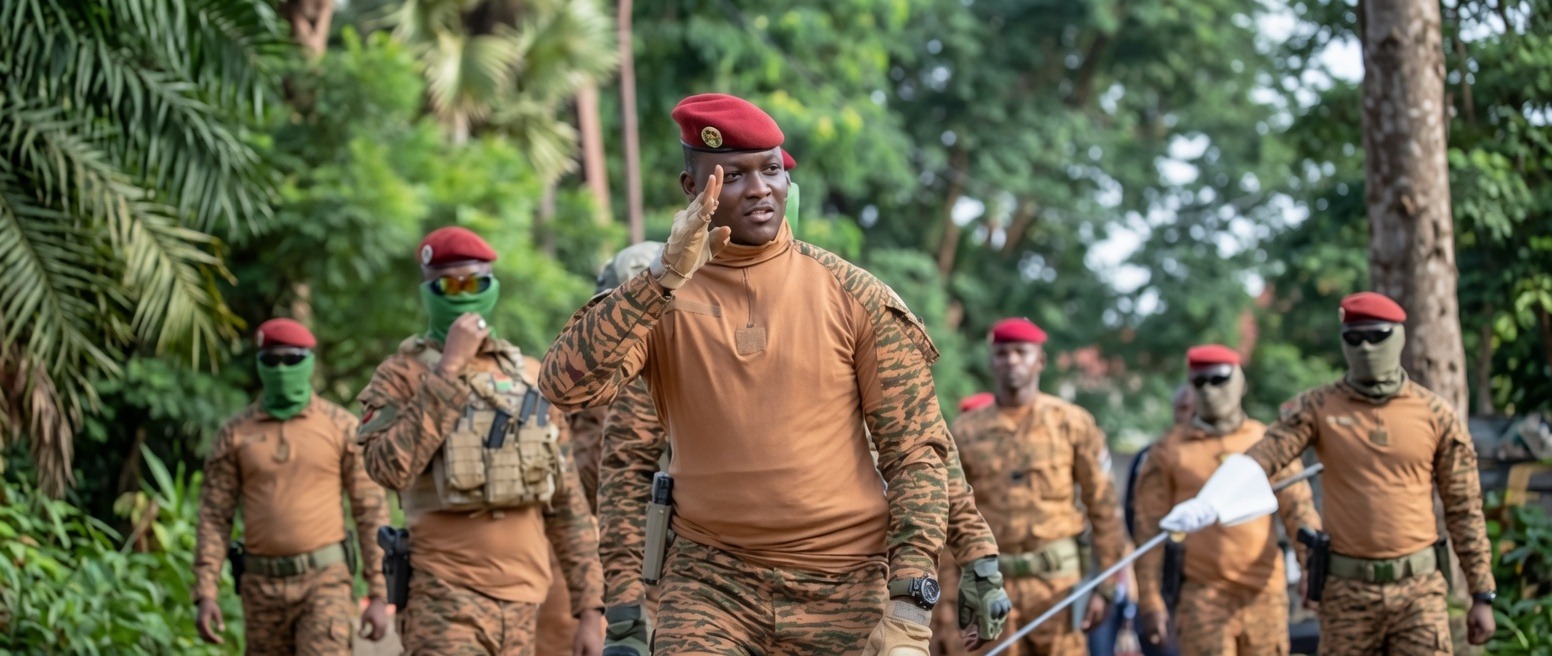
The recent address by Captain Ibrahim Traoré in Ouahigouya has laid bare deep fractures within Burkina Faso’s state apparatus, exposing not just political fragility but a systemic crisis of trust in the military leadership. The blunt, aggressive tone—marked by crude language and uncompromising threats—betrays more than just frustration; it reveals a regime so insecure in its cohesion that it must publicly threaten its own officers to maintain control. In governance and military strategy alike, such coercive posturing is not a sign of strength but a glaring symptom of vulnerability.
Traoré’s insistence on eliminating internal rivals by declaring no “number one or number two” reflects a desperate attempt to preempt challenges to his authority. Yet this strategy of leveling the hierarchy upwards is a double-edged sword. By positioning himself as the sole guarantor of legitimacy—based solely on his battlefield experience—he traps the transition in a classic pretorian trap: a system where power depends entirely on one individual’s immediate successes, with no institutional foundation to sustain it. The risks are immense: a leadership vacuum at the first sign of setback.
Worse still, this discourse of fear obscures the real strategic challenge: the need to restructure Burkina Faso’s military capabilities. By prioritizing political loyalty over tactical reform, the transition risks suffocating the command chain. Officers, now consumed by self-preservation and internal surveillance, may abandon initiative on the front lines, transforming the army into a rigid, cautious force ill-equipped to counter armed groups. The disconnect between Ouagadougou’s firm rhetoric and the operational reality on the ground grows ever more dangerous.
History offers a clear warning: when military regimes in the Sahel rely on intimidation rather than cohesion, dissent does not vanish—it goes underground. The harder the regime clings to fear as a tool of control, the more it fuels the very instability it claims to suppress. The lesson is stark: repression breeds resilience, not obedience.