
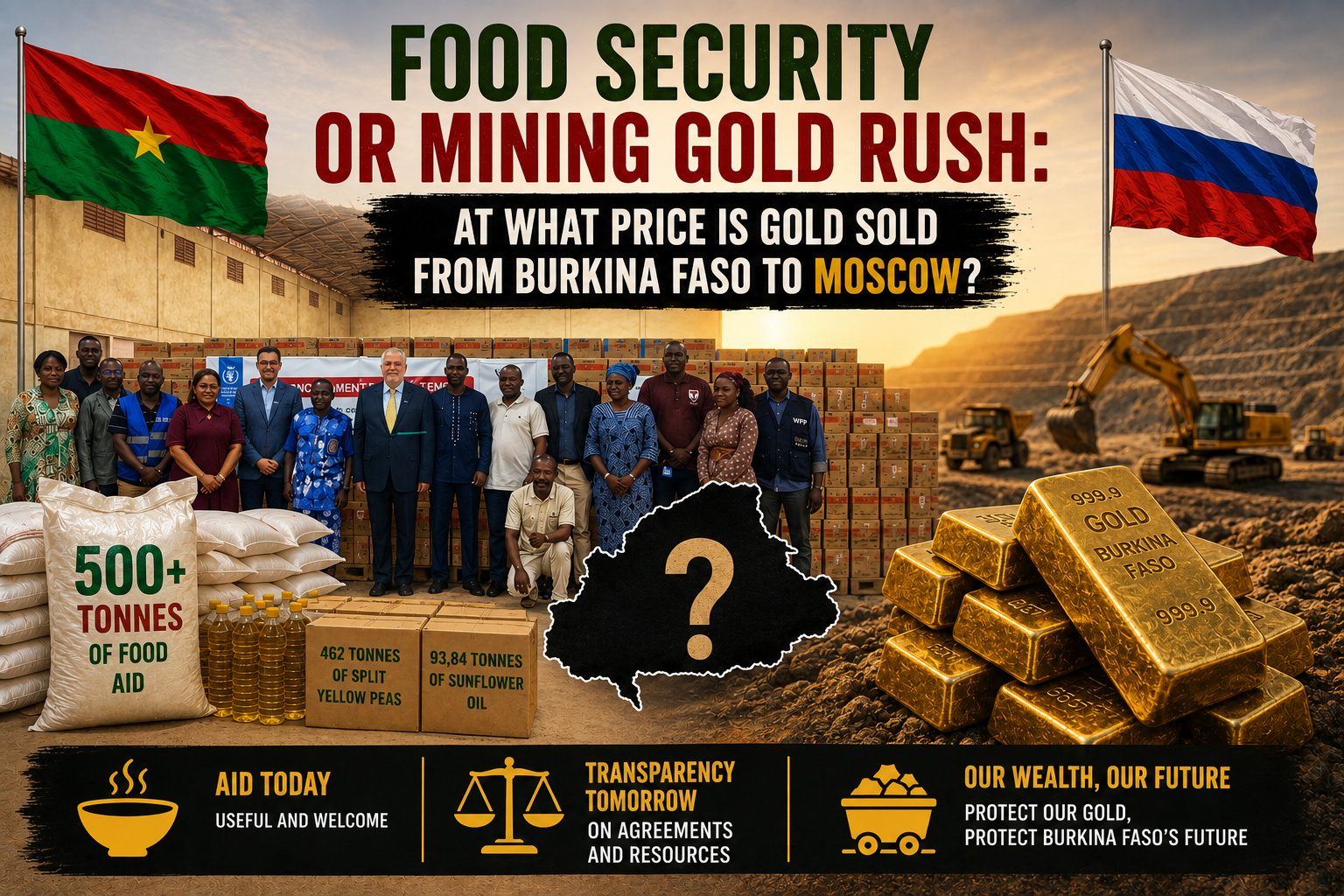
Humanitarian gesture or strategic exchange
The diplomatic announcement from Moscow’s envoy in Ouagadougou has confirmed the arrival of over 500 metric tons of food aid in Burkina Faso, valued at approximately $942,500. The shipment includes 462 tons of yellow split peas and 93.84 tons of sunflower oil, presented as a gesture of fraternal solidarity amid escalating humanitarian and security challenges. While this aid provides immediate relief, it also raises critical questions about the economic and strategic implications of Burkina Faso’s evolving partnerships.
Beyond immediate relief: the hidden costs of resource exchanges
Food aid, however vital, cannot obscure the broader economic realities facing Burkina Faso. The country possesses substantial mineral wealth, particularly gold, which forms the backbone of its extractive economy. The true measure of this partnership lies not in the temporary relief provided by food supplies, but in the long-term value derived from its natural resources.
For Burkinabè citizens, the pressing issue is not whether to accept humanitarian assistance, but rather what concessions are being made in return. The disparity between the value of imported food and the potential revenue from gold exports demands rigorous scrutiny. Are the terms of mineral contracts transparent? Does the state secure equitable returns? Are revenues reinvested in critical sectors such as infrastructure, education, and healthcare? Without clear answers, food aid risks becoming a distraction from deeper structural concerns.
The strategic value of gold in geopolitical negotiations
Gold is far more than a tradable commodity; it is a strategic asset that underpins national development and financial sovereignty. Any shift in its exploitation, export, or commercialization pathways must be subject to public oversight. Citizens have the right to know who purchases Burkina Faso’s gold, at what price, and under what contractual terms. The irreversible nature of mineral extraction unlike consumable food aid—demands stringent governance to prevent long-term losses.
From colonial dependence to new geopolitical traps
The rejection of historical dependencies, particularly with former colonial powers, reflects legitimate public sentiment. However, replacing one external partner with another does not automatically guarantee sovereignty. True independence is measured not by the absence of foreign flags, but by the ability to negotiate from a position of strength and retain control over national resources.
A modern dependency can manifest in opaque mining contracts, military equipment financing, or exclusive resource access all of which can undermine long-term development. Burkina Faso must ensure that its partnerships, whether with Moscow or any other capital, prioritize national interests over short-term gains.
Transparency as the cornerstone of economic sovereignty
For Burkina Faso to demonstrate genuine control over its economic future, every agreement especially those involving mineral concessions must be open to public scrutiny. Key questions must be addressed: What are the fiscal terms of foreign mining agreements? How much revenue returns to the state? How many local jobs are created? Are exported resources processed domestically? Where are the proceeds invested? The answers to these questions will reveal whether Burkina Faso is advancing toward sustainable development or merely exchanging one form of dependency for another.
Balancing gratitude with accountability
Food aid serves an urgent humanitarian purpose, and its beneficiaries deserve recognition for this support. Yet, it should never serve as a political shield to obscure opaque resource deals. The Burkinabè people are entitled to express gratitude for immediate relief while simultaneously demanding accountability for the management of their national wealth. Sovereignty is not achieved through symbolic gestures but through transparent governance and equitable partnerships.
The true test of Burkina Faso’s economic resilience lies in its ability to leverage its gold reserves not as a bargaining chip in geopolitical negotiations, but as a foundation for lasting development. The choice is clear: will these resources finance schools and hospitals, or will they vanish into the opaque ledgers of foreign alliances? The answer depends on the choices made today.