

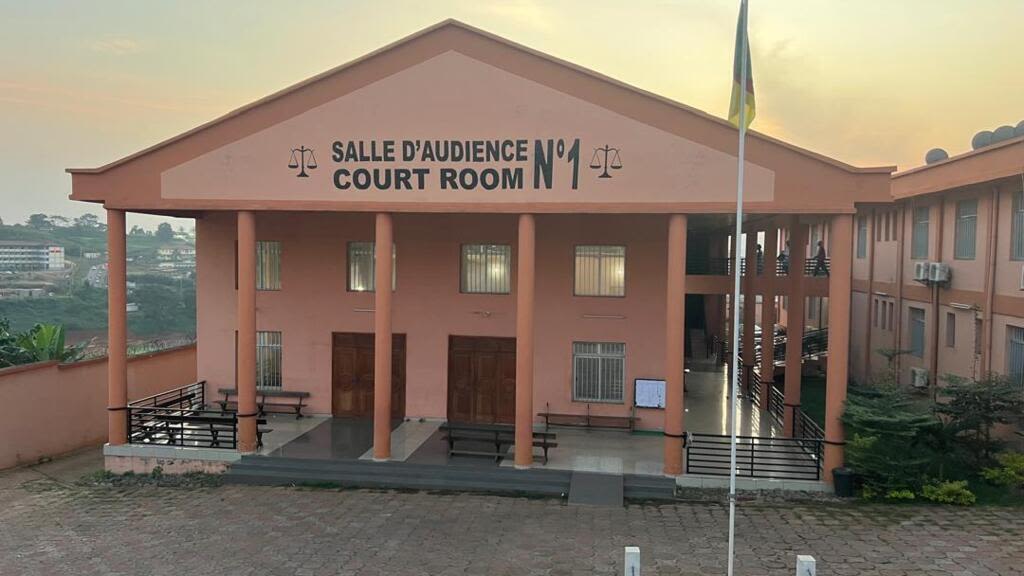
The courtroom proceedings surrounding the death of Cameroonian broadcaster Martinez Zogo reached a pivotal stage as the officer directing the inquiry completed his long-awaited testimony, leaving both sides with sharply contrasting readings of the evidence.
Colonel Jean-Pierre Otoulou took the stand to justify the way he ran his investigation, maintaining that he had assembled solid proof to support his conclusions. Central to his account was the behaviour of journalist Bruno Bidjang, who at the time was close to businessman Jean-Pierre Amougou Belinga, one of the key figures charged in the case. The colonel stated that Bidjang went out of his way to find out about inquiries that touched him directly.
Bidjang used his own appearance to argue that he had done nothing wrong. Yet the lawyer representing Martinez Zogo’s heirs reads the same sequence of events very differently, describing it as an attempt to interfere with the judicial process.
“It simply confirms what we had suspected from the outset,” said Maître Calvin Job. “He genuinely tried to work his way into that joint commission, in an investigation that was supposed to be about him.”
How the inquiry was assembled, according to the colonel
The heir’s counsel points to interference
For the families of the victim, the testimony reinforces a suspicion that has accompanied the case from its earliest days: that key players tried to shape the direction of the probe rather than submit to it. The hearing offered the colonel a platform to explain the choices he made and the leads he pursued, which he defended as grounded in verifiable material.
A lieutenant-colonel who says he was acting on orders
During his exchanges with Colonel Otoulou, Lieutenant-Colonel Justin Danwe of the DGRE acknowledged that he had planned the surveillance, the abduction and the torture of the Cameroonian presenter. He would also have been the one to put together the operational units, drawing on personnel from the DGRE. He nevertheless suggested that the instructions had come down from his superiors.
Lawyers for the intelligence chief reject that account
Counsel defending Léopold Maxime Eko Eko, who headed the general intelligence service when the events unfolded, insist that nothing in the file backs up the lieutenant-colonel’s version. “He went off on a mission without a mission order and without any funding. When he returns, he files no report with his hierarchy. The plain conclusion is that this was a personal initiative by Colonel Danwe,” said Maître Ndjana Ndjana.
Where the torture happened remains contested
Lieutenant-Colonel Justin Danwe also repeated his position on one of the most disputed points of the case: in his telling, Martinez Zogo was not tortured inside the Ekang building, the property belonging to Jean-Pierre Amougou Belinga.
With the investigator’s testimony now on the record, the competing narratives put forward by the accused and by the victim’s family remain as far apart as ever, and the question of responsibility continues to rest on which version the court ultimately accepts.