
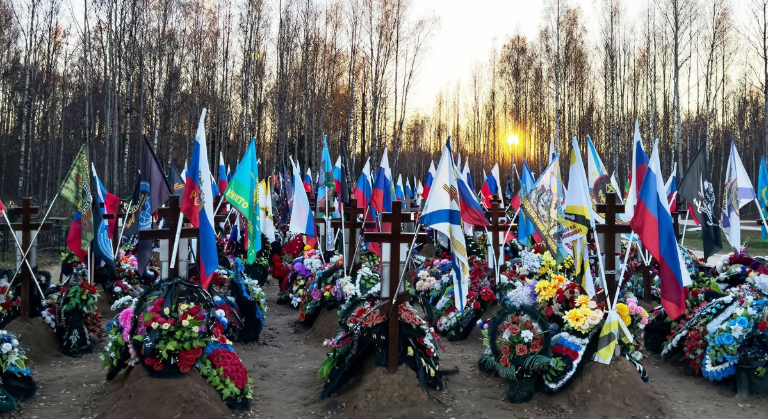
The Russian government may have drastically underestimated its military losses in Ukraine, according to a trove of documents allegedly leaked by hackers. Claiming to have breached Rosstat’s secure databases, cybercriminals now allege that 412,576 Russian soldiers have died since the full-scale invasion began in February 2022. If verified, this figure would dwarf the Kremlin’s official tally and force the nation to confront a grim reality it has long sought to bury.
What the hacked files say about Russia’s secret death toll
Silent Crow and Cyberpartisans, two hacker collectives active in Eastern Europe, assert they extracted confidential Rosstat records containing death certificates for Russian military personnel. The leaked documents reportedly span from the invasion’s first months to the present, painting a picture of unprecedented human cost.
The 412,576 figure includes soldiers killed in combat, but the full breakdown remains unclear. Do these records also account for wounded soldiers who later died, missing-in-action presumed dead, or personnel who succumbed to injuries sustained during deployment? Without complete transparency, the true scope of fatalities may remain obscured beneath layers of bureaucratic opacity.
Why Moscow’s official silence speaks volumes
Since Russia’s invasion of Ukraine, authorities have released only sporadic and incomplete casualty reports. In September 2022, the Kremlin admitted to 5,937 deaths—a figure widely dismissed as implausibly low. Since then, Moscow has not updated its public military death toll, despite mounting evidence suggesting a far higher human cost.
The absence of credible data fuels speculation among analysts, foreign governments, and independent journalists, whose estimates often exceed 300,000 Russian fatalities. While the hacked files offer a potential breakthrough, their authenticity remains unconfirmed, leaving families, policymakers, and historians in limbo.
How would Russia’s economy and society absorb such staggering losses?
The demographic and economic ripple effects of 400,000+ deaths could reshape Russia for decades. The war’s human toll extends beyond battlefields, draining regions already struggling with labor shortages and economic stagnation. Siberia and the Far East, where recruitment rates have surged, face heightened pressure to replenish dwindling workforces.
For families of the fallen, the emotional and financial burden is immeasurable. Many receive no official notification, no compensation, and no closure—only silence from a government intent on controlling the narrative. The war’s legacy, whether measured in lives lost or communities shattered, may linger long after the last shot is fired.
Can these documents withstand scrutiny?
The leaked data, while explosive, demands rigorous verification. Hackers may have manipulated, selectively leaked, or misinterpreted records to serve their agenda. Rosstat has neither confirmed nor denied the breach, further complicating efforts to separate fact from fabrication.
Yet one reality remains undeniable: the war has exacted a horrific human cost, obscured by misinformation and propaganda. Whether the true number of Russian deaths is closer to 400,000 or remains unknown, the conflict’s impact on generations of families and the nation’s future cannot be ignored.
The unanswered questions that could change everything
Beyond the death count, critical questions persist:
- Are these records exhaustive, or do they exclude certain categories of deceased personnel?
- How will Russian society react if the Kremlin’s long-standing secrecy is exposed?
- Could confirmation of these figures shift domestic or international perceptions of the war?
The answers may redefine Russia’s wartime narrative—and its future.