
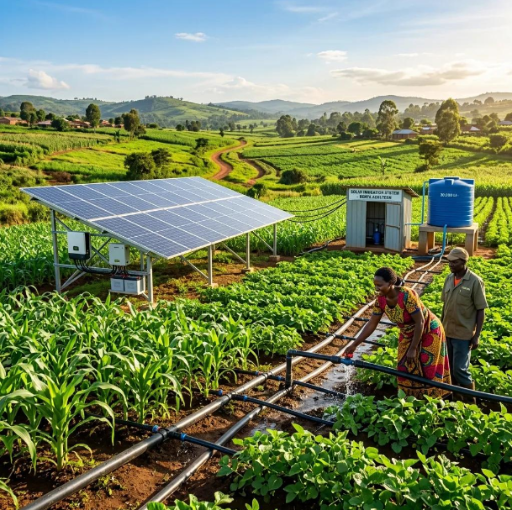
With droughts, floods, and erratic rainfall intensifying each year, Benin is racing against time to safeguard its rural communities. A bold new initiative worth $15.5 million is now putting nine of the country’s most climate-vulnerable municipalities at the center of a nationwide adaptation strategy.
Why nine communities stand at the frontline of Benin’s climate crisis
Sèmè-Kpodji, Sakété, Kétou, Savalou, Dassa-Zoumè, Djougou, Copargo, Ouaké, and Malanville have been selected not by chance, but due to their extreme exposure to climate risks. These municipalities face recurring crop failures, soil degradation, and chronic water shortages—threats that directly threaten the livelihoods of over 31,000 people.
For generations, local farmers have relied on predictable rainfall patterns. Today, that reliability has vanished. Failed harvests in staples like maize and groundnuts have pushed families to the brink, forcing many to seek alternative income sources or migrate in search of stability. This vicious cycle demands more than emergency relief—it requires systemic change.
A climate adaptation plan built on four pillars of resilience
The Integrated Project for Climate Resilience in Vulnerable Border Communities (PIRRCF) is not just another development program. It integrates four strategic axes to build long-term resilience:
- Climate-smart agriculture: Introducing drought-resistant crops, conservation farming, and soil fertility restoration to stabilize yields.
- Water security: Constructing micro-dams, rehabilitating wetlands, and installing drip irrigation systems to reduce dependency on erratic rains.
- Renewable energy integration: Deploying solar-powered water pumps and off-grid energy solutions to power irrigation and processing units.
- Digital innovation: Providing farmers with real-time weather data, market prices, and advisory services via mobile apps and SMS alerts.
These components are designed to function together, creating a resilient ecosystem where agriculture, energy, and information converge to protect livelihoods.
From mud bricks to digital dashboards: how local innovation drives change
A lesser-known but critical dimension of the project is its focus on sustainable building materials. By promoting compressed earth blocks, stabilized soil blocks, and locally sourced bricks, the initiative supports artisans, lowers construction costs, and reduces the carbon footprint of rural infrastructure.
This approach isn’t just about housing—it’s about creating jobs for women and youth in the construction sector, boosting local economies while aligning with environmental goals. Swiss cooperation partners highlight this dual benefit: economic empowerment through green innovation.
Numbers that tell a story of transformation and hope
By 2031, the PIRRCF aims to directly empower 31,687 individuals—over 12,300 of them women—while indirectly benefiting nearly 1.5 million people across the nine municipalities. The targets are ambitious:
- Train 20,000 farmers and livestock keepers in climate adaptation techniques.
- Increase agricultural productivity by 20% through better water control and technology.
- Raise household incomes by 30% in 10,000 families.
- Create 5,000 direct jobs and 15,000 indirect jobs in agriculture, energy, and digital services.
These gains would represent more than economic growth—they would signal a shift from vulnerability to viability for rural Benin.
The real test: turning funding into lasting impact
The project’s $15.5 million budget combines contributions from the Government of Benin, the UNDP, Switzerland, and Belgium. But money alone cannot guarantee success. The true challenge lies in execution: ensuring infrastructure is well-maintained, technologies are accessible, and local leaders are fully engaged.
Municipal authorities will play a key role in monitoring progress, ensuring transparency, and fostering community ownership. Without active participation, even the most advanced systems risk becoming white elephants.
For the farmers in these nine communes, the stakes couldn’t be higher. They need reliable crop cycles, steady water supplies, and fair market access—not just promises. The PIRRCF’s legacy will ultimately be measured not in dollars spent, but in lives improved and communities that no longer live at the mercy of the climate.
As the 2031 deadline approaches, the world will be watching: can Benin’s bold climate fund truly rewrite the future of its rural heartlands?