
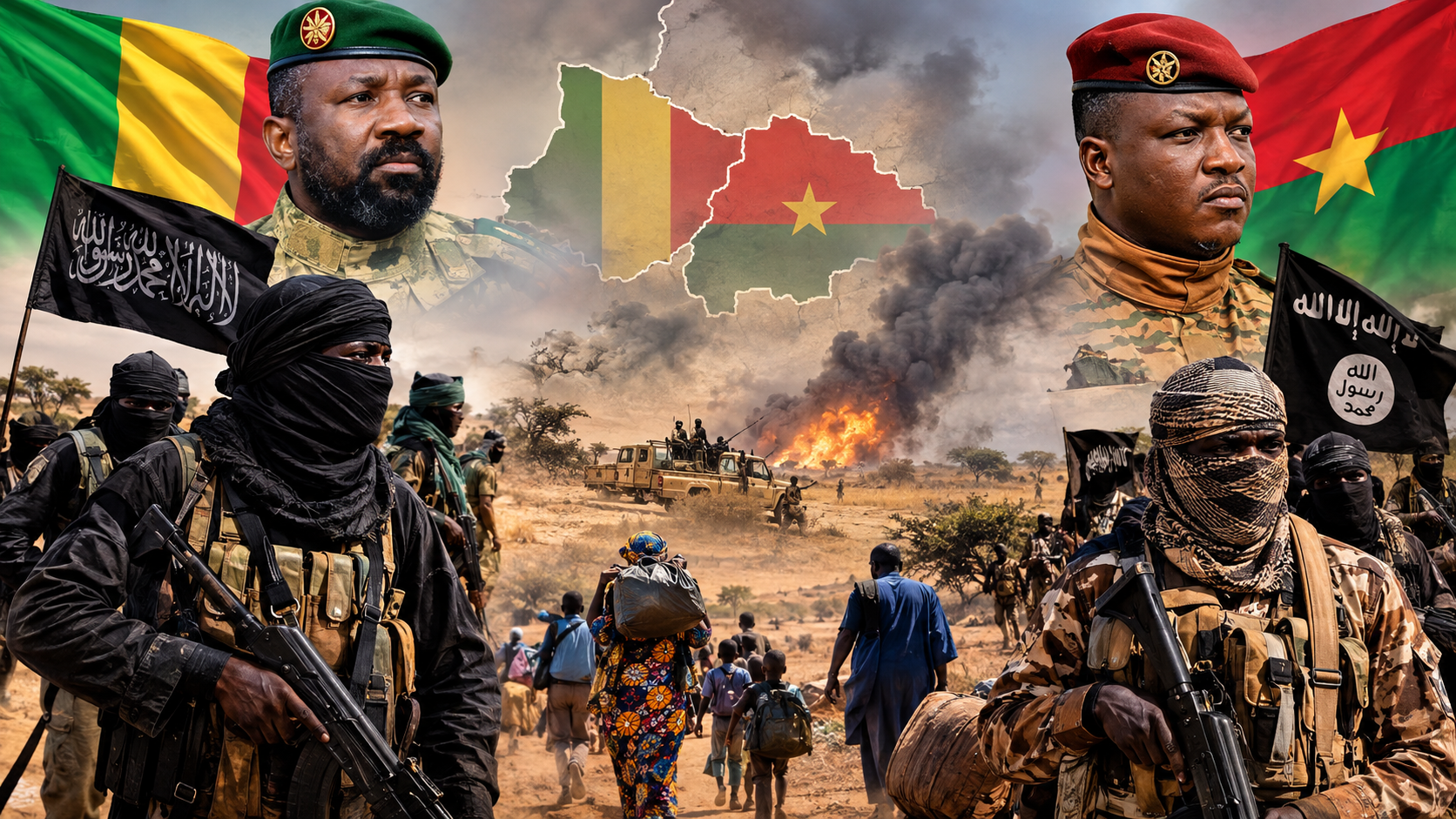
The escalating clashes between the Group for the Support of Islam and Muslims (JNIM) and the Islamic State in the Sahel (EIS) along the Mali-Burkina Faso border are exposing a harsh reality: despite military coups and promises of territorial reclamation, jihadist factions continue to reshape the security landscape of the Sahel.
These rival factions are not merely targeting state forces they are engaged in a brutal struggle for dominance, carving out zones of influence that increasingly evade government control. For civilians caught in the crossfire, the consequences are devastating: forced displacement, economic disruption, and the persistent shadow of violence.
From promises to paralysis: why military juntas struggle to reclaim the Sahel
The military juntas in both Mali and Burkina Faso came to power amid promises to restore security and reclaim lost territories. Yet, years later, the jihadist threat remains entrenched, with frontline regions bearing the brunt of the violence. The persistent inability to curb militant advances raises critical questions about the effectiveness of military strategies and the long-term viability of these regimes.
Key failures in the fight against insurgency include:
Insufficient intelligence and counterterrorism coordination.
Weak administrative presence in remote border areas.
Inability to protect civilian populations from jihadist intimidation and attacks.
Border warfare: a battleground for jihadist expansion
The Mali-Burkina Faso frontier has become a flashpoint where the JNIM and EIS compete for dominance. These clashes are not just about territorial gains they represent a broader struggle for control over trade routes, local governance, and the allegiance of communities. The humanitarian toll is severe, with thousands displaced and basic services collapsing under the weight of perpetual conflict.
Can sovereignty survive without security?
The juntas’ insistence on national sovereignty often clashes with the reality on the ground, where jihadist factions operate with relative impunity. While military operations and declarations of intent dominate the discourse, the absence of durable stability suggests that security cannot be restored by force alone. A multi-faceted approach combining intelligence, governance, and community engagement is essential to break the cycle of violence.
For the people of the Sahel, the stakes could not be higher. Without tangible progress toward peace, the promise of a return to normalcy remains elusive, and the credibility of military rule continues to erode.
By Henri Nkeng — Journalist