
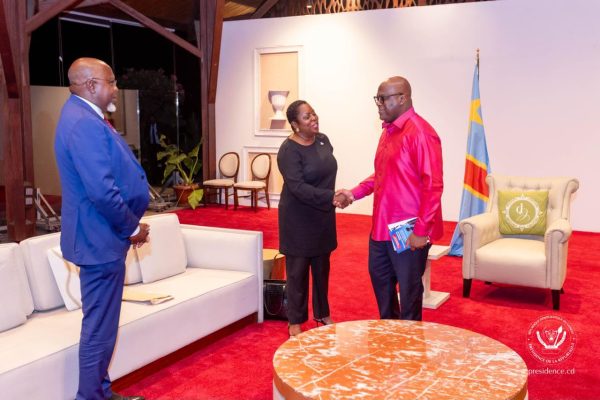
The Congolese diaspora in France is gearing up for a major diplomatic offensive to secure international recognition of the GENOCOST—a term denoting the genocide linked to resource exploitation in the Democratic Republic of Congo (DRC). The initiative, spearheaded by the Collective of French Elected Officials from Congo-Kinshasa (CEFOCK), follows a high-level meeting with President Félix Tshisekedi in Kinshasa.
Starting at the next French parliamentary session, CEFOCK will launch a comprehensive campaign to elevate the GENOCOST narrative in France’s public and political spheres. The strategy includes educational outreach, targeted advocacy, and partnerships with local governments, aimed at embedding the issue in national and international discourse.
Breaking the silence on atrocities
The campaign seeks to shift the GENOCOST from the margins of advocacy to the forefront of public policy debates. By leveraging their influence as elected officials, CEFOCK members aim to expose the mass atrocities committed in the DRC and ensure they are no longer overlooked by media and policymakers.
A strategic alliance to amplify the cause
To strengthen its efforts, CEFOCK has forged a collaborative partnership with the Congolese Inter-Institutional Commission for Victim Support and Reform (CIA-VAR). This government-backed entity is tasked with documenting atrocities, providing reparations, and preserving the memory of victims.
The alliance has two primary objectives: preserving the historical record of victims and securing official recognition of the genocide, which would unlock pathways to justice and reparations. President Tshisekedi has publicly endorsed this initiative, calling it a pivotal step in advancing the DRC’s memory diplomacy on the global stage.
Diaspora as a political force
The timing of this campaign is critical, as Kinshasa ramps up its global advocacy to classify the crimes—committed since 1996—as genocide. The Congolese diaspora in France, now holding seats in local, regional, and national councils, serves as a powerful institutional bridge between the two nations. Their involvement marks a shift from passive testimony to active political engagement.
By targeting French lawmakers and local officials, the campaign aims to catalyze parliamentary recognition of the GENOCOST, drawing parallels with historical precedents in genocide recognition. This grassroots-to-institutional strategy underscores the diaspora’s growing role in shaping international perceptions of the DRC’s struggles.
Back home, the momentum is equally palpable. On August 2, 2026, President Tshisekedi led a national commemoration for the GENOCOST, honoring victims and unveiling plans for a national GENOCOST museum and memorial. These initiatives signal a broader commitment to institutionalizing remembrance and accountability in the DRC.
Together, domestic reforms and international advocacy are converging to pressure the global community into addressing the atrocities linked to resource exploitation. With CEFOCK’s campaign and Kinshasa’s steadfast resolve, the path toward recognition and justice is gaining unprecedented traction.