
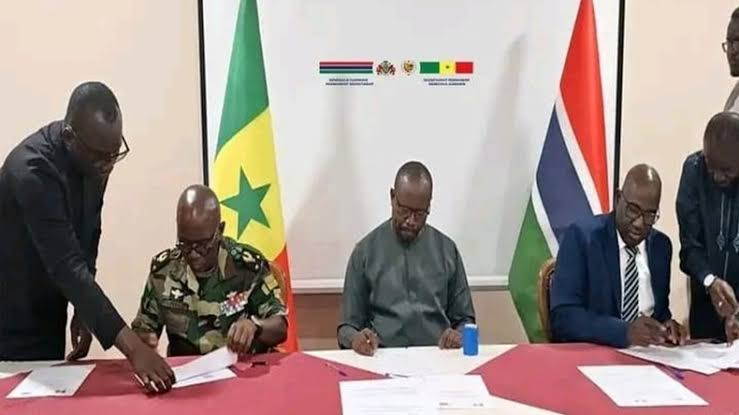
Historic breakthrough in West African border dispute
Senegal and Gambia have reached a definitive resolution in their long-standing border disagreement, signing a permanent agreement to finalise the demarcation of their shared frontier. This landmark accord, confirmed by the joint Senegal-Gambia permanent secretariat, follows weeks of intensified diplomatic efforts after recent hostilities near the border community of Bullock.
Root causes of the territorial dispute
The origins of the conflict trace back to mid-July, when Senegalese military personnel removed segments of a border barrier near the Gambian military outpost in Bullock. Banjul immediately condemned the action as a deliberate provocation violating its territorial integrity, while Dakar maintained the structures encroached upon Senegalese land. The incident underscored the urgent need for precise boundary clarification.
Joint initiatives to reinforce border stability
To prevent future confrontations, both nations agreed to resume coordinated border demarcation and reinforcement activities beginning August 15th. These operations, previously suspended in June due to logistical challenges, involve installing additional boundary markers to clearly define the frontier. The initiative also includes public awareness campaigns targeting communities in border regions, where agricultural practices occasionally spill across the disputed zone, historically triggering disputes.
The two-month initiative aims to conclusively determine whether the Gambian military installation at Bullock lies within Senegalese territory, as claimed by Dakar. Completion is targeted for September, with findings expected to provide legal clarity and prevent recurring incidents.
Diplomatic cooperation strengthens regional ties
Beyond technical border resolution, the agreement demonstrates Senegal and Gambia’s commitment to bilateral dialogue as the primary tool for managing shared challenges. The neighbouring nations share deep historical connections, significant economic interdependence, and vital security cooperation critical to West African stability.