
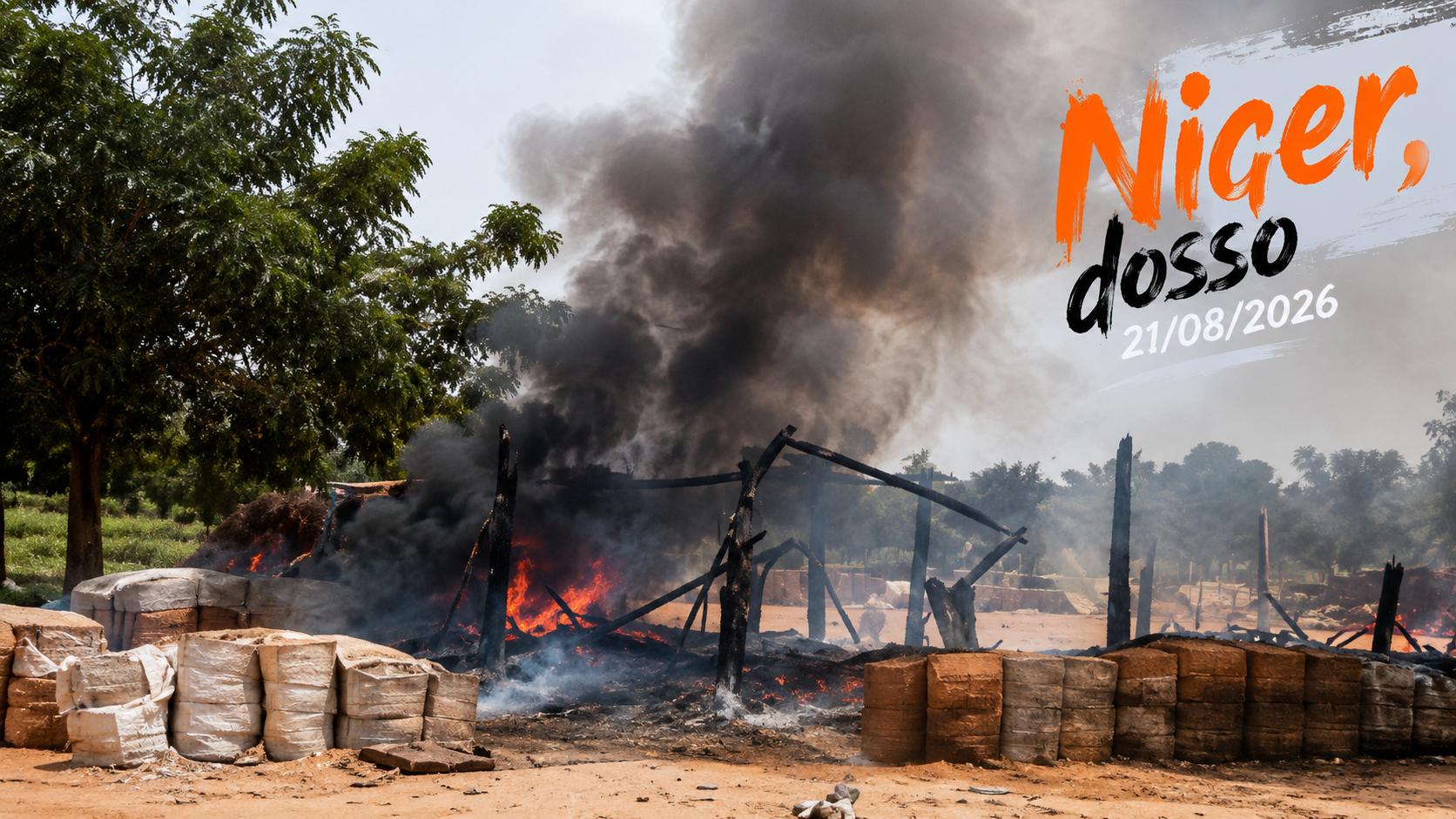
In a brutal assault that shook the rural commune of Tessa, Dosso region, eighteen gendarmes lost their lives during an ambush carried out by heavily armed men on August 21, 2026. The attack, described as one of the most violent in recent years, left behind charred remains of the gendarmerie post and widespread material destruction.
An exceptional act of violence in southern Niger
Tessa, a remote administrative area in the Dosso department of south-western Niger, became the epicenter of a shocking security breach. Local reports indicate that the assailants arrived in force, using around ten motorcycles to infiltrate the area undetected before launching a coordinated strike on the gendarmerie camp.
The intensity of the exchange was severe, with attackers deploying significant firepower. The camp was set ablaze, trapping a number of gendarmes who perished in the flames. While local sources have confirmed the toll of eighteen fatalities, authorities are yet to release an official statement to validate these figures.
Tessa’s shaken communities face economic fallout
The ripple effects of the attack extend far beyond the immediate loss of life. Residents recounted scenes of terror as attackers moved swiftly through the village, leaving behind a trail of destruction. The attack has shattered the fragile sense of security that locals had come to rely on for daily activities such as trade and movement.
In rural areas like Tessa, the presence of security forces is a lifeline. Their weakening or destruction not only compromises protection but also fuels anxiety among the population. The attack has left many questioning whether they can continue living and working in such an unpredictable environment.
Financial lifelines targeted: agences Nita and Amana under siege
Beyond the gendarmerie, the attackers turned their attention to critical economic infrastructure. Two money transfer agencies, Nita and Amana, were raided and looted during the operation. These institutions play a vital role in rural economies, enabling transactions for families, traders, and laborers who rely on remittances.
The pillaging of these agencies could disrupt local commerce for weeks. Operators may halt services temporarily, while residents could struggle to access funds essential for survival. In regions where cash flow is already fragile, such disruptions can push communities further into vulnerability.
Dosso’s fragile stability under scrutiny
While Dosso has not historically been the focal point of Niger’s security crises, its proximity to more volatile regions has made it increasingly vulnerable. This attack suggests that armed groups are expanding their reach into areas previously considered less exposed.
The attackers’ use of motorcycles highlights a persistent challenge for security forces: their ability to strike rapidly in vast rural landscapes before vanishing into the terrain. For authorities, the priority now is to prevent Tessa and similar areas from becoming safe havens or staging grounds for militant activity.
Unanswered questions cloud the aftermath
As the dust settles, critical questions remain unanswered. Who precisely executed the attack? What group do they belong to? How many attackers were involved? Were there any casualties or arrests among the assailants? Most importantly, the official confirmation of the eighteen gendarmes’ deaths is still pending.
Initial reports after such violent incidents are often incomplete. The true scale of the attack may only become clear as investigations progress and bodies are identified. Official clarity will be essential to understanding the full scope of the tragedy.
Balancing security and economic recovery
The attack on Tessa underscores a harsh reality: insecurity doesn’t just claim lives—it dismantles livelihoods. The destruction of the gendarmerie post and the looting of financial institutions have left a community grappling with dual crises: safety and survival.
For locals, the path forward hinges on restoring security and reviving economic activity. For authorities, the challenge is twofold: reinforcing military presence while mitigating the long-term economic scars of the attack. The coming days will determine whether Tessa can reclaim its stability or remain trapped in the shadow of violence.