
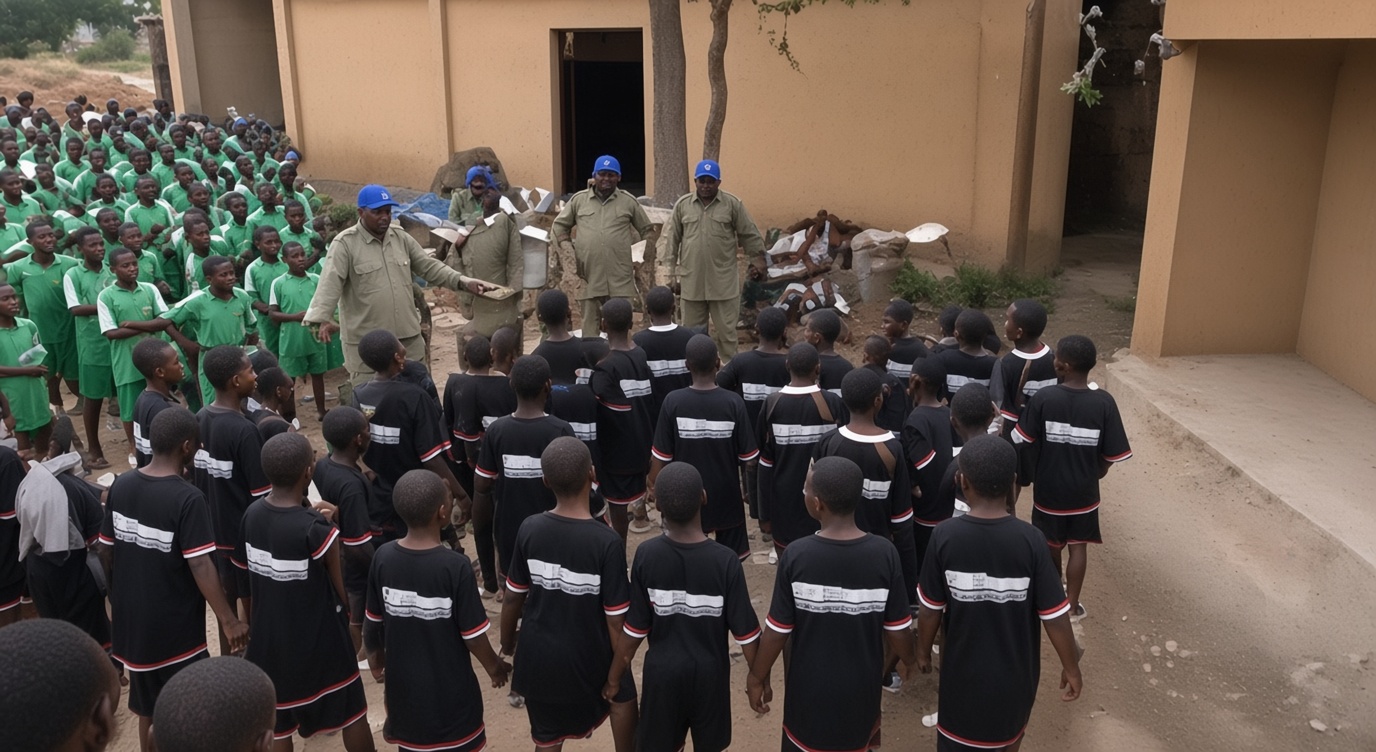
The recent launch of a training camp for over 300 young people in Niger, led by General Abdourahamane Tiani, has sparked debate. While framed as a civic engagement initiative, the program draws inspiration from a model implemented in Burkina Faso and emphasizes national renewal. Beneath the carefully crafted rhetoric of a ‘dedicated youth,’ however, concerns persist regarding the potential militarisation of impressionable minds.
Beyond the rhetoric: the risks of early militarisation
At a developmental stage when education, vocational training, sports, culture, and civic learning should take precedence, introducing young individuals to a militarised environment raises serious ethical questions. The systematic emphasis on discipline, obedience, and constant mobilization risks normalising the notion of armed conflict as an acceptable societal norm. Such an approach may inadvertently foster a mindset where loyalty to a regime supersedes the development of critical thinking a fundamental pillar of true civic responsibility.
Patriotism, in its truest sense, does not equate to blind obedience. It encompasses the capacity to question, engage in constructive debate, and prioritise the public good over partisan interests. When the state frames youth participation in such camps as a civic duty, it risks blurring the line between civic education and indoctrination, particularly when the narrative revolves around sacrifice, perpetual readiness, and the defence of the homeland.
Questioning priorities: the cost of ideological mobilization
The justification for investing heavily in ideological mobilization instead of addressing pressing socio-economic challenges such as inadequate educational infrastructure, youth unemployment, and the absence of viable economic opportunities remains dubious. While slogans of ‘mandatory civic duty’ may project an image of discipline and enthusiasm, they risk serving as a political smokescreen, diverting attention from systemic failures and the urgent needs of the population.
Moreover, the long-term implications of this approach are cause for concern. A generation raised within a culture of perpetual mobilization may come to view militarisation as an intrinsic aspect of societal structure. What is presented today as an exceptional initiative could evolve into an institutionalised model for political and paramilitary training, embedding militaristic values into the fabric of society.
The Sahel dilemma: balancing security with youth development
While the security situation in the Sahel remains precarious, the response to these challenges cannot involve the gradual transformation of an entire generation into potential combatants. The comparison with neighbouring Burkina Faso, where similar initiatives have been implemented, underscores the need for caution. States must avoid entering into a counterproductive competition to militarise their youth under the guise of national defence.
The young people of Niger deserve more than to be reduced to tools in a political narrative. They deserve access to quality education, skill-building opportunities, gainful employment, intellectual freedom, and a participatory role in public life without the imposition of a political or military doctrine. The enthusiasm of youth should not be exploited to mask governance shortcomings.
A truly resilient nation is not one that accelerates the militarisation of its children but one that equips them with knowledge, freedoms, and opportunities to shape their own future. The essence of patriotism lies in preparing citizens who can innovate, reflect, and defend their country by choice not in manufacturing minds conditioned from an early age to embrace a militarised worldview.
Niger must ensure that the fight against insecurity does not become the justification for the enduring militarisation of childhood and adolescence.