
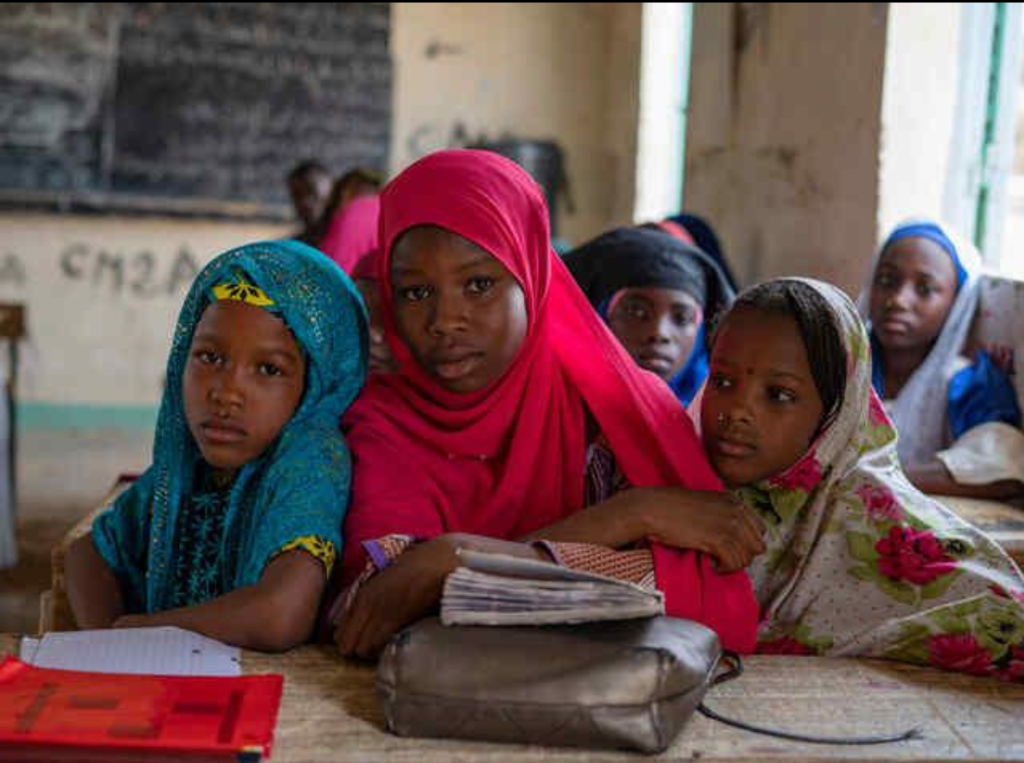
In Diffa, a pivotal question looms large: after years of security-driven school closures that disproportionately affected certain communities, is Niger finally striking the right balance between protecting its citizens and upholding the fundamental right to education for every child?
Why Diffa’s school reopening matters for Niger’s future
The decision to reopen all schools in Diffa to every community—without exception—represents more than a logistical shift. It marks a critical moment in a debate that pits security imperatives against the state’s obligation to safeguard the rights of its most vulnerable populations. For families in Diffa and Zinder, where administrative measures in late 2026 had targeted the Mohamid community, this reversal is not just a return to normalcy; it’s a test of Niger’s commitment to equality under the law.
But the stakes extend far beyond Diffa’s borders. With Boko Haram’s shadow looming over the Lake Chad basin, the government’s struggle to secure public spaces has often collided with the rights of civilians—particularly children. Can Niger’s leaders reconcile these competing demands without resorting to collective punishment under the guise of security?
From exclusion to inclusion: the Mohamid controversy
The controversy began with reports that certain schools and public infrastructure—including water boreholes—were closed or repurposed in communities perceived as high-risk. Authorities cited concerns that essential resources were being monopolized by specific groups, though no individual wrongdoing was established. For the Mohamid community, these measures translated into immediate disruptions: classrooms shuttered, teachers reassigned, and families left scrambling to secure education for their children.
Critics argue that such blanket restrictions violate the right to education, a cornerstone of international law to which Niger is a signatory. The United Nations Convention on the Rights of the Child explicitly prohibits discrimination in access to schooling, leaving little room for interpretation. Yet, in Diffa, the line between targeted security measures and collective penalization has blurred, raising urgent questions about proportionality and justice.
What the law says about security vs. rights
Niger’s constitution guarantees equal access to education for all citizens, but emergencies—real or perceived—often complicate implementation. Security forces frequently point to the need to protect students and teachers from insurgent threats, a rationale that has led to temporary school closures in other conflict zones. However, Diffa’s case reveals a darker pattern: restrictions that appear indiscriminately punitive, with entire communities bearing the brunt of administrative decisions.
The challenge for Niger’s government is clear: how can it address legitimate security concerns without trampling on the rights of innocent civilians? The answer lies in precision—targeted interventions that neutralize threats without penalizing children for the actions of a few. Anything less risks deepening mistrust between the state and the communities it is sworn to protect.
The ripple effects of school closures on Diffa’s children
For a generation already scarred by displacement and violence, the closure of schools wasn’t just an administrative inconvenience—it was a crisis. When classrooms close, children don’t just lose access to education; they lose stability, structure, and hope. In Diffa, where families have fled repeated attacks and live under constant threat, schooling represents more than academics. It’s a lifeline to normalcy.
Consider the long-term consequences:
- Delayed learning: Years of disrupted education for children in affected communities could widen the achievement gap for decades.
- Economic strain: Parents forced to relocate or withdraw children from school may face financial hardship, pushing families further into poverty.
- Social fragmentation: When schools exclude certain groups, they fracture the social fabric, making cohesion harder to rebuild.
The reopening of schools to all communities is a step toward reversing this tide. But will it be enough to restore the trust of parents who’ve seen their children’s futures held hostage to political and security calculations?
What’s next for Niger’s education crisis?
Rebuilding Diffa’s education system won’t happen overnight. Even with schools reopened, critical challenges remain:
- Teacher shortages: Many educators have been reassigned or fled the region, leaving classrooms understaffed.
- Infrastructure gaps: Damaged or repurposed schools need repairs and supplies to welcome students back.
- Community trust: Families must be convinced that the reopening isn’t temporary—and that their children won’t face renewed exclusion.
The government’s next moves will determine whether this moment is a turning point or just another false start. Will it:
- Invest in community-based security solutions that reduce the need for blanket closures?
- Clarify the legal basis for future restrictions to prevent arbitrary exclusions?
- Expand alternative education programs for children in high-risk zones?
The answers will shape not just Diffa’s future, but Niger’s ability to uphold its duties as a signatory to global human rights treaties. For the children of Mohamid and beyond, the clock is ticking.
The bigger picture: can school inclusion mend Niger’s divides?
Diffa’s struggle is a microcosm of a larger national challenge: balancing security with inclusivity in a country grappling with insurgency and poverty. Schools are more than buildings—they’re institutions of nation-building. When they exclude, they don’t just fail to educate; they fuel resentment and erode the social contract between citizens and the state.
Niger’s leaders face a choice: double down on exclusionary tactics in the name of security, or embrace an inclusive vision where every child—regardless of background—has a seat in the classroom. The latter path won’t be easy, but it’s the only one that aligns with the country’s constitutional promises and international obligations.
For Diffa’s parents, the message is simple: their children’s right to learn must not be a casualty of conflict. For Niger’s government, the question is equally clear: in the fight against insecurity, will it prioritize justice over fear?