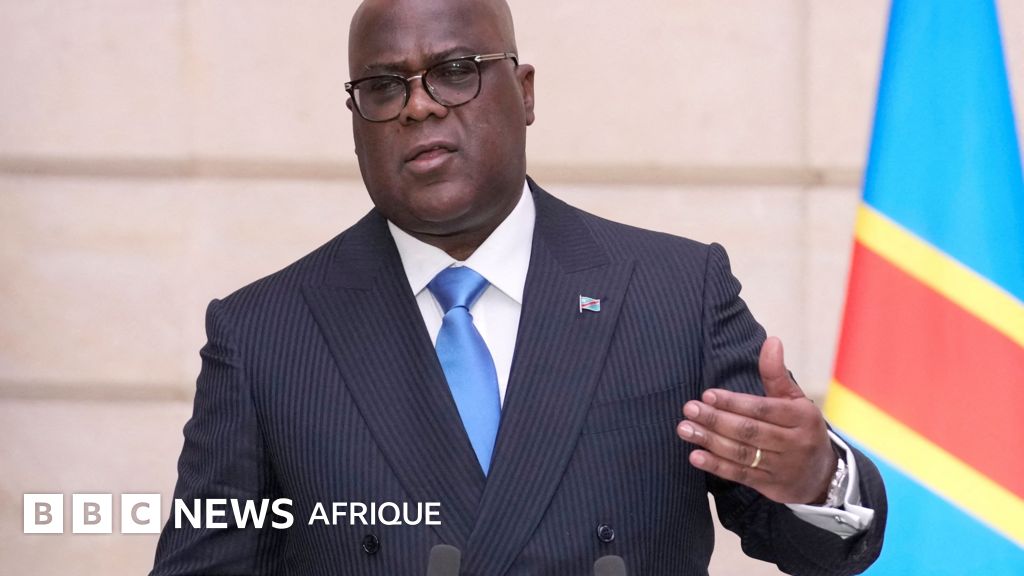
President Félix Tshisekedi of the Democratic Republic of Congo (DRC) unveiled a significant initiative on Thursday, August 27, addressing the nation. He announced the commencement of a “National Dialogue for Peace, Cohesion, and State Refoundation,” positioning it as a direct response to the persistent security, political, and social crises that have plagued the nation for years.
In his much-anticipated address, President Tshisekedi outlined the framework for a process he intends to be distinct from any previous political dialogues held in the country.
“This National Dialogue will first distinguish itself by its territorial roots: it will not begin in Kinshasa, but at the heart of our 26 provinces, our territories, and our communities,” Félix Tshisekedi declared, emphasizing a bottom-up approach to national reconciliation.
The Congolese president affirmed his commitment to fostering a dialogue “designed by Congolese and for Congolese,” with the primary goal of identifying the deep-seated causes of the recurring instability that has weakened the nation.
While some civil society stakeholders applauded the announcement, several prominent opposition figures swiftly voiced their reservations, deeming the proposed format either insufficient or ill-suited to the current national context.
A dialogue rooted in the provinces
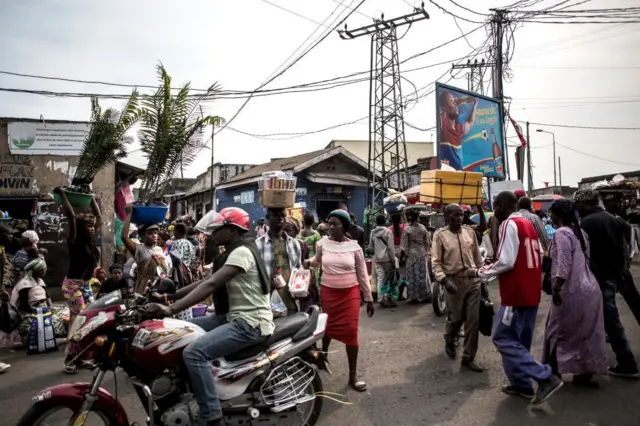
As explained by the president, the process will commence with a series of consultations across all 26 provinces of the country, culminating in national assemblies held in Kinshasa.
These provincial forums will gather national and provincial elected officials, representatives from both majority and opposition parties, civil society figures, traditional chiefs, religious denominations, as well as economic, academic, and scientific actors.
The aim is to empower each province to conduct its own comprehensive diagnosis of local challenges and opportunities.
“Each province will honestly establish its own diagnosis: the causes of insecurity, land and customary conflicts, community tensions, administrative deficiencies, inequalities, obstacles to development, and necessary reforms,” the DRC Head of State elaborated.
The findings and recommendations from these local consultations will then serve as foundational input for the national assemblies scheduled in Kinshasa.
Two ordinances to organize the process
Félix Tshisekedi further announced the upcoming signing of two presidential ordinances to formalize the dialogue process.
The first ordinance will establish an organizing committee, tasked with managing the administrative, logistical, and material preparations for the dialogue, ensuring all necessary conditions for its successful execution are met.
The second ordinance will officially convene the dialogue, detailing the modalities for participant representation, the various stages of the process, and the mechanisms designated for monitoring the implementation of the resulting recommendations.
The president indicated that the entire process is expected to span a maximum duration of three months.
Upon the conclusion of the national assemblies, a “national pact” is anticipated to be adopted, accompanied by a permanent mechanism to monitor the commitments made.
Tshisekedi sets his red lines
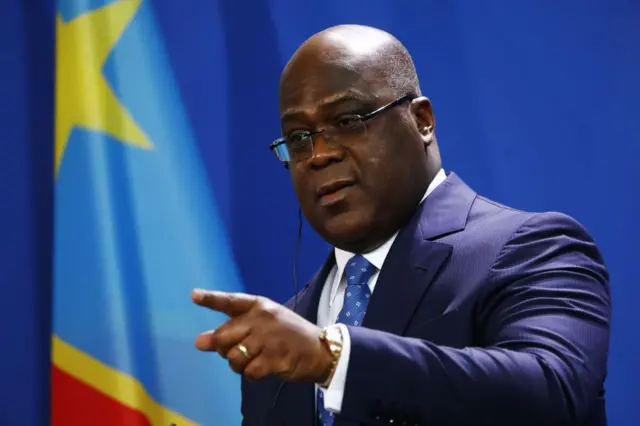
The Congolese president also established several non-negotiable boundaries for the dialogue.
He specifically underscored that the dialogue should not be misconstrued as a platform for power-sharing.
“We have too often responded to crises by sharing power rather than by consolidating the State,” he stated, signaling a shift in approach.
Félix Tshisekedi also explicitly ruled out any challenge to the institutions established by the 2023 elections, emphasizing the unwavering commitment to maintaining constitutional order.
Another critical red line concerns the participation of armed groups.
“No one will be excluded because of their opinions, their criticisms, their political affiliation, their provincial origin, their language, their ethnicity, or their religion. But no one can claim to sit at the nation’s table while taking up arms against it,” the president asserted.
This provision effectively excludes armed movements active in the eastern part of the country, even as ongoing negotiations between Kinshasa and the AFC/M23 continue in Doha.
However, the president reassured that the national dialogue would not supersede diplomatic initiatives already underway at regional and international levels.
Claudel Lubaya speaks of a “missed opportunity”
In a message disseminated on the social media platform X, opposition figure Claudel Lubaya expressed sharp criticism of the presidential address.
“Neither vision, nor awareness of the gravity of the moment, nor answers commensurate with the crisis,” he wrote, highlighting his disappointment.
The former deputy contended that the Head of State failed to provide the anticipated solutions to the profound challenges confronting the country.
In another reaction, he characterized the presidential announcement as a “missed opportunity with history,” asserting that the proposed dialogue falls short of the expectations of many Congolese citizens.
For Claudel Lubaya, the core issue extends beyond the mere participation of certain actors in the process.
“The point of disagreement is the substance. It is not the form,” he declared in interviews with Congolese media.
The opposition leader went further, suggesting that the dialogue risked primarily serving the interests of the ruling coalition rather than fostering a genuine space for national consultation.
Christian Mwando doubts inclusivity
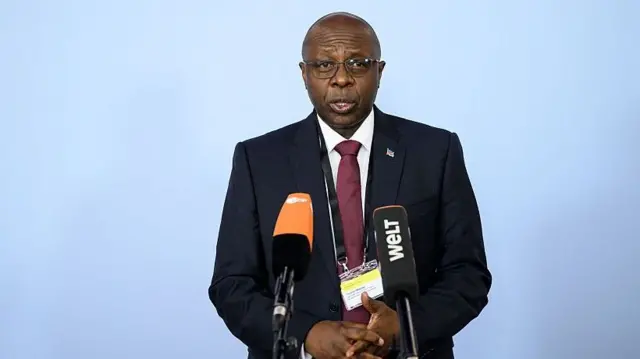
Christian Mwando Nsimba, a deputy and opposition figure within the Ensemble pour la République party, also voiced his concerns.
In his view, the format presented by President Tshisekedi appears inadequate to resolve the current crisis.
“What President Tshisekedi is proposing is a vast fair that will not bring an end to the conflict,” he asserted, dismissing the initiative’s potential impact.
Christian Mwando particularly questioned the absence of the term “inclusive” in the Head of State’s speech, a concept that had been consistently highlighted in prior discussions regarding a national dialogue.
The opposition leader also raised questions about the compatibility of this new consultation framework with the ongoing Doha process, which is specifically dedicated to discussions with the AFC/M23.
Jean-Claude Katende supports certain orientations
Conversely, Jean-Claude Katende, president of the African Association for the Defense of Human Rights (ASADHO), expressed a favorable reception to several aspects of the presidential address.
In a message posted on X, the lawyer and human rights defender specifically commended the rejection of power-sharing.
“I subscribe to President Félix Tshisekedi’s discourse on dialogue insofar as he has clearly excluded any power-sharing,” he wrote, indicating his agreement with this particular stance.
