
“Le chaos sécuritaire favorise un projet géopolitique”
While the government of the Democratic Republic of Congo (DRC) recently confirmed the signing of a protocol with the Democratic Forces for the Liberation of Rwanda (FDLR) for the disarmament, demobilization, and cantonment of these Rwandan rebels in eastern DRC, Rwanda has dismissed the initiative as a “dilatory maneuver.” For decades, the DRC and Rwanda have been at odds over the FDLR, some of whom are implicated in the 1994 Rwandan genocide. Kigali consistently views the FDLR as a significant threat, an argument it uses to justify the deployment of its army in eastern DRC, operating alongside the M23 rebels of the Alliance of Congolese Patriots (AFC-M23).
Last year’s Washington accords saw Rwanda commit to withdrawing its troops, while Kinshasa pledged to neutralize the FDLR. The stark contrast between these two neighboring nations today prompts questions about the underlying dynamics.
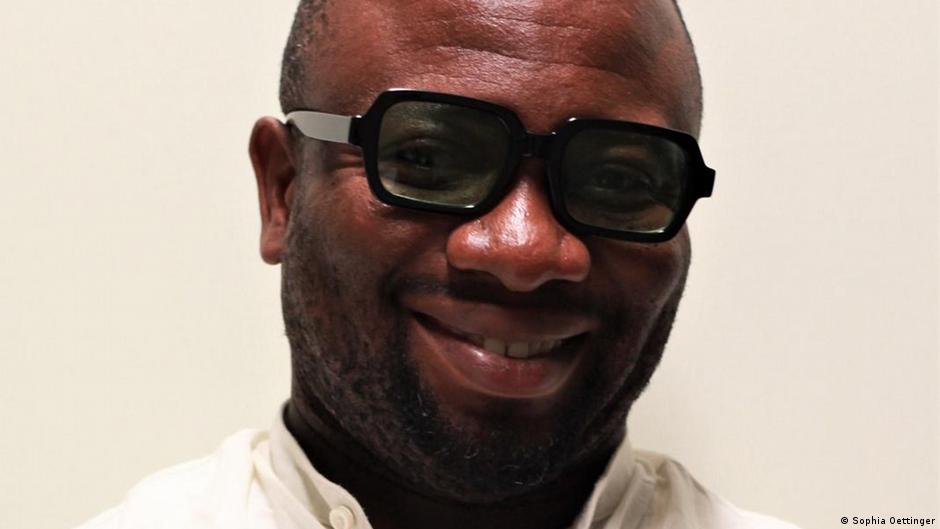
Insights from researcher Josaphat Musamba, a doctoral candidate at Ghent University in Belgium:
Josaphat Musamba: Kigali has consistently rejected engagement and persuasion efforts. I believe Kigali is acting in bad faith. What are its ultimate goals? Despite its active involvement in operational theaters, I think the current security chaos in eastern Congo benefits Kigali, which seeks to solidify this status quo. Kigali’s geostrategic ambitions in eastern Congo remain opaque.
What is the true reality of the FDLR presence in eastern DRC, and what lies behind their continued presence on Congolese territory?
Josaphat Musamba: I believe the assertion by Kigali and the AFC-M23 that the FDLR are an integral part of the FARDC (Congolese armed forces) is factually incorrect. It is surprising that these allies, the AFC-M23 and the RDF (Rwanda’s official army), appear incapable of fully neutralizing the FDLR within their own operational zones. To me, the security chaos they have orchestrated in eastern Congo serves a much broader geopolitical agenda for Kigali. By contributing to the fragmentation of Congolese administrative structures in the East, Kigali is effectively entrenching its influence in this vital region of the country.
Kigali argues that the protocol between Kinshasa and the FDLR fails to meet the Washington accord’s requirements and does not guarantee the dismantling or neutralization of the FDLR. Do you believe the FDLR will ever disappear, paving the way for peace between Rwanda and the DRC?
Josaphat Musamba: I maintain that Rwanda’s argument lacks factual basis. The DRC has prioritized persuasion over military confrontation with the FDLR, adapting its approach to the specific context. In my view, this contextual strategy is sound. While containing the RDF and M23, the DRC cannot afford to open a second or third front with the FDLR. If dialogue can persuade this group, then indeed, the FDLR could cease to exist as an armed entity. However, as an ideology of resistance against the Kigali regime—not as a genocidal force, as Rwanda and M23 claim—it may persist.