
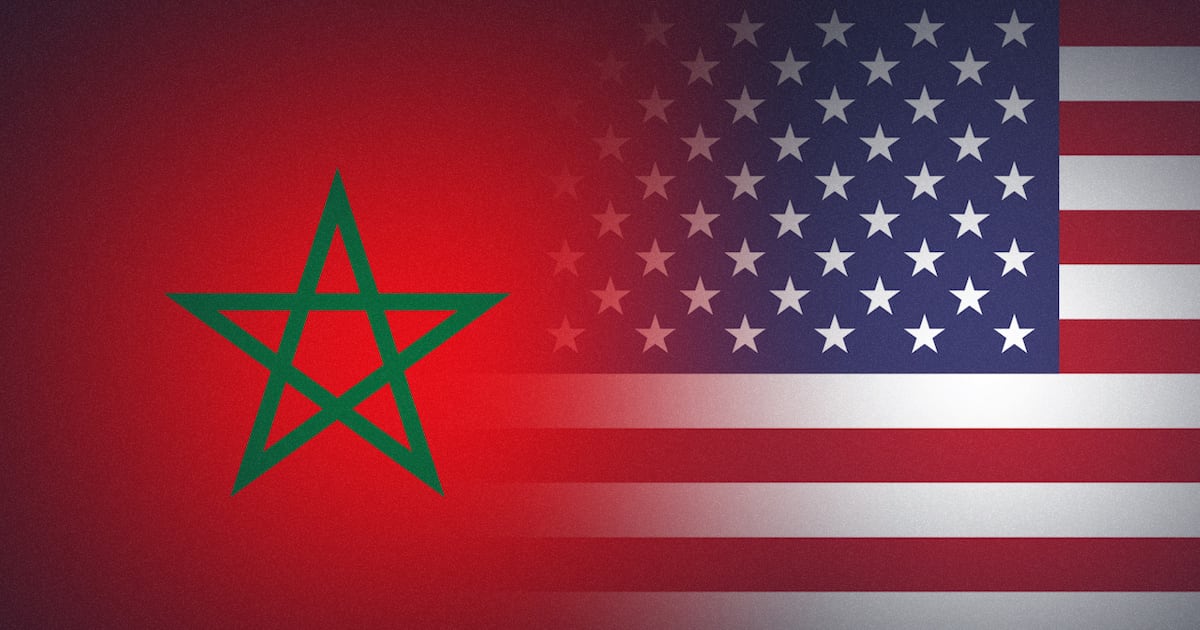
The deep strategic ties between the United States of America and the Kingdom of Morocco, forged in the nascent stages of American independence, are historically significant. Officially rooted in the 1786 Treaty of Friendship, this foundational agreement has steadily strengthened over two and a half centuries. Today, this robust framework of cooperation is notably exemplified by unwavering political backing for Morocco’s sovereignty over the Sahara.
Reflecting this profound historical connection, King Mohammed VI recently conveyed a message of congratulations to President Donald Trump, marking the 250th anniversary of American independence. In his correspondence, His Majesty characterized the bilateral relations as «rich and fruitful,» underscoring Morocco’s historic role as the inaugural nation to acknowledge the sovereignty of the newly formed United States. The King also expressed profound and solemn appreciation for President Trump’s pivotal decision to recognize Moroccan sovereignty over the Sahara, an act he described as «etched into the memory of Moroccans.» Furthermore, he emphasized that these bonds, nurtured by deep friendship and reciprocal fidelity, achieved unparalleled strength and productivity specifically during President Trump’s two terms.
Addressing security and military collaboration, the Sovereign lauded the partnership between Rabat and Washington as an «exemplary model,» highlighting significant joint initiatives such as the renowned «African Lion» exercise. He also noted with satisfaction the unprecedented levels of trade achieved between both nations. This remarkable depth and longevity of relations are no mere coincidence. The Kingdom of Morocco, notably, was the first to extend recognition to the United States following its independence, after the six-year conflict with Great Britain. Morocco further demonstrated its steadfast support during the American Civil War, unequivocally opposing any attempts at secession. Moroccan authorities at the time readily acceded to American requests to pursue separatists who had landed in Tangier, while simultaneously prohibiting them from anchoring in any of the Kingdom’s ports.
Such unwavering commitment, extended to a distant power across centuries, undeniably represents an exceptional diplomatic legacy, a significant political asset, and an unparalleled blueprint for bilateral cooperation. It becomes imperative, therefore, to actively promote, revitalize, and globally disseminate this heritage, even leveraging it to advance the nation’s righteous causes. This enduring legacy should also be understood as a lasting obligation incurred by Americans towards the Kingdom. It is a debt that successive generations are bound to uphold, one that should preclude any stance or decision capable of undermining the Kingdom’s interests, infringing upon its sovereignty, or weakening its territorial integrity.