
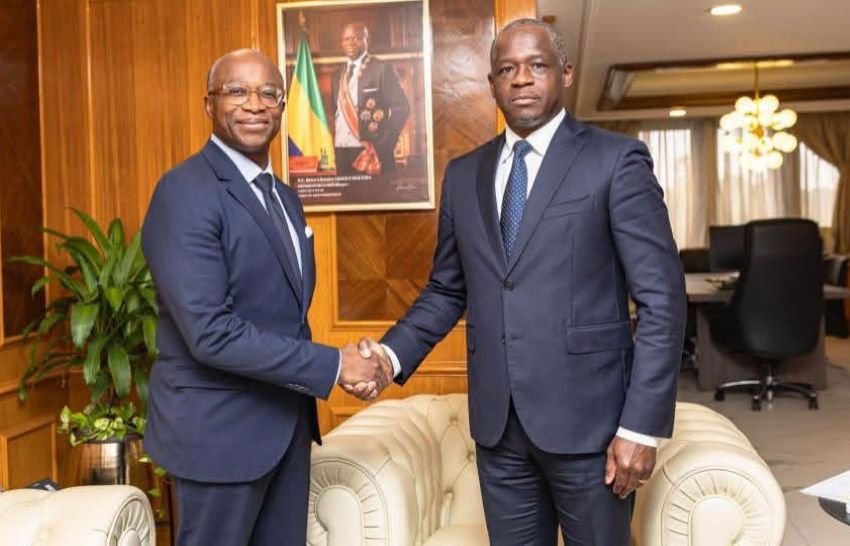
Gabon and Monaco unite in green partnership drive
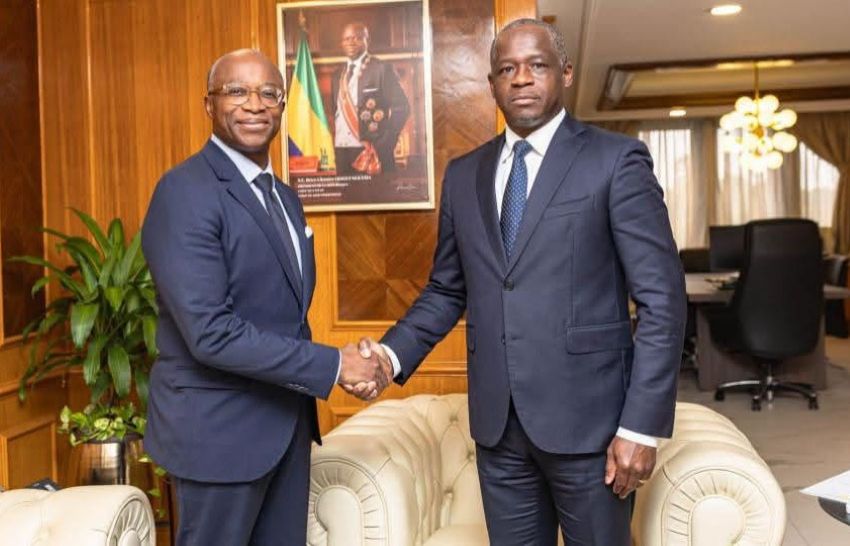
Libreville, August 9, 2026 — Gabon is redefining its natural capital as a cornerstone for diplomacy, climate action, and economic growth. The strategic meeting held on August 5, 2026, between Gabonese Vice-President Hermann Immongault and a delegation from the Prince Albert II of Monaco Foundation marks a pivotal shift in the country’s environmental strategy.
The discussions, though centered on ecological concerns, underscore a broader ambition: building international partnerships that can fund, safeguard, and sustainably leverage Gabon’s vast forests, biodiversity, and marine ecosystems.
Led by Charles Oula Siehe, Africa Special Advisor to the Prince Albert II of Monaco Foundation, the delegation engaged in talks with Immongault and Aimé Martial Massamba, Gabon’s Minister of Fisheries, Maritime Affairs, and Blue Economy. The agenda focused on expanding the Foundation’s footprint in Gabon and deepening cooperation across key areas.
Gabon’s selection as a priority partner is deliberate. With one of the world’s largest forest covers, thriving marine ecosystems, and exceptional biodiversity, the country holds a natural heritage of global significance. Against the backdrop of accelerating climate change and the global search for nature-based solutions, Gabon’s assets position it as a pivotal player—both in terms of environmental stewardship and strategic asset value.
Central African rainforest at the heart of global climate action
The Monaco Foundation’s renewed interest comes weeks before its 20th anniversary in September. The organization is prioritizing action in the Congo Basin, a critical biodiversity and carbon reservoir on the planet.
For Gabon, the challenge is aligning this international momentum with national priorities. Future cooperation could span critical domains: forest conservation, biodiversity protection, carbon financing mechanisms, and blue economy development.
The latter deserves special attention. The preservation of oceans and marine resources can no longer be separated from economic policy. For a nation with significant maritime assets, a blue economy strategy can unlock value creation—provided it balances sustainable exploitation, ecosystem conservation, and equitable benefits for communities.
The same principle applies to forests. The goal is no longer merely conservation but creating conditions for Gabon to maximize the global value of its environmental services. Carbon financing mechanisms could serve as a revenue stream, but only if paired with transparent, credible systems that ensure fair compensation for conservation efforts.
From natural wealth to diplomatic leverage
The meeting in Libreville signals a transformative phase in Gabon’s environmental diplomacy. The country is shifting from viewing nature protection as a mere ecological obligation to embracing it as a driver of development, international cooperation, and global influence.
Yet this evolution demands more than rhetoric. The true test lies in turning intentions into funded projects, skill transfers, job creation, scientific data, and sustainable ecosystem protection. The challenge ahead is converting Libreville’s commitments into measurable, scalable outcomes.
For both Gabon and Monaco, this partnership offers strategic alignment. Monaco brings expertise, networks, and global advocacy for environmental causes, while Gabon provides a critical operational ground in the Congo Basin—an ecosystem whose preservation directly impacts global climate stability.
The August 5 gathering was more than a diplomatic engagement; it reflected Gabon’s central challenge: intelligently harnessing its natural capital. In a world where forests, oceans, and biodiversity are increasingly treated as strategic assets, Libreville must negotiate partnerships with the same rigor as trade agreements.
The stakes extend beyond securing international support for conservation. They involve recognizing the inherent value of what Gabon already protects and leveraging it to reinforce national sovereignty and sustainable growth.
If this cooperation succeeds in merging conservation, financing, expertise, and domestic benefits, it could set a new standard for Gabonese diplomacy—one built on a simple yet powerful premise: transforming natural heritage into a catalyst for climate leadership and inclusive development.