
Can Guinea-Bissau’s December vote proceed without its most prominent challenger?
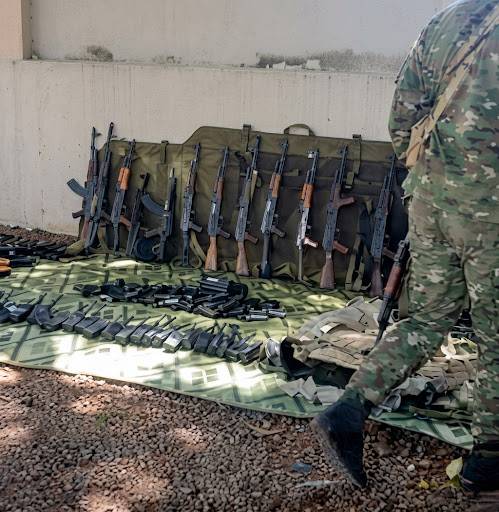
The military-led junta in Guinea-Bissau has launched a sweeping disarmament operation in Bissau, seizing weapons from containers and private residences in the capital. The crackdown targets stockpiles allegedly linked to armed factions tied to former President Umaro Sissoco Embaló, who remains in exile in Morocco after a 2025 coup.
With the presidential election just two months away, the junta claims security concerns prevent Embaló’s return. Yet the former leader insists he will contest the vote and demands his candidacy be evaluated impartially. The standoff raises a critical question: can Guinea-Bissau hold a fair election while barring its most polarizing figure from participating?
Weapons seizures or political maneuvering ahead of a decisive vote?
Security forces have intensified searches across Bissau, targeting hidden caches of firearms and ammunition. Authorities justify the operation as a necessary step to dismantle armed groups outside state control—a persistent challenge in a nation where the military has long dominated political crises.
However, the timing of the disarmament campaign coincides with a heated electoral race. Critics warn the seizures could be exploited to weaken Embaló’s support base, though the junta denies any political motives. The credibility of these operations will hinge on transparent procedures, with observers questioning whether weapons seizures are purely security-driven or part of a broader power struggle.
Embaló’s return blocked: a strategic move or a democratic setback?
The former president had scheduled his return for October 4, only to be barred by the junta. Military leaders cite unmet security conditions, but Embaló frames the ban as an attempt to suppress his political ambitions. His exclusion from Bissau already limits his ability to campaign, raising concerns about the election’s fairness.
Constitutional shifts complicate the transition
The junta recently pushed through a new constitution in August, despite fierce opposition from civil society and political factions. The revised charter centralizes presidential power, further blurring the line between military authority and civilian rule. As the December vote approaches, the junta faces mounting pressure to prove its commitment to a democratic transition—not just security control.
What’s at stake for Guinea-Bissau’s future?
The election will determine whether the country can break its cycle of coups and democratic reversals. Embaló’s potential return and the junta’s grip on power represent two competing visions for Guinea-Bissau’s path forward. With arms seizures intensifying and political tensions rising, the next two months will reveal whether the transition can survive—or if military rule will endure.
Bissau remains a city under surveillance, where every container searched and every weapon seized carries implications far beyond security. The stakes? The very soul of Guinea-Bissau’s democracy.