
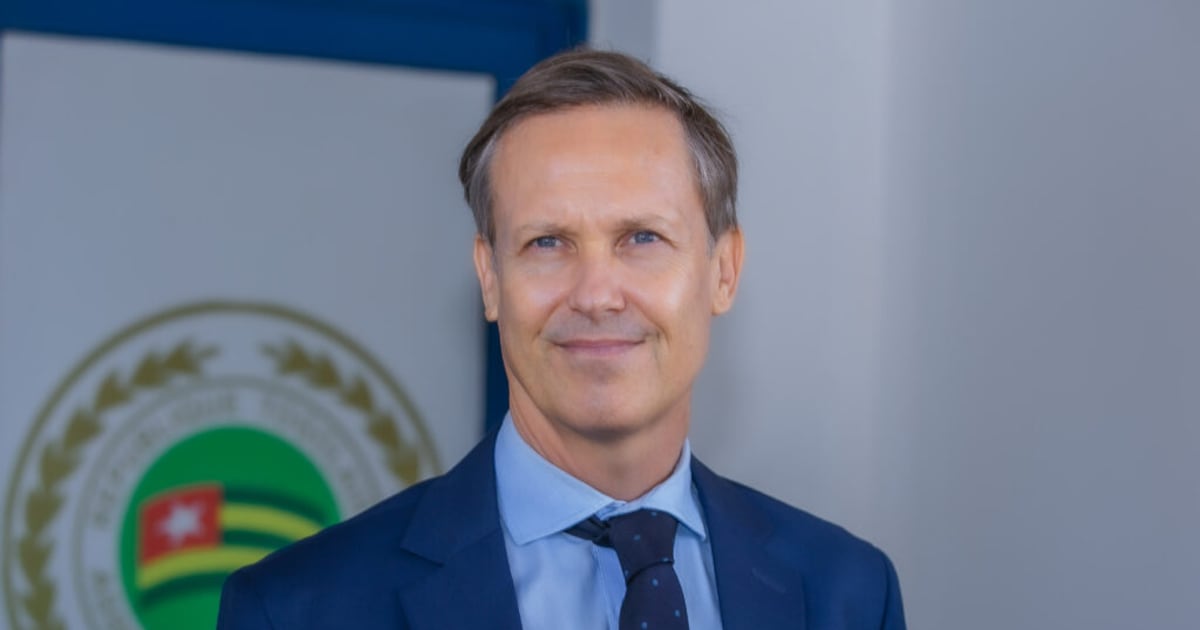
In a period of heightened global tensions, the European Union (EU) has reaffirmed its commitment to deepening its partnership with Togo. This announcement was made in Lomé by Gwilym Ceri Jones, Head of the EU Delegation to Togo, during the Europe Day celebrations on May 9. The event highlighted both European achievements and the pressing geopolitical and security challenges facing the world today.
The EU’s focus on cooperation with Togo comes as international conflicts intensify and economic instability rises. Jones emphasized the bloc’s dedication to being a reliable partner for African nations, particularly Togo, by upholding international law and fostering mutually beneficial collaboration.
«In these uncertain times, the EU remains a strong and dependable partner,» Jones stated. «Our cooperation with Togo is built on respect for international law and shared goals for sustainable development.»
Under this partnership, the EU has played a key role in advancing Togo’s infrastructure and social programs. Over 1.3 million Togolese now benefit from EU-funded electrification initiatives, while more than 2.5 million people have access to improved waste collection and treatment systems. Additionally, the rehabilitation of the RN2 highway—connecting Lomé to Aného and the Benin border—is underway, further strengthening regional connectivity.
The EU has also pledged to support a 18% increase in Togo’s electricity production, prioritizing renewable energy sources. This move aligns with the bloc’s climate goals while addressing Togo’s growing energy needs.
Beyond development aid, Togo’s strategic role in regional stability has not gone unnoticed. The country has welcomed 60,000 refugees in its northern regions and serves as a mediator in the Sahel and Great Lakes conflicts. Its security forces have also been commended for their efforts in countering terrorism, reinforcing Togo’s position as a stabilizing force in West Africa.
As instability spreads across the Sahel, the EU’s alliance with Togo takes on added significance. While neighboring countries challenge Western influence, Brussels is reinforcing its partnership with Lomé, which acts as both a shield against regional turmoil and a diplomatic bridge. The timing of this cooperation is deliberate: Togo’s stability is critical to preventing the crisis from engulfing the Gulf of Guinea.
This relationship extends beyond aid and development. The EU’s investment in Togo’s energy sector, infrastructure, and security reflects a broader strategy to secure its interests in West Africa. By supporting Togo’s growth, the EU ensures not only regional stability but also access to key economic corridors.