
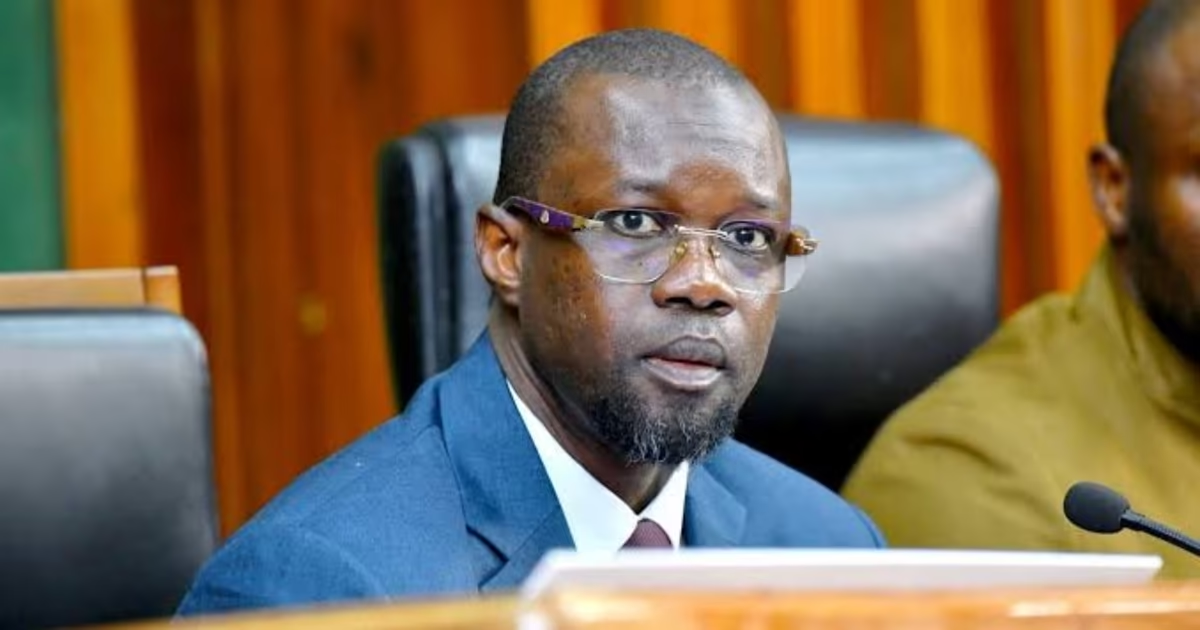
Senegal’s National Assembly is gearing up for a pivotal legislative session, with a sharp focus on institutional reforms, accountability, and public transparency. At the heart of this agenda lies Ousmane Sonko’s determination to push through key legislative initiatives that reflect the priorities of his governing majority.
Landmark transparency reforms take center stage
A cornerstone of the upcoming legislative push is a proposed amendment to Article 37 of the Constitution. This reform aims to mandate that the President of the Republic submit a mandatory asset declaration at the end of their term, a move already receiving strong backing from the Minister of Justice. The proposal seeks to extend this requirement to all senior public officials, reinforcing the framework for financial accountability and public trust.
Another critical initiative targets the regulation of political funds, a long-standing concern in Senegal’s public finance landscape. Under the new proposals, these funds would be subject to stricter legal oversight to enhance transparency and ensure full traceability of financial flows in political activities.
Parliamentary investigations and strategic ratifications
The National Assembly has also approved the establishment of three new parliamentary inquiry commissions. The first will examine the management of state-owned buildings, including the high-profile cases surrounding the Cité Fayçal and Sogepa’s operations. A second commission will revisit the unresolved TRS files, a dossier that has lingered despite prior parliamentary efforts led by the Takku Wallu group.
In parallel, the Executive branch is advancing several high-priority ratification projects. Chief among them is the long-awaited Petroleum Code, a legislative framework deemed essential as Senegal navigates evolving energy dynamics and their economic implications.
Legislative momentum and national priorities
This legislative agenda underscores a broader commitment to strengthening governance, combating corruption, and aligning Senegal’s legal framework with international best practices. As the National Assembly convenes, all eyes will be on how these reforms unfold and their impact on the country’s political and economic trajectory.