
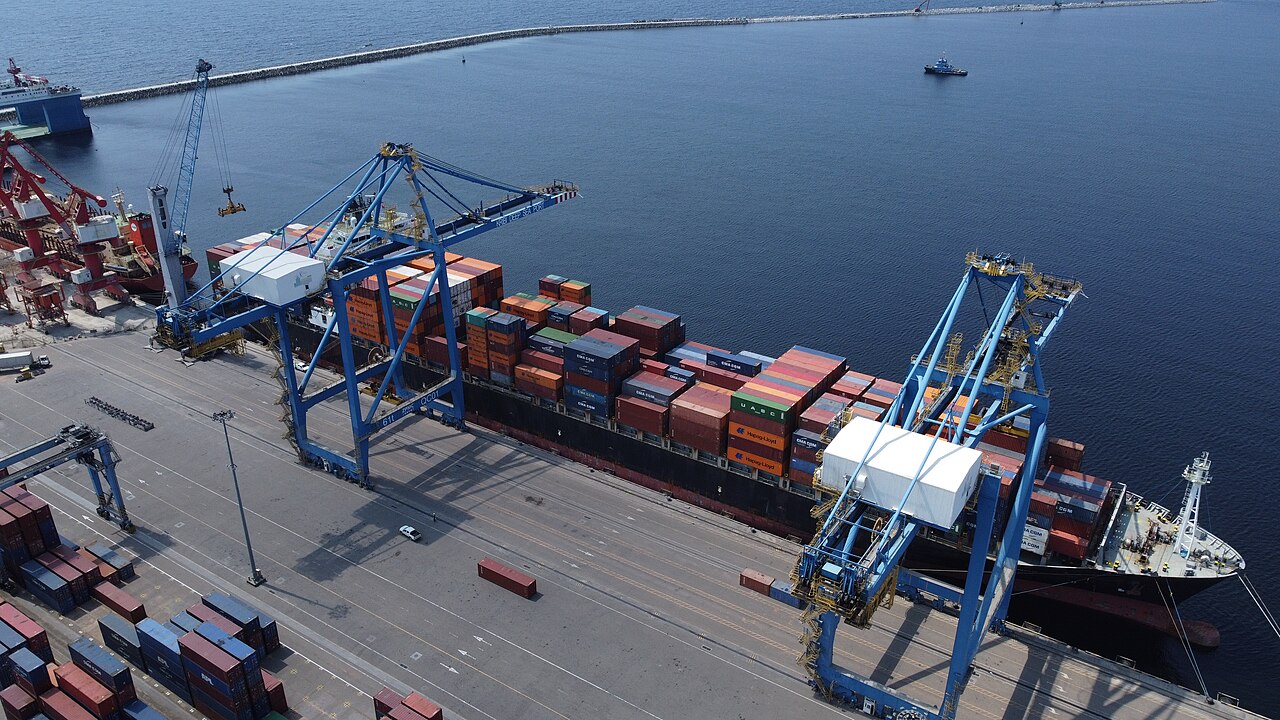
Fifteen years ago, Kribi’s outskirts—once a distant fishing hamlet called Mboro—stood as a forgotten stretch of coastline where narrow dirt paths meandered between sparse homes. Today, this same stretch cradles one of Central Africa’s most advanced deep-sea ports, a symbol of decisive transformation that has shifted Cameroon’s economic trajectory and redefined daily life for thousands.
From Sand and Silence: The Birth of a Maritime Powerhouse
Since the 1970s, Cameroon had envisioned a deep-sea port to complement Douala’s aging infrastructure—a port trapped in a shallow estuary unable to handle large vessels. That vision finally crystallized with the completion of the first two phases of the Kribi deep-water port, built by Chinese engineering giant China Harbour Engineering Company (CHEC).
Gu Gaobai, now CHEC’s Country Director in Cameroon, arrived in 2011 as part of the initial construction team. “We drove for hours on unpaved trails,” he recalls. “We saw only sand, reefs, and an empty horizon. Those reefs were our only landmarks for where the port would rise.” Within a decade, those same waters now echo with the movement of container ships, cranes, and trucks that form the backbone of a rising industrial economy.
The once-isolated village of Mboro has become a vital logistics node. Tarmac roads have replaced dusty tracks, modern hospitals and universities stand alongside bustling markets, and streetlights now illuminate roads that once vanished into darkness at dusk. For residents like Jean-Kalvin Assembe, a 50-year-old local, the change is life-changing. “This city brings me joy and purpose,” he says. “Small shops I once struggled to support now thrive. The future feels tangible.”
Fueling Cameroon’s Economic Engine: Trade, Jobs, and Regional Integration
The port’s momentum is reshaping not just Kribi, but the entire nation. Since operations began in 2018, the Kribi Logistics Hub has evolved from a 455-hectare logistics zone into a sprawling 4,000-hectare industrial powerhouse. “In just six years, investors have poured nearly $700 million into the area,” says Patrick Mpila Ayissi, head of port infrastructure. “We’ve issued 93 land-use permits, and 18 companies are already operational.”
These investments are laying the groundwork for Cameroon’s industrial future. The port is expected to attract up to $900 million in new investments over the next 15 years and create up to 150,000 jobs—directly and indirectly. “Container traffic has quadrupled since 2018, reaching over 555,000 TEUs in 2025,” Ayissi reports. “Total cargo volume exceeded 12.7 million tons in 2024.” The port now serves as a critical gateway linking Cameroon to Central African neighbors like Gabon, Chad, the Republic of Congo, the Central African Republic, and Equatorial Guinea via strong maritime partnerships with global operators such as MSC.
Connectivity is expanding beyond the docks. The CHEC-built Kribi-Lolabé road now links the port to major cities, accelerating both passenger movement and freight distribution—a vital artery for Cameroon’s growing industrial base, according to Minister Emmanuel Nganou Djoumessi.
People First: How the Port is Reshaping Lives and Careers
The port’s story is not only about steel and sand—it’s about people. Ngatugirius Ndenya left a welding job in Yaoundé in 2013 to join CHEC in Kribi. “The early days were tough,” says the 53-year-old. Through joint training with Chinese experts, he mastered advanced welding techniques. Today, he supervises welding teams and mentors newcomers. “I came as a basic welder. Now, I can handle any welding project. Young workers who arrived with no technical background are now skilled professionals.”
For others, the port has been a ladder out of poverty. Armand Guehoada arrived with nothing but determination. “I earned barely $190 a month before,” he says. “Now I’m a commercial affairs manager at CHEC. I’ve bought three cars and put my children through school.” His story mirrors hundreds of others whose careers and livelihoods have been transformed by the port’s growth trajectory.
“Over the past 15 years, we’ve trained hundreds of local professionals in port construction, logistics, and industrial engineering,” notes Gu Gaobai. “Many now work in the adjacent industrial zone, building Cameroon’s next chapter.”
Beyond the Horizon: A Model of Sustainable Partnership
As Kribi marks 15 years since construction began in 2010 and Cameroon celebrates 55 years of diplomatic ties with China, the port stands as a testament to long-term cooperation built on concessional financing and shared ambition. Patrice Melom, Director-General of the Kribi Port Authority, sees boundless potential: “The port’s future is bright with concrete results and strong momentum. Our mission is to harness this energy to drive sustainable national growth and deepen regional integration.”
From a forgotten coastline to a Central African trade leader, the Kribi deep-sea port is no longer a vision—it’s a turning point. A catalyst for jobs, a bridge to neighboring markets, and a foundation for Cameroon’s industrial destiny. In just over a decade, it has rewritten not only the nation’s economic map but the daily reality of thousands who now stand at the helm of change.