
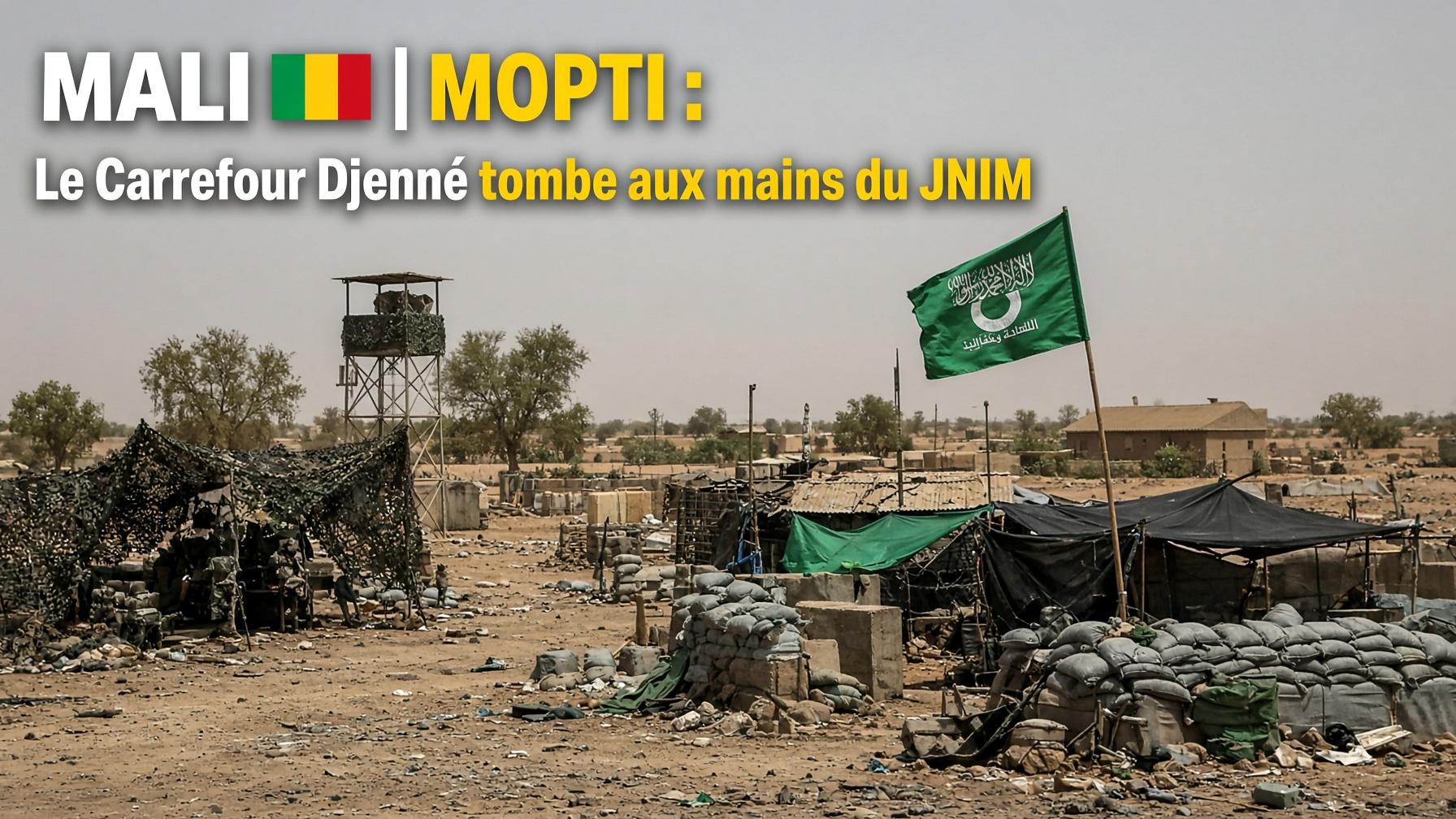
BAMAKO, Mali — A seismic shift has rocked central Mali. On September 24 at 12:10 p.m. local time, the strategic crossroads of Djenné—a vital nexus of the RN6 highway connecting southern Mali to its northern regions—became the epicenter of a devastating and lightning-fast assault carried out by fighters from the Jama’at Nusrat al-Islam wal Muslimin (JNIM), an Al-Qaeda-affiliated militant group.
Within minutes of the barrage of gunfire and explosions, the military outpost at Djenné fell to the insurgents, according to multiple local accounts. While the Malian military’s general staff in Bamako has yet to release an official casualty report, sources on the ground describe the losses as catastrophic. The attackers reportedly seized a significant haul of military equipment, including tactical vehicles, heavy weapons, and stockpiled ammunition.
The collapse of Djenné’s defenses has exposed glaring vulnerabilities in the military’s operational framework, exacerbated by the JNIM’s relentless tactics of strangulation.
The decisive collapse of a strategic stronghold in Mopti
A coordinated and overwhelming assault sealed the fate of Djenné. Eyewitnesses described a sudden encirclement of the base, with militants launching simultaneous attacks from all directions. « The assault was unprecedented in its intensity. The base came under fire from every angle, and our forces couldn’t hold the line for long, » recounted a local resident who requested anonymity.
Following the withdrawal of government forces, footage disseminated by the militant group depicted armed men parading through the smoldering remains of the camp, brandishing captured equipment as trophies of war.
Fuel blockade: The militant group turns scarcity into a weapon
The speed of the base’s surrender has left analysts questioning the deeper strategic failures at play. Over the past several months, the JNIM has tightened its economic and military stranglehold on the Mopti region by systematically intercepting fuel convoys along key trade routes connecting Mali to neighboring countries. This calculated blockade has crippled the region’s fuel supply, leaving little doubt about its intent: to cripple the mobility and operational capacity of Malian security forces.
Without fuel, rapid response units are grounded, armored vehicles sit idle in depots, and aerial support missions face crippling delays. The JNIM’s strategy is clear—deprive the enemy of mobility to exploit isolated weaknesses.
Escalating pressure on Bamako’s military leadership
The crisis has intensified tensions at the highest levels of command. Reports indicate that the Africa Corps, a paramilitary contingent supporting Mali’s transitional government, has urgently requested increased fuel allocations from Bamako to restore operational mobility and maintain logistical support for forward operating bases.
Russian officers have warned that without immediate and secure fuel supplies, counteroffensives are nearly impossible, and the risk of further base collapses looms large. Yet, with national fuel reserves critically low due to the militant-enforced blockade, fulfilling these demands presents a daunting strategic puzzle for Mali’s transitional authorities.
A turning point for central Mali’s security crisis
Djenné’s fall is more than a tactical setback—it represents a pivotal moment in the ongoing struggle for control over central Mali. The militants’ fuel blockade has not only crippled military operations but has also throttled local economies, leaving communities stranded and dependent on dwindling resources. As the JNIM continues to exploit these weaknesses, the Malian transitional government faces a dual challenge: breaking the fuel siege while preserving the cohesion of its military alliances on the ground.
The message is unmistakable—the fight for central Mali is no longer just about territory, but about survival.