

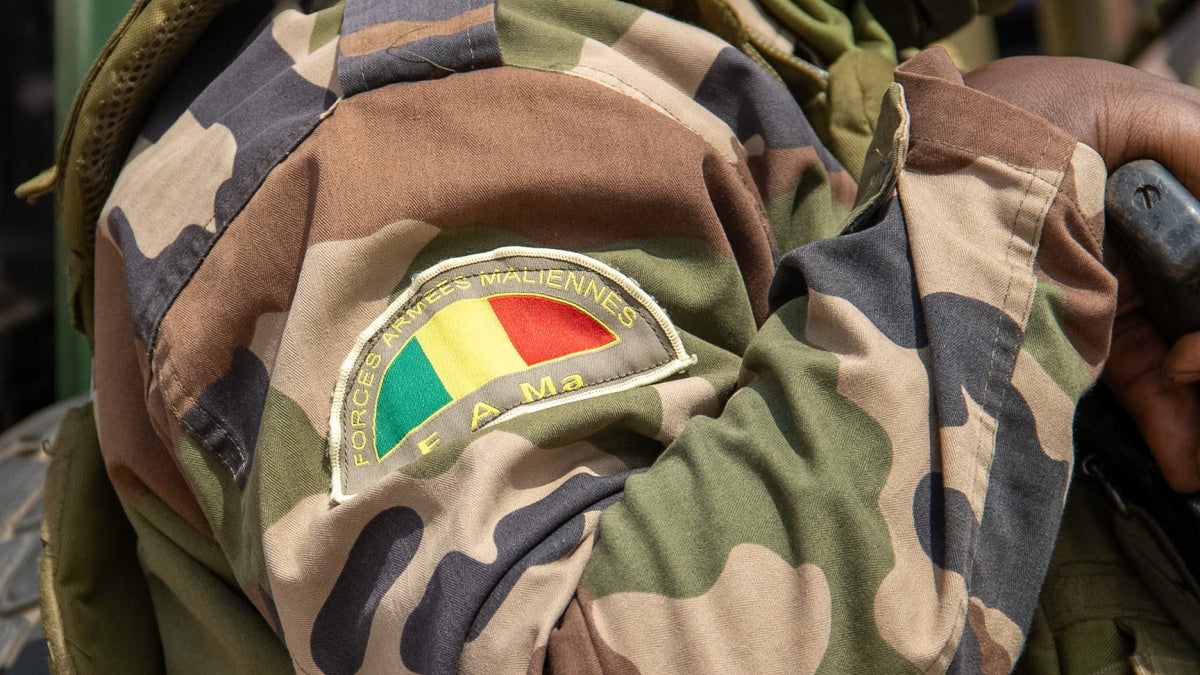
The Malian armed forces, alongside allied militias, stand accused of carrying out deadly attacks on civilians in the central region of Ségou, resulting in the deaths of at least 31 people and the burning of homes, according to local testimonies.
Deadly raids in Kamona and Balle villages
On October 2, Malian soldiers and allied dozos militias—traditional hunters predominantly from the Bambara ethnic group—raided the village of Kamona, killing at least 21 men and torching over 10 homes. Witnesses reported that the soldiers and militiamen executed civilians after accusing them of collaborating with the Group for the Support of Islam and Muslims (JNIM), an Al-Qaeda-linked faction controlling parts of the region.
Survivors described how soldiers arrived in at least seven pickup trucks and three armored vehicles, supported by dozos on motorcycles. Many villagers fled after receiving warnings from JNIM fighters about the approaching military forces. Those who remained were rounded up and shot, according to one survivor who recounted the horrors to investigators.
« Those who couldn’t escape were herded together and executed, » the survivor stated. Witnesses confirmed that JNIM fighters had already vacated the village before the army’s arrival, with no clashes reported between the two groups.
The victims, all men aged 20 to 65, were found scattered across the village, with 17 bodies discovered under a tree and four others located north of Kamona. The soldiers reportedly burned at least 10 huts and three storage sheds belonging to Fulani residents. A 40-year-old shepherd, who hid with his 9-year-old daughter in an abandoned house, described the grim scene: « The bodies were riddled with bullets. One man had his head completely crushed. Empty shell casings littered the ground. »
Local accounts indicate that at least 15 additional men may have been killed in nearby bushland, though fear prevented villagers from confirming the exact number.
Thirteen days later, on October 13, military forces and dozos struck again, this time in the village of Balle, located about 55 kilometers from Kamona. Soldiers in five pickup trucks and dozos on 30 motorcycles descended on the settlement, prompting some residents to flee. « I didn’t run immediately, but when I saw soldiers going door-to-door and assaulting men, I escaped, » a 24-year-old man recounted. From his hiding place, he heard gunfire.
By the time the attackers left, 10 civilians lay dead—nine men aged 22 to 67 and a 55-year-old woman. At least 100 cattle were also stolen. A 33-year-old resident discovered the bodies in the village center, describing them as « lying side by side, riddled with bullets. Some had broken limbs. »
The slain woman’s 21-year-old daughter provided a chilling account: « My mother shouted at the soldiers, accusing them of mistreating the villagers. She walked toward them and was taken to where the men were gathered before being shot. »
Contradictory military claims and civilian realities
The Malian military’s official statement on October 14 claimed that its October 13 operation near Balle was a « reconnaissance mission » that « neutralized around twenty terrorists » and seized weapons. However, residents disputed this narrative, stating that Balle has been under JNIM control for years. « We pay zakat to them annually, » one man explained. « If disputes arise, the jihadists settle them. There are no soldiers, gendarmes, or police here. The army doesn’t distinguish between us and them. »
Since 2012, Mali has grappled with armed Islamist groups, triggering a devastating conflict that has claimed thousands of civilian lives and displaced over 402,000 people. Both state forces and allied militias, as well as armed groups like JNIM, have been implicated in grave abuses.
The recent attacks in Ségou followed the imposition of a siege on Bamako by JNIM in early September. The blockade cut off fuel supplies to the capital, forcing the military junta to temporarily shutter all schools and universities nationwide.
Legal accountability and regional inaction
International humanitarian law, including Common Article 3 of the 1949 Geneva Conventions and customary rules of war, prohibits attacks on civilians, executions, and cruel treatment. Despite Mali’s withdrawal from the International Criminal Court (ICC) in September, the country remains bound by the Rome Statute until September 2026. The ICC opened an investigation into alleged war crimes in Mali in 2013.
Human rights advocates have criticized the African Union (AU) for its weak response to the escalating crisis. « The AU Peace and Security Council must prioritize Mali, » said a regional expert. « It should hold regular briefings, strengthen diplomatic efforts, and coordinate international actions to ensure accountability for abuses by all parties. »