
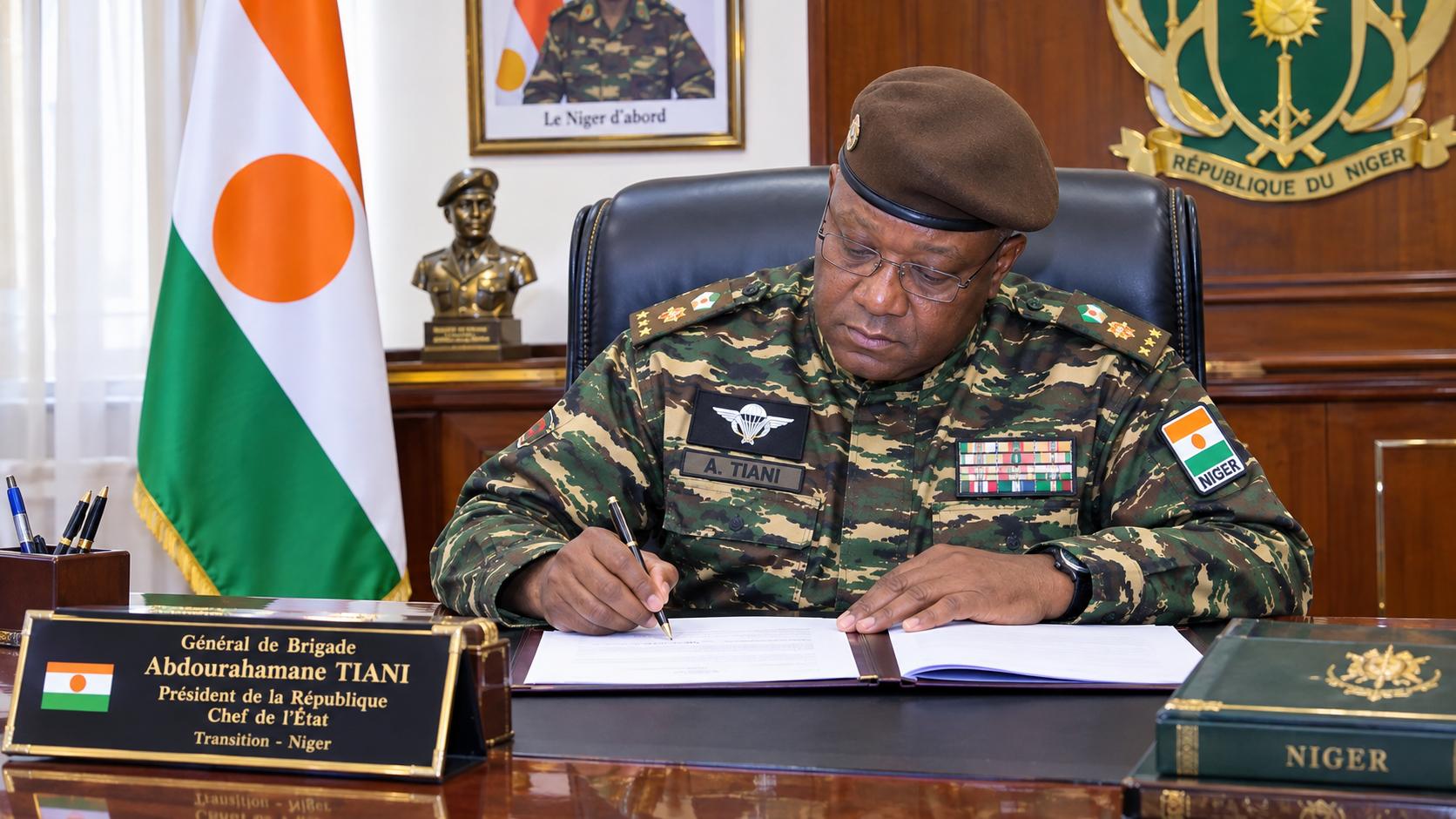
In the ever-shifting sands of Niger’s political landscape, a dangerous new precedent has taken root. Since the July 2023 military takeover led by General Abdourahamane Tiani, the once-untouchable concept of national identity has been weaponized. The regime in Niamey is no longer content with silencing opposition through imprisonment or exile—it has crossed a perilous threshold by revoking citizenship itself. Opposition to the ruling junta is now treated as high treason, with the stroke of a pen rendering dissenters legally stateless.
The birth of a repressive blueprint: national identity as a bargaining chip
This radical shift gained formal structure in August 2024 when the CNSP government enacted sweeping legislation establishing a National Registry of Individuals Linked to Terrorism and State Security Threats. Ostensibly designed to combat insecurity, this vaguely-worded framework is in fact a blunt instrument aimed at the regime’s critics—politicians, activists, journalists, and even retired military officers.
The most alarming provision allows for the provisional or permanent revocation of Nigerien citizenship for anyone accused of activities deemed to:
- Disrupt public order or foment instability
- Spread regionalist or xenophobic rhetoric
- Engage in alleged collaboration with foreign powers
These charges are so loosely defined that even a critical social media post or a protest slogan could serve as grounds for expulsion from the nation. The message is clear: loyalty to the junta is now a prerequisite for citizenship.
The machinery of exclusion: how the purge unfolds
The crackdown follows a systematic, multi-stage process:
- Registration and labeling: Names are added to the security registry based on vague allegations, often without evidence.
- Administrative strangulation: Financial assets are frozen, travel bans are imposed, and identity documents are confiscated.
- Legal erasure: Presidential decrees strip citizenship, stripping individuals of their legal identity overnight.
- Existential limbo: Stripped of their nationality, the newly stateless face unemployment, social exclusion, and the inability to access basic services.
A targeted campaign: from politicians to activists
The regime’s purge has zeroed in on a cross-section of Nigerien society. Among those stripped of citizenship are former ministers, opposition leaders, civil society voices, and military personnel who once served the state.
Key figures targeted include:
- Ouhoumoudou Mahamadou: Former Prime Minister accused of alleged intelligence ties with foreign entities.
- Hassoumi Massoudou: Ex-Foreign Minister charged with national security violations and conspiracy.
- Rhissa Ag Boula: Former government minister and leader of the FRR resistance council, accused of inciting armed rebellion.
- Alkache Alhada: Former Interior and Commerce Minister targeted for allegedly spreading information that undermines public order.
- Amadou Barou Chekaraou: Former state official charged with endangering state security and promoting violence.
These individuals—many of whom spent decades contributing to Niger’s development—now find themselves erased from the national registry, their identities nullified by executive fiat. Bank accounts frozen, passports revoked, and civil rights suspended, they are left in legal limbo, barred from participation in public life.
Patriotism by decree: the hollow rhetoric of regime loyalty
The CNSP’s narrative hinges on a dangerous conflation: opposing the junta is equated with betraying Niger itself. This populist gambit attempts to rally nationalist sentiment while diverting attention from the junta’s failure to address pressing security and economic crises, particularly in the volatile tri-border region with Mali and Burkina Faso.
Yet beneath the rhetoric lies a regime increasingly fearful of its own isolation. A government secure in its legitimacy would not resort to manufacturing stateless citizens as a tool of control. Instead, this policy fuels resentment, radicalizes dissent, and pushes opposition into the shadows—or worse, into armed resistance.
Breaking international law: when citizenship becomes a privilege
From a legal standpoint, the Tiani administration’s actions flagrantly violate international human rights standards. Article 15 of the Universal Declaration of Human Rights guarantees that every individual has the right to a nationality and that no one shall be arbitrarily deprived of it. By revoking citizenship retroactively, without due process, and without access to an independent judicial review, Niger is in clear breach of its international obligations.
Human rights lawyers and global watchdogs warn that this represents a dangerous erosion of the very concept of citizenship. When nationality becomes contingent on loyalty to an authoritarian leader, the foundations of republican governance collapse. The precedent set by Niamey risks normalizing statelessness as a political tool—one that other regimes may emulate.
A self-defeating strategy: the iron fist and the crumbling mandate
By turning citizenship into a political bargaining chip, General Tiani’s junta has revealed its real strategy: survival through fear. But history shows that regimes that silence their citizens through legalized expulsion are ultimately consumed by the very instability they seek to suppress.
No decree can erase the identity of a people rooted in their land, their culture, and their shared future. The more the junta clings to power through exclusion, the more it accelerates its own illegitimacy. Stripping citizens of their identity will not stabilize Niger—it will only deepen the crisis and fuel the cycle of confrontation.