
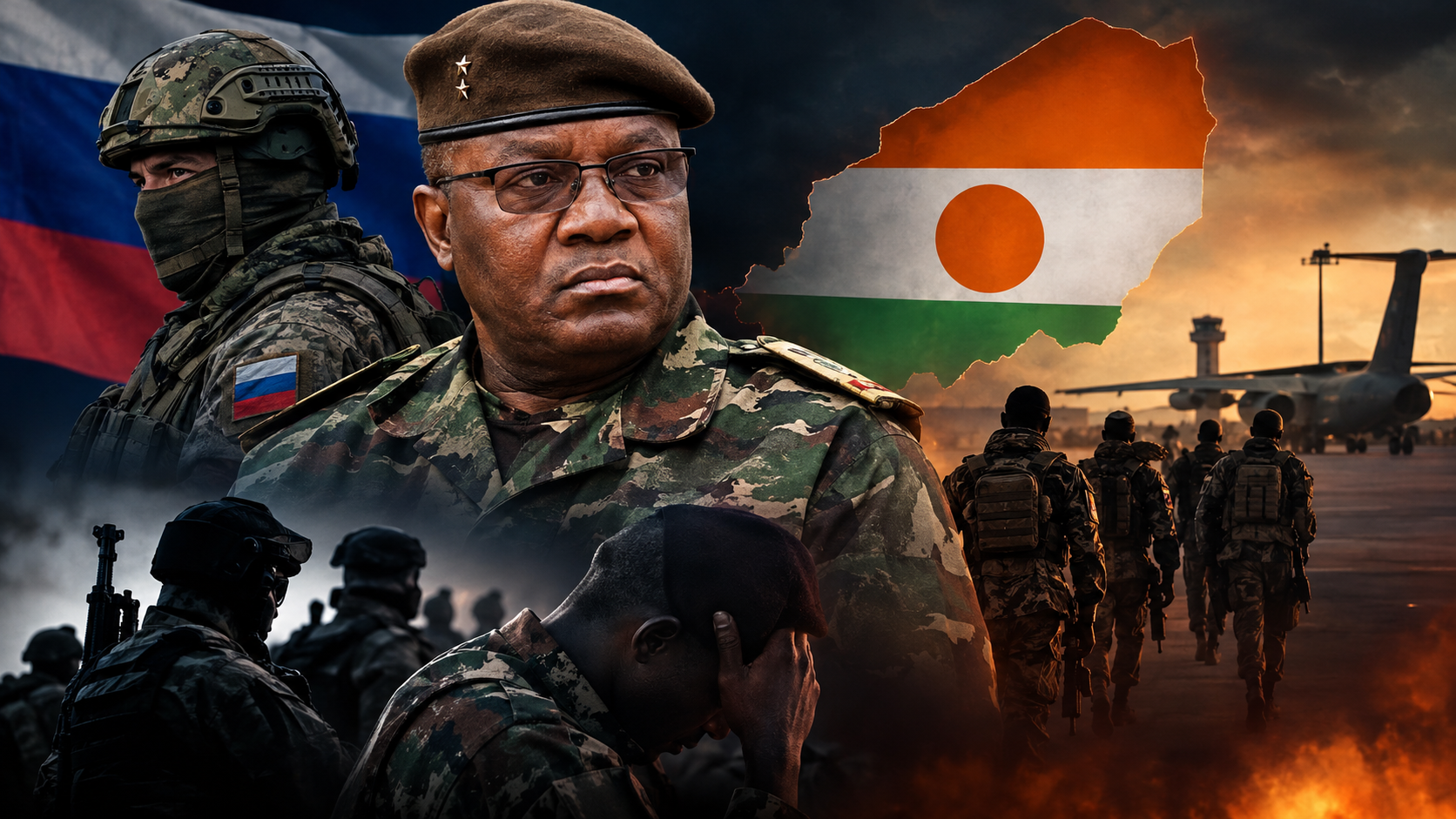
The night the Nigerien regime faced its darkest hour
The late hours of August 28, 2026, became etched in Niger’s military history when a faction of special forces launched a daring mutiny against President Abdourahamane Tiani’s regime. Targeting strategic sites including Niamey’s 101st Air Force Base, the presidential palace sector, and other sensitive installations, the uprising threatened to collapse the already fragile balance of power in Niamey.
For nearly 24 hours, the regime teetered on the brink. Loyalist forces struggled to regain control, their efforts complicated by deep divisions within the military itself. Then, a decisive shift occurred: Russian fighters from the Africa Corps intervened, providing critical ground and air support that enabled Tiani’s loyalists to retake the airbase and suppress the rebellion. The operation marked a turning point not only in quelling the mutiny but in reshaping the political and military landscape of Niger.
This unprecedented collaboration raised urgent questions: Was this intervention merely a temporary measure to save a besieged regime, or did it signal a permanent realignment of Niger’s security alliances?
From rebellion to reckoning: the purge that reshaped the army
The aftermath of the mutiny was swift and brutal. A sweeping purge swept through the ranks, targeting primarily the special forces who had initiated the uprising. Over 500 soldiers were detained; others disappeared or fled the country. The crackdown extended beyond mere arrests it reached into the heart of the military command.
On September 11, General Moussa Salaou Barmou, long-serving chief of staff and former commander of the special forces, was removed from his post. He was succeeded by General Mamane Sani Kiaou. Days later, Barmou was placed under surveillance, effectively sidelined from public life.
The regime cited “command failures” during the mutiny as justification for the purge. But this explanation only deepened the mystery surrounding Barmou’s downfall. As the former commander of the very forces now in rebellion, his authority and credibility were deeply compromised. Worse still, reports suggest his opposition to Russian involvement in quelling the mutiny may have sealed his fate. By refusing to endorse foreign intervention against fellow Nigerien soldiers, Barmou became a liability in the eyes of a regime increasingly dependent on Moscow.
The Russia factor: a lifeline or a long-term liability?
The August mutiny exposed a harsh truth: President Tiani’s regime, once touted as a defender of Nigerien sovereignty, now relies on foreign fighters to secure its own survival. Since 2023, Tiani has pivoted Niger’s security strategy toward Russia, severing long-standing partnerships with Western nations. When the mutiny erupted, the Africa Corps was not just an ally it became the regime’s last line of defense.
A coordinated operation involving Russian ground troops and air support was instrumental in retaking the airbase and ending the standoff. Witnesses and reports confirm that Russian fighters engaged directly in combat, contributing to the mutineers’ defeat. Their involvement went beyond tactical support; it was a symbolic statement that Niger’s security future lay in Moscow, not with its traditional Western backers.
But this alliance comes with a steep price. The mutiny had been led by soldiers trained and once commanded by Barmou soldiers who may have viewed the Russian presence as an act of betrayal. The intervention may have saved the regime, but it also deepened fractures within the army, raising concerns about long-term cohesion and loyalty.
The fall of Barmou: a casualty of shifting loyalties?
General Moussa Salaou Barmou was no ordinary officer. A key figure in the July 2023 coup that brought Tiani to power, he had served as the regime’s emblematic military leader. Yet his influence stemmed from a network of alliances that predated the Russian pivot including ties to American military circles. This made him a relic of an era Niger’s new leadership sought to erase.
When the special forces revolted, Barmou found himself in an impossible position. He was expected to restore order in units he once commanded, now in open rebellion. Worse, he opposed the use of Russian forces against Nigerien soldiers a stance that likely isolated him further. His removal and subsequent house arrest were not just about discipline; they signaled a deeper shift in power dynamics.
As the mutiny raged, Barmou’s relationship with Russian military advisors became a subject of intense scrutiny. Did he resist their presence? Did they see him as an obstacle? Without public disclosure from the regime, these questions remain unanswered but they underscore a critical reality: loyalty now lies with those who embrace Tiani’s Russian alignment, not with those who resist it.
A crisis of accountability: what really happened on August 28?
In the days and weeks following the mutiny, the regime released scant details about the events that unfolded. Official statements spoke of “command dysfunctions” and “security lapses,” but avoided naming those responsible or disclosing the scale of violence.
Independent reporting suggests multiple fatalities occurred during the operation to reclaim the airbase. Arrests numbered in the hundreds, but the regime has not confirmed the identities of those detained, their current conditions, or the legal basis for their imprisonment. The Africa Corps’ role, too, remains officially unacknowledged despite evidence of their active involvement in combat.
As questions mount, one thing is clear: the mutiny was not just a rebellion it was a symptom of a deeper crisis. Tiani’s promise to restore national security and strengthen the army has collided with the reality of a fractured, divided military. When a regime must call in foreign fighters to suppress its own soldiers, the foundations of its authority are not just shaken they are rewritten.
The paradox of a revolution betrayed
In July 2023, Abdourahamane Tiani justified his coup by vowing to restore security and reassert the army’s central role in defending Niger. Three years later, the institution he sought to empower has turned against him. The response? To seek help from abroad, purge its own ranks, and silence dissent within the command structure.
The purge that followed the mutiny was not just about eliminating potential threats it was about redefining the army in the image of the regime’s new alliances. Those who once swore loyalty to Niger now find themselves sidelined for their ties to Western partners or their refusal to embrace Moscow’s influence.
As the dust settles, one question looms large: How many more fractures must emerge before the full truth of that pivotal night August 28 to 29, 2026 comes to light? And at what cost will Niger’s leaders secure their hold on power?
By Henri Nkeng — Reporter