
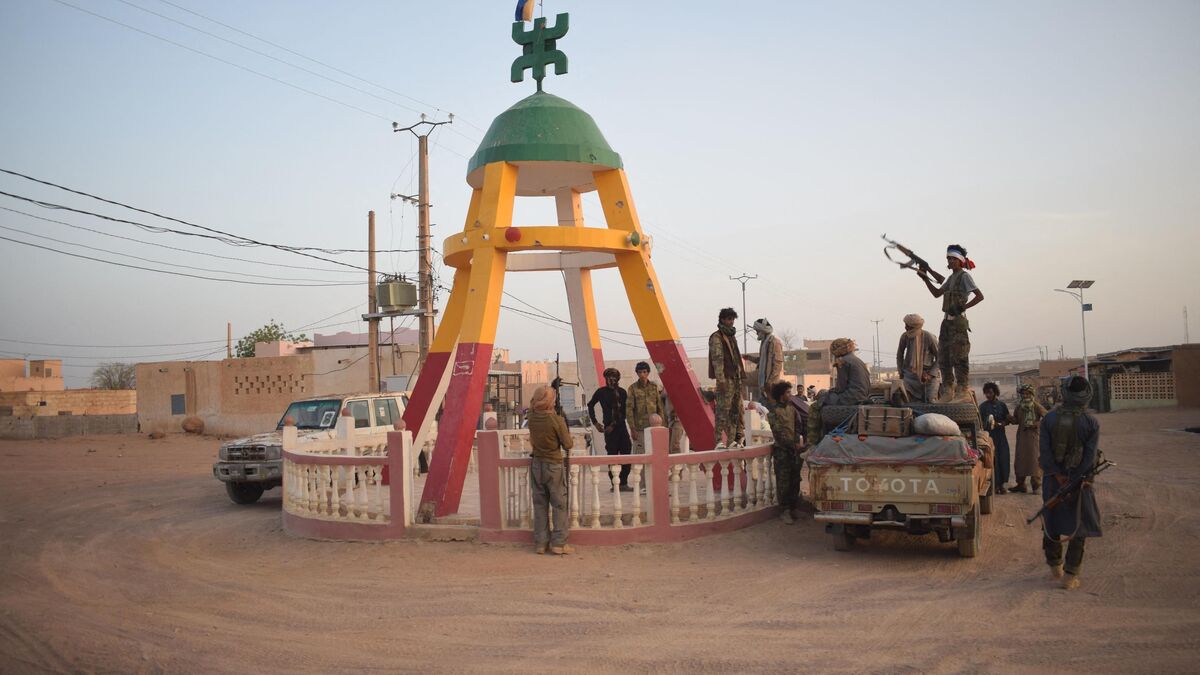
Africa Corps, the shadowy Russian paramilitary force that has quietly reshaped security dynamics across Africa, suffered a rare setback in Mali over the weekend. Rebel factions, including armed Touareg groups, reclaimed control of Kidal—a strategic stronghold previously held by the militia for years. The withdrawal marks a rare tactical retreat for an organization Moscow relies on to maintain influence in the Sahel.
The unfolding events in the region came as no surprise to regional analysts. Over the past year, Africa Corps has steadily consolidated its presence in Mali, positioning itself as a successor to the now-defunct Wagner Group. While Wagner’s dramatic decline left a power vacuum in several African nations, Africa Corps has stepped in, offering military support to allied governments while advancing Russia’s geopolitical objectives.
From Wagner to Africa Corps: a calculated transition
The Africa Corps emerged in late 2023 as a more centralized and less publicly scrutinized alternative to Wagner. Officially linked to the Russian Ministry of Defense, the group was reportedly placed under the command of Deputy Defense Minister Yunus-bek Yevkurov, a move signaling Moscow’s direct control over its operations. Military analysts suggest the transition was designed to distance the Kremlin from the controversies that plagued Wagner, including allegations of war crimes and human rights abuses.
Russian military commentator Igor Korotchenko, a frequent voice on state-aligned media, has framed Africa Corps as a force for African sovereignty. In a November 2023 statement, he described the group’s mission as helping African nations “regain full independence by eliminating Western influence and securing strategic resources.” The rhetoric echoes Soviet-era narratives, positioning Moscow as a champion of anti-colonial struggles.
A new strategy: softer power, harder influence
Unlike its predecessor, Africa Corps has adopted a lower-profile approach, avoiding the overt brutality that tarnished Wagner’s reputation. Instead, the group focuses on forging military partnerships with governments in the Sahel, including Mali, Burkina Faso, Niger, and Libya. Reports indicate that hundreds of Africa Corps operatives are now deployed across these countries, providing training, equipment, and logistical support to allied forces.
In Mali, Africa Corps has become a linchpin of the junta’s security apparatus. Since 2024, the group has worked closely with Malian forces to counter rebel advances, including those by Touareg separatists in the north. The partnership has allowed Moscow to expand its footprint in the region while reducing reliance on volatile local proxies—a lesson learned from Wagner’s chaotic demise.
Controversies and geopolitical stakes
The rise of Africa Corps has not gone unchallenged. International observers, including Western governments, have accused the group of human rights violations and economic exploitation. In 2024, the United Kingdom imposed sanctions on Africa Corps, citing evidence of widespread abuses and the plundering of natural resources. Critics argue that, despite its more polished image, the group remains a tool for Moscow’s resource extraction and geopolitical ambitions.
The group’s name, a deliberate nod to the Nazi-era Afrikakorps, has also sparked controversy. While Africa Corps denies any ideological alignment with historical fascist regimes, the choice of nomenclature has drawn sharp criticism from African and Western analysts alike. Some see it as a cynical attempt to evoke nostalgia for Soviet-era military campaigns in Africa.
What’s next for Africa Corps?
With Wagner’s influence waning and Western powers receding from the Sahel, Africa Corps appears poised to deepen its roots in the region. Analysts suggest the group will continue expanding its operations, particularly in mineral-rich nations like the Central African Republic and Sudan. For Moscow, the stakes are high: securing access to critical resources, countering Western influence, and maintaining a foothold in a strategic corridor linking North and West Africa.