
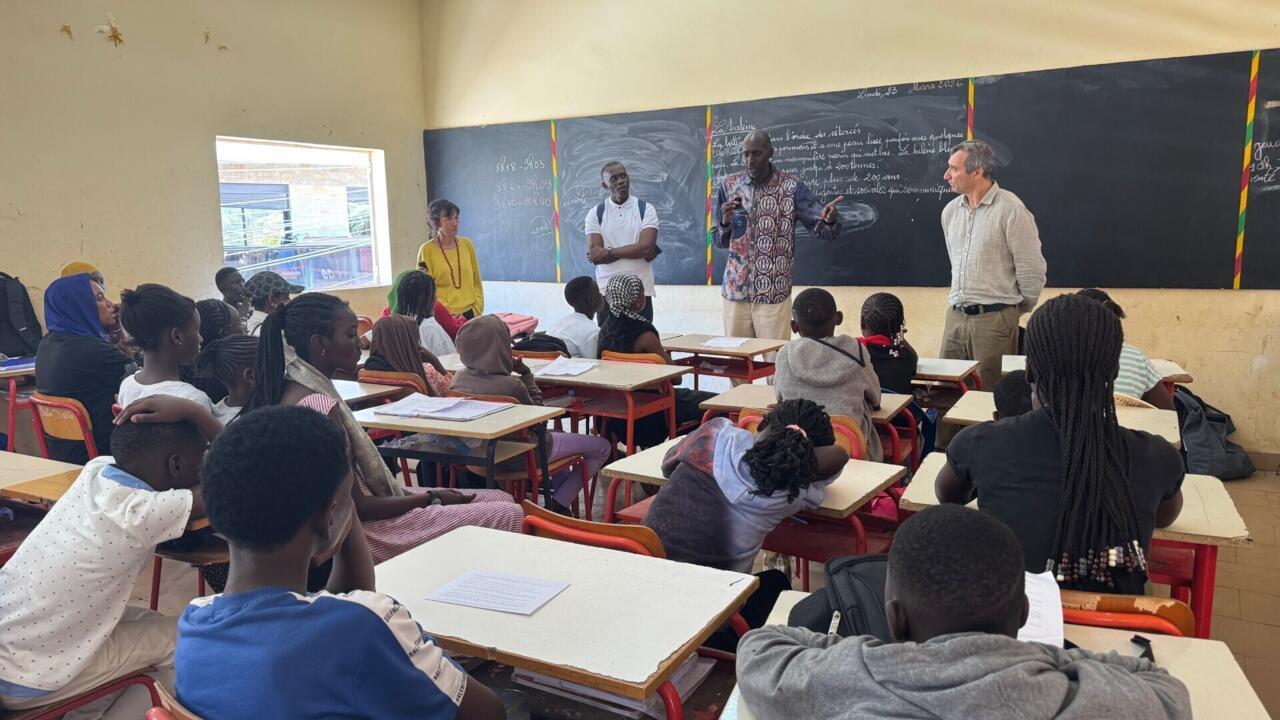
In the classrooms of Dakar, a unique sound is capturing the imagination of the youth: the hauntingly beautiful songs of humpback whales. This initiative, led by the association Gestu (Germes d’Écocitoyens à travers les sciences et les traditions dans les univers d’apprentissage), aims to foster environmental awareness by connecting students with the marine life right off their shores.
Listening to the giants of the Atlantic
At the Alieu Samb primary school in the Ngor district, thirty students sit in rapt attention. They are listening to audio recordings of humpback whales captured in the waters near Ouakam between 2018 and 2022. The session is led by Olivier Adam, a specialist in cetacean acoustics and a professor at the Sorbonne.
Adam explains to the children that these massive mammals are more than just visitors to the coast of Sénégal. “These whales come to Dakar to give birth,” he tells the class. “Their calves are effectively Dakarois.”

Decoding a structured language
The goal of these workshops is to democratize the understanding of cetacean communication. For Adam, the discovery that whales use intentional and structured sounds was a revelation he felt compelled to share with the younger generation. By understanding the inhabitants of the ocean, he believes we can better understand and protect the marine ecosystem itself.
The children responded with a flurry of questions, ranging from how many stomachs a whale has to their specific dietary habits and how they give birth. Fanta, a 12-year-old student, noted that the most striking part of the experience was hearing how the whales actually speak to one another.
Addressing the threat of extinction
For local educators like Thierry, a teacher at Alieu Samb, these lessons are vital. He noted that learning about the slow reproductive rate of whales—only one calf per birth—underscores how easily the species could vanish without active protection.
This sense of urgency is shared by Babacar Sy, a veteran underwater hunter who has spent three decades observing the waters of Dakar. Sy, who provided the recordings used in the class, has witnessed a drastic decline in local fish populations. “Last year, I caught only five thiofs in the entire year,” he lamented, warning that if current trends continue, future generations may only know of certain species through stories.
The outreach program has reached three schools across Dakar so far. Beyond the whale recordings, the association Gestu also organizes waste collection days, working to shift cultural attitudes toward environmental stewardship and marine conservation.