
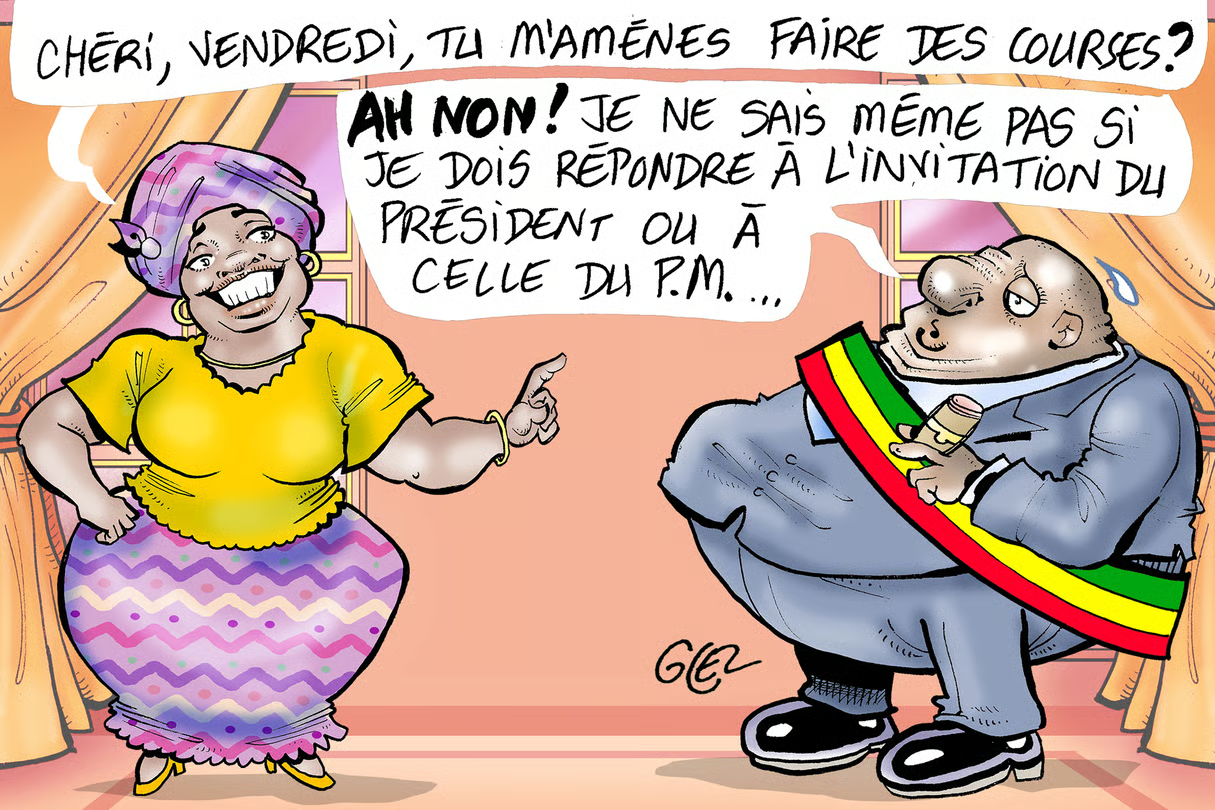
The political landscape of Senegal is at a pivotal moment as two prominent figures, Bassirou Diomaye Faye and Ousmane Sonko, engage in a high-stakes battle of dialogues. Their conversations are shaping the future direction of the country, drawing attention from citizens and observers alike.
Why these exchanges matter for Senegal
Senegal stands at a crossroads where the outcomes of these discussions could redefine governance, policy, and national unity. The stakes are high, with both leaders bringing distinct visions to the table. Their ability—or inability—to find common ground will determine the next chapter in Senegal’s political narrative.
The role of Bassirou Diomaye Faye
Bassirou Diomaye Faye has emerged as a key player in these negotiations, advocating for reforms and a new approach to leadership. His proposals are rooted in a commitment to transparency and accountability, resonating with a growing segment of the population seeking change.
Ousmane Sonko’s strategic moves
Ousmane Sonko, on the other hand, brings a different perspective, emphasizing grassroots engagement and a focus on economic empowerment. His approach has garnered significant support, particularly among younger voters eager for tangible progress.
Public reaction and anticipation
The Senegalese public is closely watching these developments, with opinions sharply divided. Some view the dialogues as a necessary step toward healing and progress, while others remain skeptical about the potential for meaningful compromise. Social media platforms are abuzz with debates, reflecting the nation’s divided sentiments.
What’s next for Senegal
As the dialogue between Faye and Sonko continues, the nation holds its breath. The decisions made in these discussions will have far-reaching consequences, influencing everything from economic policies to social cohesion. Senegal’s ability to navigate this moment will be a testament to its resilience and commitment to democratic principles.