
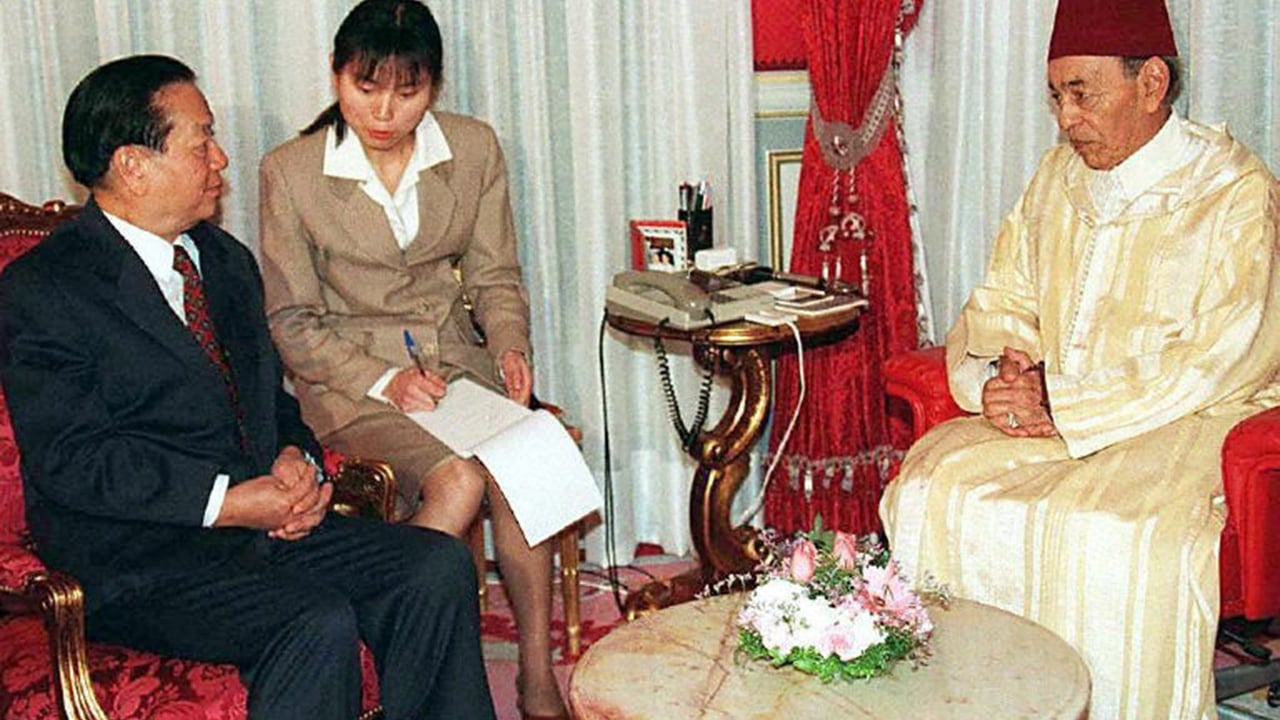
The unforgettable 1960 speech that shaped sino-moroccan relations
In the annals of diplomatic history, few speeches have left an indelible mark across continents and generations. The address delivered by Morocco’s late monarch, Hassan II, at the United Nations in 1960 remains etched in China’s foreign policy archives as a pivotal moment in Sino-Moroccan relations. More than six decades later, the echoes of that speech continue to resonate in Beijing’s strategic outlook toward Rabat.
A historic address that redefined alliances
On that autumn day in New York, Hassan II, then Morocco’s sovereign, took the global stage to articulate a vision of solidarity between Africa and Asia. His words, delivered with measured diplomacy and visionary foresight, laid the groundwork for a partnership that would transcend ideological divides and economic disparities. The speech was not merely a diplomatic gesture; it was a catalyst that propelled Morocco and China into a long-term alliance built on mutual respect and shared interests.
The birth of a strategic partnership
The seeds planted in 1960 bore fruit decades later. In 2016, Morocco’s King Mohammed VI embarked on a landmark state visit to Beijing, a journey that formalized the comprehensive strategic partnership between the two nations. This milestone underscored the enduring legacy of Hassan II’s vision, transforming decades of goodwill into a robust framework for cooperation in trade, infrastructure, and technological exchange.
The partnership has since flourished, with China emerging as one of Morocco’s top economic partners. From the establishment of industrial zones to the expansion of ports and renewable energy projects, the collaboration has become a cornerstone of Morocco’s economic development strategy. The 2016 agreement marked a turning point, but its roots trace back to the foundational principles articulated in that 1960 speech.
Symbolism in Casablanca: a meeting of modern leaders
A poignant moment in this enduring relationship occurred in Casablanca in November 2024, when China’s President Xi Jinping was greeted by Crown Prince Moulay Hassan. The meeting, steeped in symbolism, highlighted the continuity of the alliance forged over six decades earlier. It was a visual confirmation of how Hassan II’s early diplomatic overtures had evolved into a dynamic, mutually beneficial partnership that benefits both nations today.
Why Hassan II’s vision still matters today
The relevance of Hassan II’s 1960 speech extends far beyond nostalgia. In an era marked by shifting global alliances and rising geopolitical tensions, the principles of solidarity and cooperation he championed remain guiding lights. Morocco and China have demonstrated that diplomacy rooted in shared values can withstand the test of time, even as global landscapes transform.
For China, Hassan II’s speech was an early affirmation of Africa’s role in its foreign policy. It set the stage for Beijing’s engagement with the continent, emphasizing equitable partnerships over extractive models. For Morocco, it reaffirmed its position as a bridge between Africa and the wider world, leveraging its historical ties to foster modern economic and political alliances.
The enduring nature of this relationship serves as a testament to the power of visionary leadership. Hassan II’s foresight in 1960 was not merely about forging an alliance; it was about envisioning a future where two nations, separated by vast distances and cultural differences, could thrive together. Today, that vision is a reality, and its foundations remain as strong as ever.