
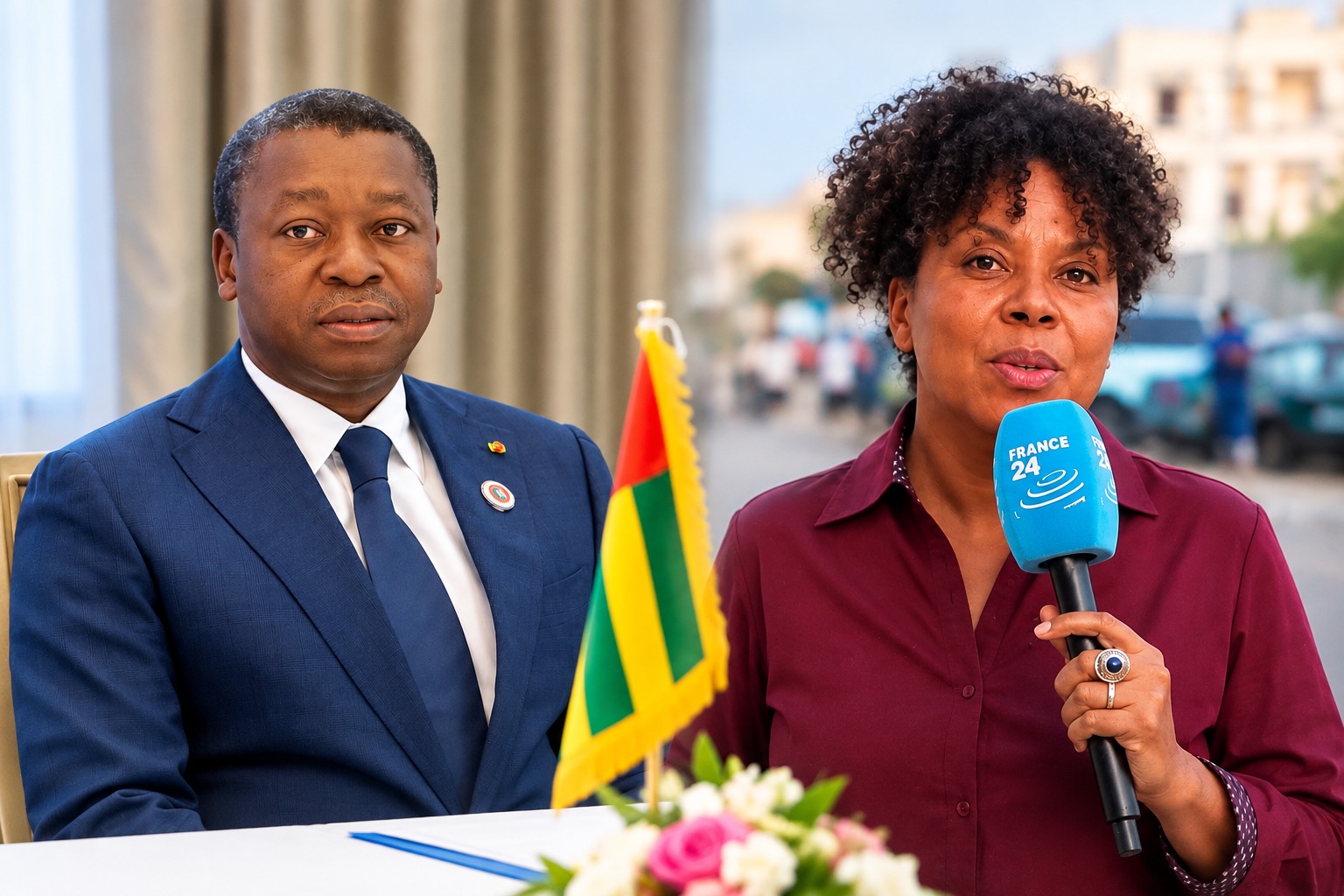
Aftermath of Emmanuelle Sodji’s case exposes deeper media freedom tensions
When government pressure intersects with journalistic duty, the consequences ripple far beyond individual newsrooms. The ongoing controversy surrounding Togolese journalist Emmanuelle Sodji has exposed fundamental questions about press freedom in Togo, with far-reaching implications for how African democracies balance security concerns against transparency obligations.
On August 18, 2026, Sodji, a long-time correspondent for France 24 in Benin, shared publicly available information regarding the detention of two French nationals in Togo. The details—about filmmakers Gaël Mocaër and Sebastian Perez Pezzani, arrested on July 27 while researching a documentary in northern Togo—had already circulated in multiple media outlets and social platforms. The Togolese media regulator later acknowledged that the information had been in circulation since the morning of August 18.
This revelation has intensified debates over whether journalists can be sanctioned retroactively for reporting already public information before formal restrictions were officially communicated. The National Journalists Union (CGT-SNJ) argues that such cases set dangerous precedents, warning that the decision to remove Sodji from her role could signal a broader erosion of journalistic independence in Togo.
From isolated incident to systemic concern
The Sodji case is not an isolated incident but rather a symptom of a tightening media environment in Togo. Just one year prior, in June 2025, the High Authority for Broadcasting and Communication suspended France 24 and RFI programming for three months, citing alleged breaches of impartiality and fact-checking standards. While authorities cited concerns over inaccuracies in certain broadcasts, critics viewed the move as part of a broader strategy to suppress critical coverage.
The timing of these events raises critical questions: Is the crackdown on international media a coordinated effort to control narrative flows, or does it reflect ad-hoc responses to perceived threats? Regardless, the cumulative effect has created an atmosphere of uncertainty for journalists covering sensitive topics in Togo.
Clarifying the boundaries of journalistic responsibility
This controversy forces a necessary distinction between legitimate journalistic practice and potential overreach. While authorities have every right to protect classified information—especially when judicial proceedings or national security are at stake—the tools used to enforce these boundaries must meet three key standards:
- Clarity: Rules should be articulated in advance, not retroactively applied
- Consistency: Enforcement must not depend on the outlet’s country of origin or political alignment
- Transparency: Regulatory decisions should be publicly justified with detailed reasoning
When information circulates widely across platforms—only to be retroactively deemed problematic—the very concept of press freedom becomes murky. Under such conditions, how can journalists know which boundaries to respect before publishing?
Lomé’s evolving political landscape
The Sodji case unfolds against a backdrop of political transformation in Togo. Following June 2025 demonstrations in Lomé, where security forces dispersed protesters amid institutional shifts around the Council of Ministers presidency, every media restriction now faces heightened scrutiny. Global observers are particularly attentive to whether restrictions target specific narratives—or specific reporters.
The implications extend beyond Togo’s borders. When international outlets face punitive measures for standard reporting practices, it sends a chilling signal across Francophone Africa’s media landscape. Will other governments follow suit in using regulatory tools to silence critical coverage?
What comes next for Togolese journalism?
The coming months will be decisive. Will the Togolese government issue formal clarifications on media regulation timelines? Can international news organizations expect procedural transparency from local authorities? Most critically, will journalists be protected when their work touches on politically sensitive topics?
The answers to these questions will reveal more than just the fate of one correspondent. They will determine whether Togo’s press can continue operating as a Fourth Estate—or whether it will become another cautionary tale about media repression in West Africa.