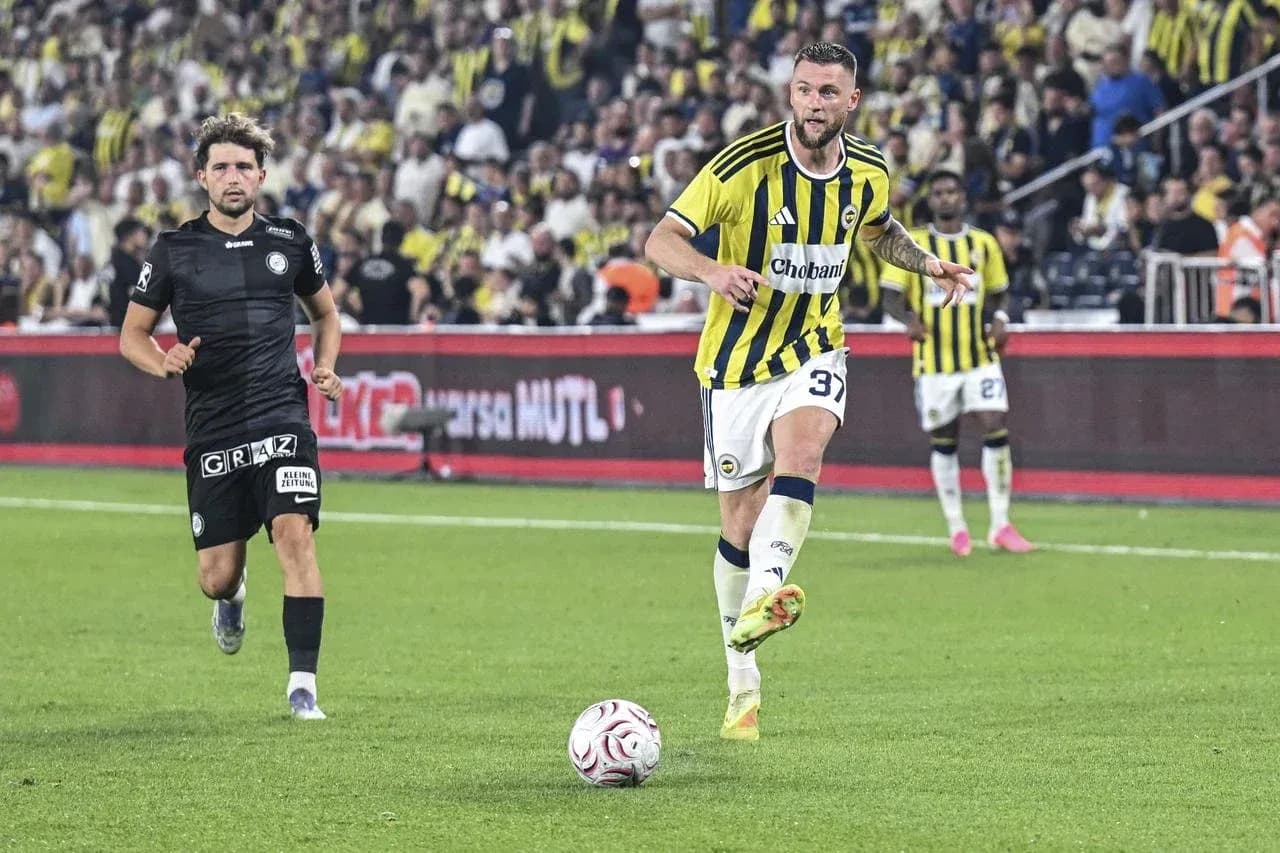
The return leg of the UEFA Champions League 2026 3rd Qualifying Round between Sturm Graz and Fenerbahçe at the Merkur-Arena is poised to be a pivotal moment for both clubs. Following a commanding 2-0 victory for the Turkish side in the first leg, the Austrian team now faces a significant challenge to salvage their European aspirations. Meanwhile, Fenerbahçe is focused on securing their spot in the next stage, aiming to solidify their position as a strong contender in the competition.
Recent encounters: a tactical overview
Fenerbahçe has consistently held the upper hand in recent clashes against Sturm Graz. Their most recent encounter on August 5, 2026, in Istanbul, saw Fenerbahçe triumph 2-0 at home in the UEFA Champions League 3rd Qualifying Round, establishing a clear advantage for the aggregate score. Looking back to 2017, the two teams also met in the UEFA Europa League 3rd Qualifying Round. On July 27, 2017, Sturm Graz suffered a 1-2 home defeat at the Merkur-Arena in Graz, followed by a 1-1 draw on August 3, 2017, at the Şükrü Saracoğlu Stadı in Istanbul. Across these three European cup matches, Fenerbahçe boasts an impressive record of two victories and one draw, having scored 5 goals while conceding only 2, which underscores their historical superiority in this particular rivalry.
Seasonal performance metrics
- Qualification phase performance: While detailed standings are not fully available, Sturm Graz’s UEFA Champions League 2026 statistics show 3 matches played, resulting in 2 wins and 1 defeat, with 6 goals scored and only 2 conceded. Fenerbahçe also contested 3 matches, securing 2 victories and 1 draw, scoring 4 goals and conceding just 1. Both teams enter this crucial return leg with generally strong records in the preliminary rounds.
- Key season statistics: In the current competition phase, Sturm Graz has maintained an average of 2.0 goals per match (4 at home, 2 away) and conceded only 0.7 goals per game, achieving 2 clean sheets in 3 outings. Fenerbahçe, on the other hand, averages around 1.3 goals scored per match (4 total) while conceding a mere 0.3 goals, also securing 2 clean sheets. Sturm Graz has demonstrated explosive offensive capability at home, highlighted by a dominant 4-0 victory. Fenerbahçe distinguishes itself through defensive solidity and efficiency, particularly at home (best win 2-0), and a perfectly converted penalty (1 out of 1). Regarding disciplinary records, Sturm Graz’s yellow cards are concentrated between the 16th and 75th minutes, whereas Fenerbahçe receives most of its cautions in added time beyond the 90th minute, indicating sustained intensity throughout their matches.
- Recent form trajectory: Sturm Graz arrives with a recent UEFA Champions League form of ‘WWL’ – two consecutive wins preceding their defeat in Istanbul. This suggests a strong start to their campaign, but also their first significant setback against a higher-caliber opponent. Fenerbahçe, with a ‘WDW’ record, remains undefeated, showcasing a gradual build-up of momentum and an ability to navigate various match scenarios without succumbing to defeat.
Tactical effectiveness on display
The European campaign figures reveal contrasting profiles for the two clubs. Sturm Graz relies on an aggressive offensive block, particularly potent at home, where they have already secured a 4-0 victory. However, their 2-0 away loss to Fenerbahçe highlighted their limitations when facing elite opposition. Their average of 2 goals scored per match against only 0.7 conceded points to a forward-thinking yet generally balanced team, capable of keeping two clean sheets.
Fenerbahçe, conversely, has built its qualification strategy on defensive mastery: just 1 goal conceded in 3 matches, 2 clean sheets, and an unbeaten run. With 1.3 goals scored per game, the Turkish giants do not need to overcommit offensively to be effective, especially with their 2-0 advantage from the first leg. Their ability to manage difficult periods and maintain discipline until the final whistle makes them a formidable opponent to overturn in a two-legged tie.
Given this context, Sturm Graz must elevate their offensive intensity without compromising the defensive balance that has been their strength. Fenerbahçe can leverage its robust defensive structure, a compact block, and efficient transitions to exploit any spaces left by an Austrian side compelled to take risks. The primary tactical challenge for Sturm Graz lies in replicating their home offensive prowess against a superior defense, while simultaneously preventing an away goal that would effectively end the tie.
The season’s defining moment
From a seasonal perspective, this return match represents a strategic crossroads. For Sturm Graz, elimination at this 3rd Qualifying Round stage would significantly impede their 2026 European momentum, carrying substantial financial and sporting repercussions. This would mean reduced visibility, lower revenues, and increased pressure on domestic competitions to secure a qualifying spot for the following season. A successful comeback, however, would powerfully re-energize the club’s project, validating their capacity to compete with a powerhouse like Fenerbahçe and providing a considerable boost to the team and its supporters.
For Fenerbahçe, confirming their qualification after the 2-0 first-leg win would align with their upward trajectory. Remaining unbeaten, reaffirming their defensive strength, and advancing to the next round would consolidate their ambitions to consistently feature on the European stage. A surprise underperformance and elimination, however, would immediately put their season under immense pressure, raising questions about the team’s ability to handle high-stakes matches and intensifying focus on their domestic objectives.
Ultimately, this return leg at the Merkur-Arena is set to be a true test: either Sturm Graz will transform their offensive might into a historic comeback, redefining their 2026 European aspirations, or Fenerbahçe will confirm its structural superiority, establishing itself as a serious contender to progress further in the qualification rounds, building its season on stability, defensive control, and clinical management of two-legged confrontations.
