
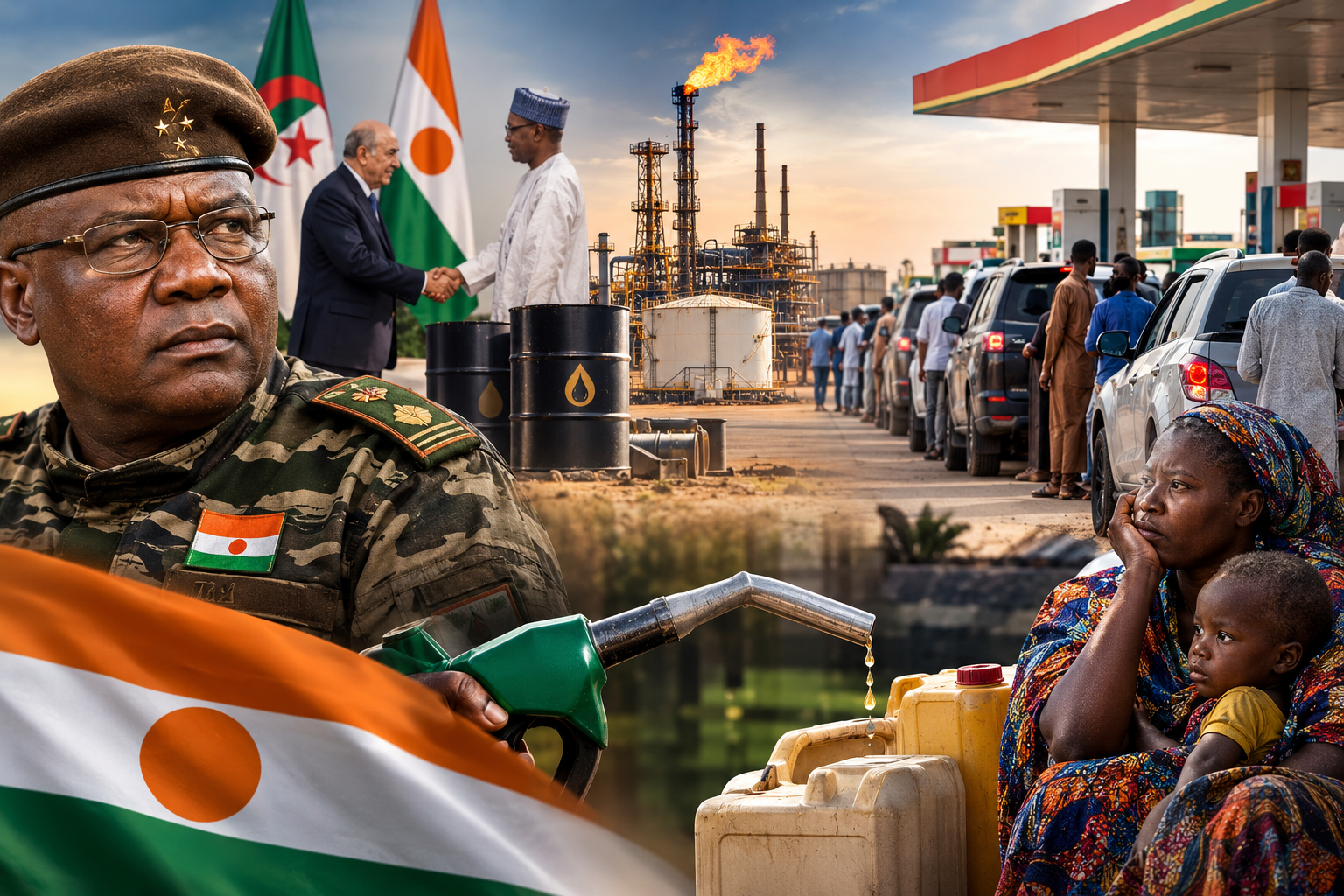
The recent security pact between Algeria and Niger has brought renewed attention to a pressing dilemma in Niamey: how can an oil-producing nation struggle to provide its own citizens with reliable access to fuel? As Niger’s government pursues diplomatic and strategic partnerships in the name of national sovereignty, this fundamental question remains unanswered.
The paradox is undeniable. Niger possesses oil reserves and has developed infrastructure for extraction and refining. Yet, fuel scarcity continues to disrupt daily life—long queues at gas stations, transportation challenges, and economic setbacks for businesses and individuals alike. The issue is not merely about production but about control over distribution and the equitable use of national resources.
Where does Niger’s oil go?
The critical questions demand clear answers: how much of the extracted oil is allocated for domestic consumption? What volumes are exported, and under what terms? Do the refining, storage, and distribution systems truly meet the country’s needs? Transparency in these processes is essential if the government’s claims of resource sovereignty are to hold weight.
A growing web of foreign influence
Adding to the complexity is the increasing role of external partners in Niger’s strategic sectors. Russia’s expanding presence in the Sahel, particularly through economic and security agreements with military-led governments, raises concerns about the long-term implications of such collaborations. While security partnerships may address regional threats, they cannot substitute for sound domestic energy policies or transparent resource management.
Sovereignty must deliver tangible benefits
The true test of sovereignty lies not in the number of agreements signed but in the ability to convert natural wealth into concrete improvements for citizens. For many Nigériens, the question is straightforward: what good is oil wealth if it fails to secure a stable fuel supply at home?
For Niamey, the challenge is now to address the opacities in its oil supply chain, clarify accountability for shortages, and prove that strategic decisions prioritize national interests. Until fuel shortages are resolved, rhetoric about economic independence will continue to face a blunt reality: who truly benefits from Niger’s oil, and where do its people stand in the equation?