
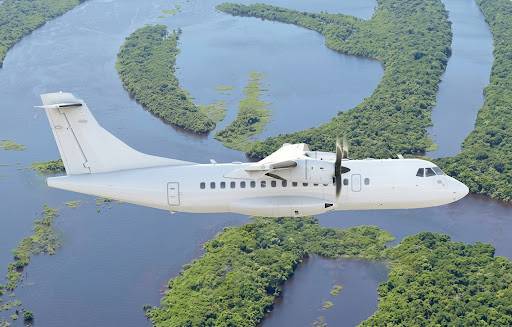
What triggered the disappearance of the Nigerian air force’s ATR-42
The Nigerian Air Force’s ATR-42, tail number NGR 931, vanished from radar screens on the morning of October 5 as it carried out a routine transport mission from Benin City to Lagos. Contact was lost at 9:13 a.m., leaving authorities racing against time to determine whether technical failure, human error, or external factors were responsible. Moments after the AWOL alert, emergency protocols swung into motion, but the aircraft’s abrupt end 300 km away in Igbokoda’s coastal wetlands forced rescuers into uncharted terrain.
Mapping the chaos: zones of uncertainty around the wreckage site
Unlike inland crash sites, Igbokoda’s swampy coastline slows every rescue step. Debris already spotted near a tidal channel underscores the logistical nightmare confronting search-and-rescue teams. Nigeria’s military, local agencies, and first responders have coalesced into a multi-pronged operation, but the region’s waterlogged communities and scattered villages mean time is as critical as technique. Identifying the fuselage and cockpit data recorders could hinge on how swiftly heavy machinery can reach the muck.
Real-time challenges complicating the search
- Tidal flows that shift wreckage and obscure the site each high tide
- Limited ground access due to soft mud and flooded paths
- Mobile network dead zones preventing instant updates from foot patrols
Inside the ATR-42: passengers, crew, and a mystery tally
Initial tallies point to 25 passengers and seven crew, for a combined total of 32 souls on board. Authorities have yet to release names or confirm survival rates, urging families and the public to await verified statements. Social media feeds from Igbokoda already swirl with unverified images, underscoring the need for calm and measured communication as the hours tick past.
Why the ATR-42’s crash spotlights Nigeria’s aerial safety culture
The ATR-42 family is a workhorse of the Nigerian Air Force, used for troop transport and surveillance. Yet routine missions are no safeguard against systemic vulnerabilities. With fleet age, maintenance cycles, and pilot training under the spotlight, this accident inevitably raises broader questions about the broader health of Nigeria’s military aviation ecosystem. Any verdict, however, must wait for the accident board’s forensic drill through flight data, air traffic logs, and mechanical records.
Critical focus areas for investigators
- Flight data recorder for speed, altitude, and control inputs
- Maintenance logs for scheduled and unscheduled checks on NGR 931
- Weather archives over the Benin–Lagos corridor at 9 a.m.
- Air traffic control audio to reconstruct last transmissions
Community reaction: fear, rumor, and the demand for truth
Igbokoda’s residents, already familiar with harsh coastal living, now face fresh uncertainty. Erratic early reports—first suggesting a helicopter, then an ATR-42—fueled anxiety before military spokespeople clarified the model. Local leaders have pleaded for patience, but for relatives scattered across the state, waiting is an ordeal. The coming days will test Nigeria’s ability to deliver transparent, timely updates while managing public sentiment.
The road ahead: facts, families, and future safeguards
Until every sheet of wreckage is logged, every data point parsed, and every victim accounted for, the full story remains untold. What is certain is that the crash has triggered an unprecedented mobilization across Ondo State, uniting military precision with local resilience. The outcome—whether redemption through transparency or erosion of public trust—will hinge on how Nigeria answers the hardest question: how did this routine flight slip from the sky?