
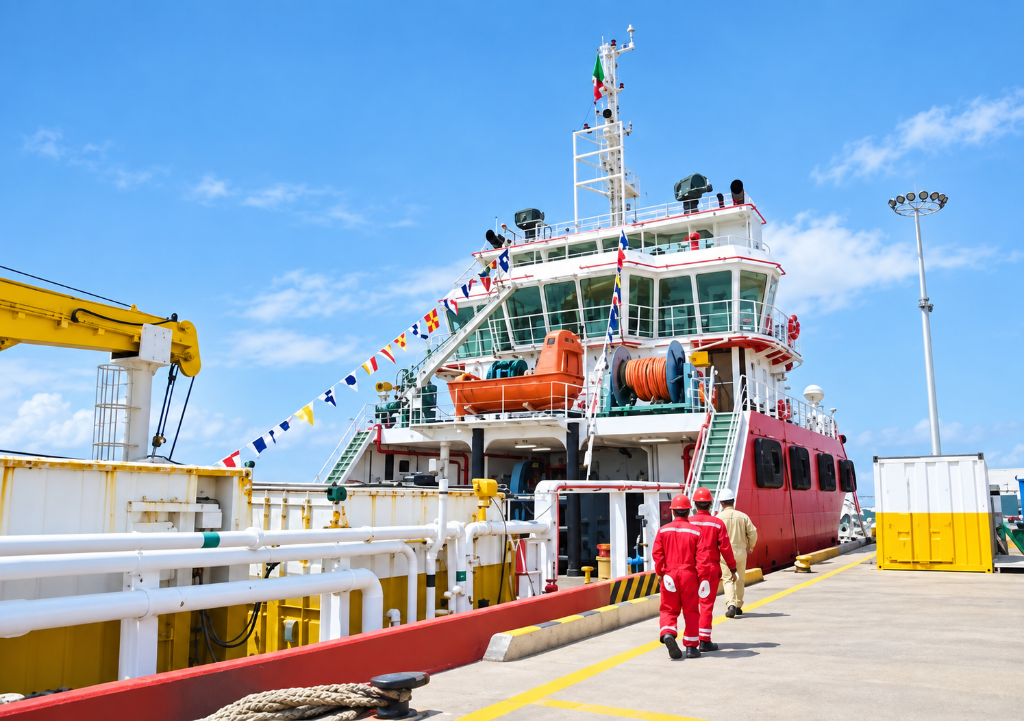
From dormancy to dominance: the Sèmè field revival
The Beninese government is poised to make a historic economic statement in October 2026—launching the country’s first-ever crude oil export from the Sèmè offshore field. A shipment of 250,000 barrels marks not just a milestone in energy production but a strategic turning point for Benin’s financial sovereignty and industrial future. After decades of sporadic extraction, this decisive move signals the dawn of a new era in West African hydrocarbon development.
Beyond logistics: Benin’s transformation from trade hub to oil producer
Long recognized as a regional logistics leader and agricultural powerhouse, Benin is now diversifying its growth strategy. The Sèmè project redefines the nation’s economic identity, shifting focus from transit to production. With its first international crude sale, Benin asserts itself among Africa’s energy producers, unlocking new revenue streams that promise to bolster state coffers and fuel long-term development.
A legacy field reborn through modern ingenuity
Discovered in the late 1960s and once operated intermittently in the 1980s–90s, the Sèmè field fell into disuse amid technical hurdles, low oil prices, and declining output. Today, rising global energy demand and advances in offshore drilling technology have reignited interest. Renewed geological assessments confirmed substantial recoverable reserves, prompting government-led investments to rehabilitate extraction infrastructure and secure international partnerships.
250,000 Barrels: the launchpad for Benin’s energy ambitions
This initial export serves as a financial and reputational catalyst. The crude’s quality—determined through lab analysis of density, sulfur content, and API gravity—will shape its market positioning relative to benchmark grades like Brent. More critically, the inflow of foreign currency will:
- Bolster Benin’s foreign exchange reserves and stabilize its balance of payments
- Generate immediate fiscal returns via production-sharing agreements and petroleum taxes
- Enhance the country’s sovereign credit profile by diversifying revenue sources in a volatile commodities landscape
Local industries ride the oil wave
The Sèmè project is already injecting capital into Benin’s private sector. Offshore operations demand specialized logistics—from vessel support and towing to advanced engineering and port infrastructure upgrades. Local maritime firms, construction companies, and logistics providers are securing contracts, creating skilled jobs and fostering knowledge transfer among Beninese professionals. The ripple effects are transforming Cotonou’s coastal corridor into an integrated industrial hub capable of handling storage, transport, and primary processing.
Synergy with the Niger-Benin pipeline: Africa’s energy crossroads emerging
Benin’s strategic position is further strengthened by its dual role as both an oil producer and a transit hub for hydrocarbons. The operational expertise gained from managing the Niger-Benin pipeline—which connects Agadem’s oil fields to the Sèmè-Kpodji port—complements the Sèmè field’s revival. This convergence positions Benin as a pivotal player in the Gulf of Guinea’s energy landscape, attracting regional and international investor attention.
Sustainability first: turning oil wealth into lasting progress
Success hinges on disciplined governance. To prevent the pitfalls seen in other resource-rich nations, Benin must prioritize transparency in revenue management and enforce strict regulations around extractive industries. Future oil proceeds are earmarked for national development funds targeting education, healthcare, infrastructure, and agricultural modernization. While the 250,000-barrel debut may seem modest globally, its symbolic value and catalytic potential lay the foundation for a sustainable economic transformation.
The October 2026 export is not the finale—it’s the opening chapter of Benin’s renewed industrial narrative, where energy becomes the engine of progress.