
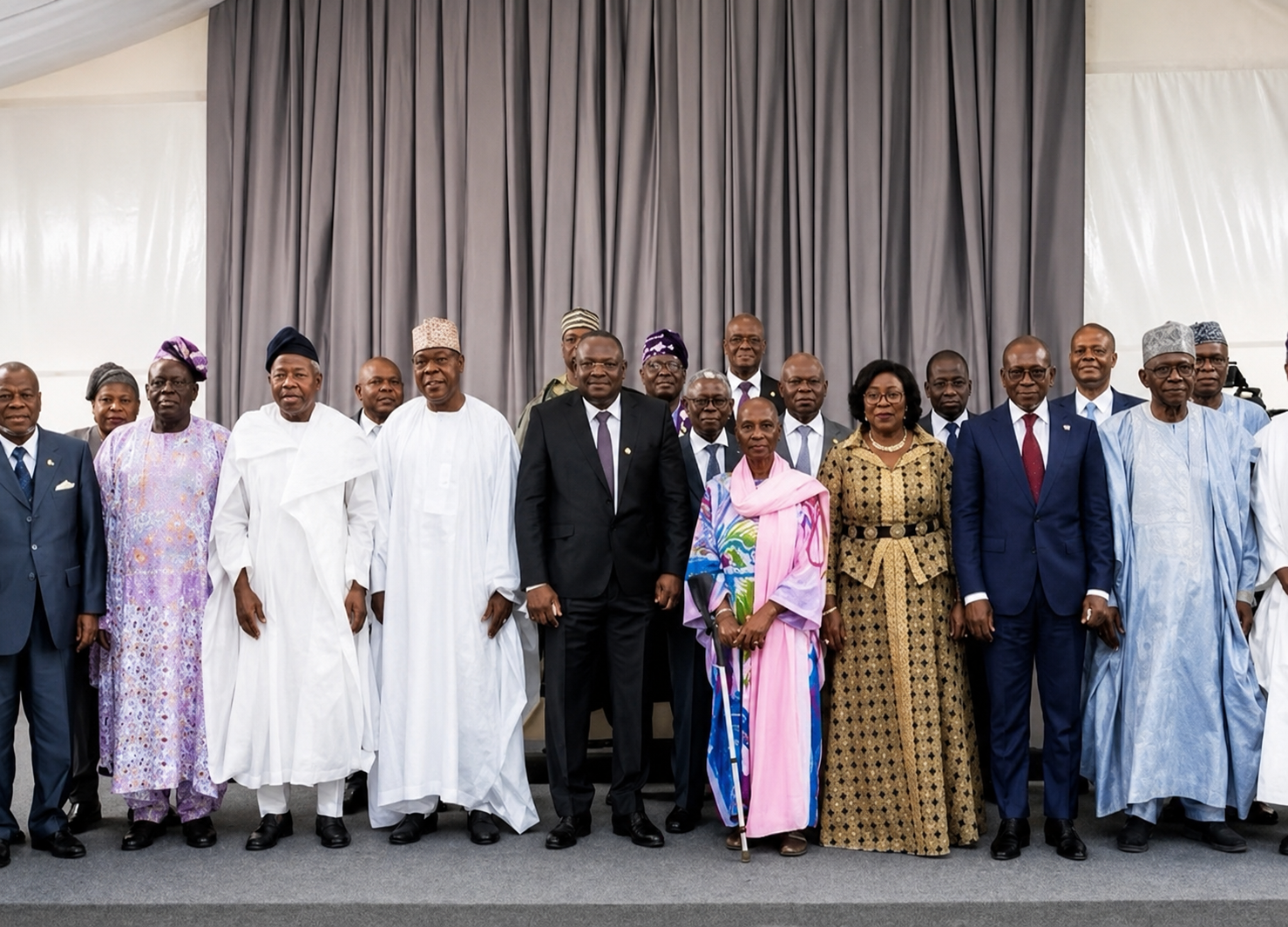
The official inauguration of the Republic of Bénin’s inaugural Senate on July 30, 2026, followed by the election of former President Patrice Talon to its presidency on August 6, marks a significant juncture in the nation’s institutional evolution. Established through the constitutional revision enacted on December 17, 2025, this second parliamentary chamber introduces a novel balance to the operational framework of Béninois institutions.
Yet, this institutional birth is already accompanied by a multitude of inquiries. Certain critics of the former head of state characterize the Senate as a “shadow government,” or even as a mechanism enabling Patrice Talon to retain power following his departure from the presidential office.
Such interpretations, however, demand scrutiny against the established legal texts. While legitimate discourse can focus on the Senate’s utility, composition, powers, or operational procedures, it is crucial to differentiate between political influence, institutional function, and the exercise of executive authority. These three concepts are not interchangeable.
A new institution created by the Constitution, not an improvised mechanism
The primary point to underscore is straightforward: the Senate does not constitute a structure designed around Patrice Talon. Its existence stems directly from the constitutional revision adopted in 2025.
The amended Constitution stipulates that the Béninois Parliament now comprises two chambers: the National Assembly and the Senate. It meticulously outlines the composition, missions, operational regulations, and competencies of this newly formed institution.
Consequently, the Senate stands as a full-fledged constitutional body. Its continued existence remains independent of the individual who presides over it.
This is a pivotal consideration in the ongoing debate: one may criticize the Senate’s creation, its composition, or the choices made during its establishment, but it cannot legally be depicted as a personal construct designed to allow a former president to govern remotely.
The Constitution precisely delineates its limitations and prerogatives.
The choice of Patrice Talon: a political dimension, but not a new presidency of the Republic
Patrice Talon’s election to lead the Senate naturally fuels speculation. As a former President of the Republic, he now heads a new institution. It is therefore understandable that some observers question his future influence.
However, it is imperative to distinguish this potential influence from the constitutional exercise of the presidential office.
Patrice Talon concluded his tenure at the nation’s highest office after two mandates. Romuald Wadagni was elected President of the Republic in April 2026 and inaugurated on May 24, 2026. The institutional transition has demonstrably occurred.
The fact that the former president now presides over the Senate does not imply a recovery of the presidential function in an altered form.
The President of the Senate is distinct from the President of the Republic. He does not possess the same constitutional powers, does not lead the government, and does not command the state administration.
The Constitution continues to vest executive prerogatives in the President of the Republic. The Senate, conversely, is an integral part of the parliamentary architecture. Article 79 explicitly defines Parliament as the body exercising legislative power and overseeing government actions.
A Senate that regulates, but does not govern
It is likely on this specific point that current criticisms foster the most confusion.
The Béninois Senate indeed holds significant powers. The Constitution entrusts it with a crucial mission to regulate political life, aimed at safeguarding national unity, democracy, peace, political stability, and the continuity of the state.
It is also charged with ensuring adherence to political truce and upholding political conduct.
These competencies are substantial enough to warrant serious public discussion. However, they do not transform the Senate into a parallel government.
Regulating is not governing. Controlling is not executing. Offering an opinion is not administering the country.
Therefore, the Senate replaces neither the President of the Republic, nor the government, nor the ministries.
Executive power continues to be exercised within the framework of the Presidency of the Republic and the government. The Senate primarily intervenes in the parliamentary domain and through the regulatory mechanisms stipulated by the Constitution.
Real legislative powers, but precisely framed
Stating that the Senate is not a shadow government does not imply it is a symbolic institution.
Quite the contrary.
The Constitution grants it substantial prerogatives. Certain categories of texts, particularly constitutional laws, electoral laws, and laws governing the life and activities of political parties, must mandatorily be submitted for its non-objection opinion before their promulgation.
To formulate an objection, the Senate must secure a qualified two-thirds majority of its members. The absence of notification within the prescribed timeframe is deemed a non-objection.
The Senate can also request a second deliberation on a law adopted by the National Assembly, with specific exceptions, notably for finance and settlement laws, as well as program laws.
This capability demonstrates that the upper chamber is not merely ornamental. It represents an additional mechanism for legislative scrutiny and reflection.
However, here again, one must not conflate legislative power with executive power.
A “chamber of sages”: why this institution can have its utility
The distinctive nature of the Béninois Senate also lies in its composition.
The Constitution specifically provides for the presence of ex-officio members drawn from former institutional roles, as well as the appointment of high-ranking personalities who have held responsibilities within the defense and security forces. Should the required number not be met, additional members are designated to reach the constitutional minimum of 25 members.
This structural design reflects a deliberate intent to establish the upper chamber as a forum where institutional experience can be leveraged.
In a democracy, not all crises are resolved solely through majority vote. Mechanisms for dialogue, mediation, tension prevention, and consensus-building are also essential.
This precisely constitutes one of the potential justifications for an upper chamber partially composed of individuals who have already held high responsibilities.
The Senate can thus evolve into a space for the transmission of experience, the prevention of institutional crises, and the pursuit of consensus.
The paradox of criticism: denouncing influence while forgetting the safeguards
Another aspect of the debate warrants emphasis.
Criticisms concerning Patrice Talon’s potential influence are not entirely unfounded in a political sense: a former president naturally retains experience, networks, institutional knowledge, and a capacity for influence.
However, this political reality must not be misrepresented as a legal assertion that he would continue to exercise the presidential function.
The pertinent question is therefore not: