
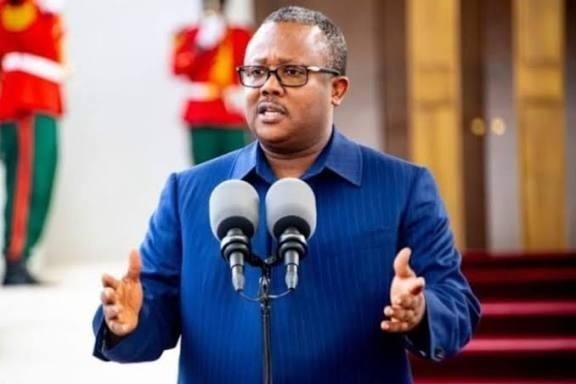
The political landscape of Guinea-Bissau has once again descended into chaos, with the fate of former President Umaro Sissoco Embaló hanging in the balance. The military junta’s abrupt refusal to allow his return—despite his public vow to contest the upcoming presidential election—has laid bare a deeper, unspoken conflict: a calculated power struggle that predates his exile.
What’s driving the military’s stand against Embaló?
Behind the junta’s firm stance lies a fragile balance of power and a history of instability. The military’s statement declared Embaló persona non grata, citing his role in allegedly destabilizing the nation during the November 2025 crisis. But the roots of this standoff go deeper than a single election cycle.
The junta, led by a coalition of military factions, has presented Embaló’s return as an existential threat. Their communiqué framed his interference as a deliberate attempt to manipulate the electoral process—a claim echoed by some international observers who have questioned the legitimacy of his political maneuvers from abroad. Yet, for Embaló’s supporters, the junta’s veto is less about democracy than about preserving their own grip on power.
The November 2025 coup: the unresolved backdrop
The catalyst for this crisis was the controversial November 2025 presidential election, which ended in a violent coup. As vote counts were finalized, gunfire erupted in the capital, and armed forces seized the presidential palace, detaining Embaló. The junta claimed it was acting to prevent electoral fraud—a narrative that has faced skepticism from diplomats and analysts alike.
- Accusations of an ‘inside job’: Critics allege Embaló orchestrated his own ousting to avoid an electoral defeat, pointing to irregularities in his administration’s handling of the vote.
- A nation caught in limbo: With the election suspended and institutions suspended, Guinea-Bissau’s transition toward constitutional order remains stalled.
- International reactions: Observers have struggled to reconcile the junta’s justification with the broader context of Guinea-Bissau’s chronic political instability.
Embaló’s exile gambit: a fight for political survival
From his exile base, Embaló has refused to concede defeat. His declaration to return and contest the election—amplified by the newly formed ‘Republican Platform’ coalition—is not just a campaign maneuver. It’s a defiant bid to reclaim his legitimacy, leveraging legal loopholes in the transitional framework that bar junta members from running.
The junta’s response has been uncompromising. In a rare public reprimand, they branded his return attempt a ‘destabilization ploy,’ signaling that Embaló’s political ambitions pose an unacceptable risk. Yet, for many in Guinea-Bissau’s opposition, this is a thinly veiled attempt to sideline a popular figure and centralize military control over the electoral process.
The cost of exclusion: democracy on the brink
The military’s refusal to allow Embaló’s return isn’t just a diplomatic snub—it’s a litmus test for Guinea-Bissau’s democratic future. By locking out a major political player, the junta risks alienating a significant portion of the electorate. Meanwhile, Embaló’s supporters decry the move as an authoritarian overreach, warning that it could ignite unrest ahead of the election.
With the transitional government’s credibility already under scrutiny, this standoff threatens to deepen the country’s polarization. The junta’s insistence on controlling the electoral narrative raises a critical question: can Guinea-Bissau’s fragile democracy survive when key actors are systematically excluded?
The road ahead remains uncertain
As the election looms, Guinea-Bissau stands at a precipice. The junta’s denial of Embaló’s return has crystallized the deeper conflict: a battle between military authority and democratic aspirations. The coming months will reveal whether the country can chart a path forward—or whether the shadow of instability will continue to define its future.