
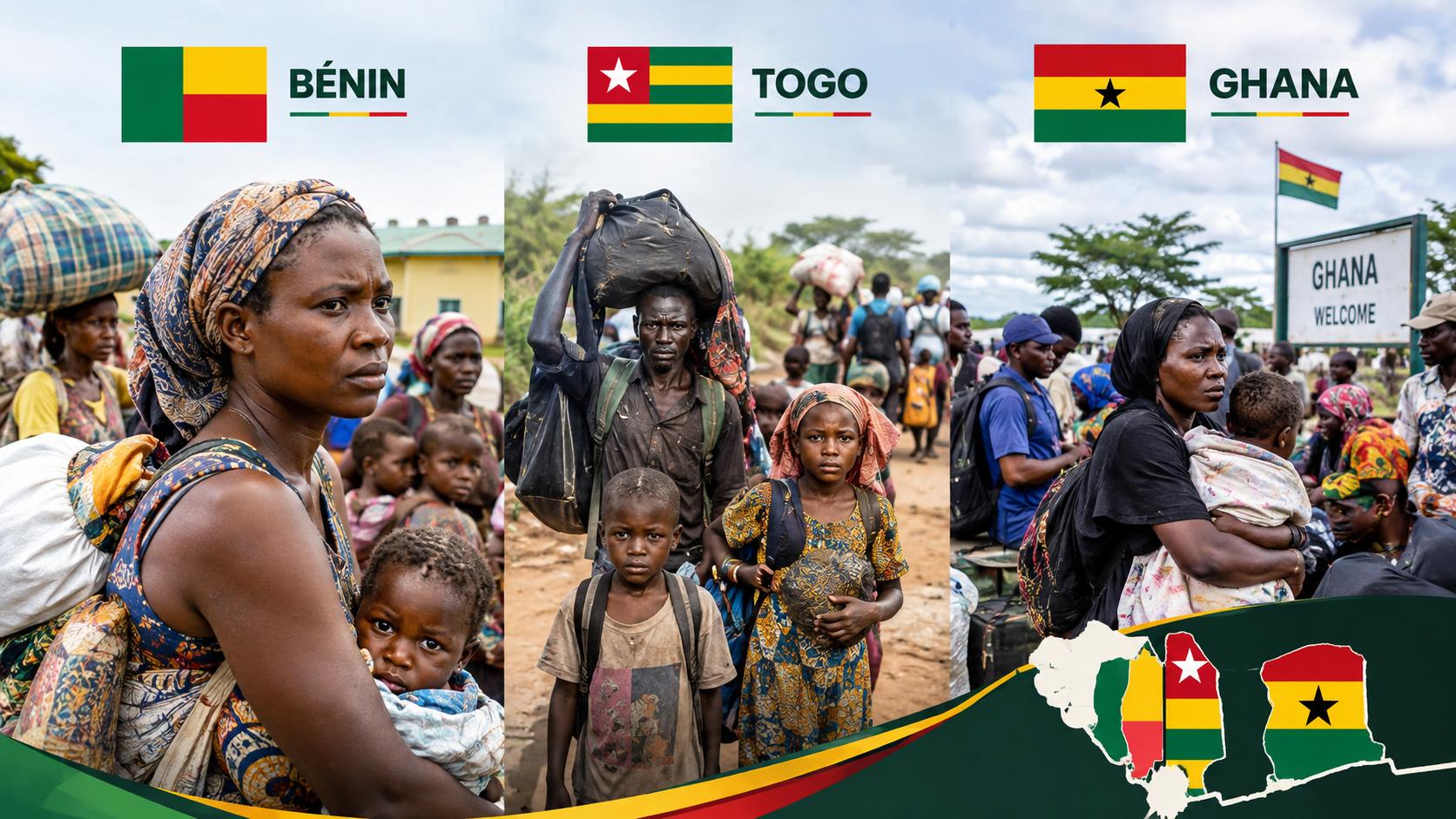
The signing of tripartite agreements in Lomé by Benin, Ghana, Togo, Burkina Faso, and the UN Refugee Agency (UNHCR) has ignited intense public debate over the feasibility—and ethics—of returning Burkinabè refugees to their homeland. While the accords, finalized on September 11, outline a framework for voluntary, safe, and dignified repatriation, they have also triggered widespread concern about whether conditions in Burkina Faso truly allow for sustainable returns. The real test now lies not in diplomatic signatures, but in how governments, regional actors, and humanitarian bodies navigate the fallout from ongoing insecurity and human rights violations.
Public reaction centers on timing and trust
Across West Africa, civil society groups, legal experts, and displaced communities are questioning the premise that a return is even possible under current conditions. The agreements do not mandate immediate repatriation; instead, they establish coordination mechanisms between host countries, Burkina Faso, and UNHCR to prepare for potential future returns. Yet many fear the mere existence of such deals could pressure refugees into going back prematurely—especially as host nations face growing economic and social strain.
Refugee advocacy organizations emphasize that informed consent is non-negotiable. Any return must be based on transparent, up-to-date information about security, access to services, and legal protections in areas of origin. Without verifiable improvements on the ground, critics argue, the Lomé framework risks becoming a political gesture rather than a practical solution.
Host nations shoulder heavy humanitarian burden
Benin, Ghana, and Togo have absorbed tens of thousands of Burkinabè fleeing relentless violence. As of May 2026, Benin hosted over 11,000 Burkinabè refugees. Ghana, which granted prima facie refugee status to Burkinabè arrivals in February 2025, reported 13,368 by June 2026—making up nearly two-thirds of its entire refugee population. Togo’s numbers are even more striking: approximately 65,100 refugees and asylum-seekers as of mid-2026, with 86% originating from Burkina Faso.
These figures underscore the scale of displacement—and the weight of responsibility borne by neighboring states that did not cause the crisis. Their participation in the Lomé process reflects both regional solidarity and pragmatic planning. Rather than forcing a binary choice between permanent asylum or rushed return, the agreements aim to create a flexible pathway that respects refugee agency while preparing for eventual reintegration.
Security concerns cast long shadow over return prospects
The central obstacle remains the deteriorating human rights and security situation inside Burkina Faso. Since the September 2022 coup, military authorities led by Captain Ibrahim Traoré have extended the transition period and tightened control over civic space. According to documented reports from 2025 and 2026, both Islamist armed groups and state-aligned militias—including pro-government forces—have committed atrocities ranging from extrajudicial killings to forced displacements.
A comprehensive April 2026 analysis detailed 57 incidents involving grave abuses potentially amounting to war crimes or crimes against humanity. Independent investigations remain scarce, and accountability mechanisms are weak. For refugees considering return, this raises urgent questions: Will their villages be safe? Can they reclaim land and property? Will they have access to identity documents, healthcare, schools, and livelihoods? Most critically, will there be functioning systems to report abuses without fear of reprisal?
What comes next: cooperation or complacency?
The Lomé agreements mark a procedural milestone, not an operational deadline. Their success hinges on sustained regional cooperation, rigorous monitoring, and above all, tangible improvements in Burkina Faso’s security landscape. Host countries now face a dual challenge: maintaining protection for those who still need it while cautiously preparing for returns that meet international standards.
Observers warn against conflating diplomatic progress with on-the-ground reality. True success won’t be measured by how many people cross back into Burkina Faso—but by how many can rebuild their lives there freely, safely, and permanently. Until then, the debate over the Lomé accords will continue to center on one core question: Is Burkina Faso ready for its displaced citizens to come home?