
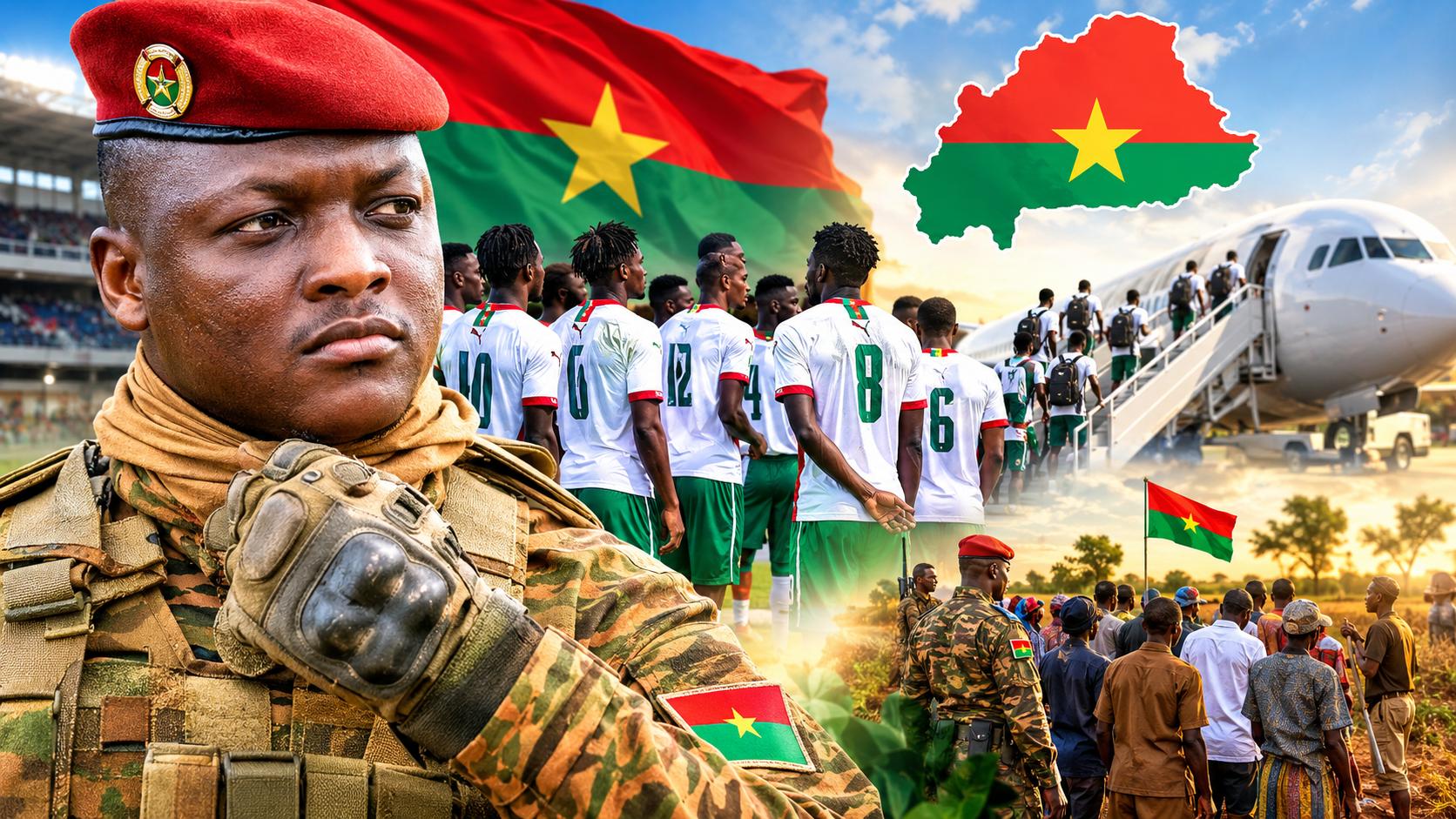
The unexpected absence of Burkina Faso’s senior national football team from an international fixture in Argentina has cast a spotlight on the shifting dynamics between patriotism and institutional priorities within the country. Recent reports suggest that the squad may have been requisitioned for participation in national mobilization efforts under the direction of Captain Ibrahim Traoré, raising critical questions about the balance between civic duty and competitive sports.
The mechanics behind the requisition of Burkina Faso’s national team
According to accounts from within the football community, the entire first-team roster was reportedly called upon to engage in activities framed as patriotic initiatives. If verified, this decision would mark a significant departure from conventional approaches to national team deployments, where athletic performance typically takes precedence. The move underscores the broader trend of intensified mobilization across Burkina Faso’s public and institutional sectors, driven by a stated commitment to national resilience and security imperatives.
The role of patriotism in reshaping national policy frameworks
Burkina Faso has, in recent years, witnessed a pronounced militarization of civic life, with calls for collective action extending across multiple domains including education, healthcare, and now, athletics. While authorities argue that these measures are essential to addressing pressing security challenges, the application of such policies to professional sports represents a notable escalation. This intersection of patriotism and institutional priorities warrants close examination to assess its implications for both the country’s athletic development and its broader societal values.
The unresolved question of official confirmation
Despite the circulating reports, no official statement has been issued by the Burkina Faso Football Federation, the Ministry of Sports, or other relevant authorities to confirm the alleged requisition. Without corroboration from credible institutional sources, the narrative remains speculative, though it has nonetheless sparked a broader debate about the potential consequences of prioritizing patriotism over traditional national team commitments.
What does this reveal about Burkina Faso’s evolving governance model?
If substantiated, the decision to deploy the national football team in patriotic initiatives rather than international competition would signal a fundamental redefinition of how the country allocates its human and institutional resources. Such a shift could indicate a systematic integration of national mobilization into the operational frameworks of various sectors, prompting concerns about the long-term sustainability of specialized institutions, including sports federations. At its core, this situation forces a reevaluation of whether Burkina Faso is recalibrating its national priorities in a way that could reshape civic identity and institutional functions.
Looking ahead: uncertainties and potential ramifications
The absence of an official explanation leaves multiple scenarios open for interpretation. Should the requisition be confirmed, stakeholders may need to reconsider the mechanisms governing national team participation, potentially leading to revised policies that align athletic engagements with broader national objectives. Conversely, if the reports are found to be unfounded, the swift circulation of such claims highlights the sensitivity surrounding the intersection of politics, patriotism, and public institutions in Burkina Faso today. In either case, the incident serves as a case study in how national narratives are increasingly influencing institutional decisions in unprecedented ways.