
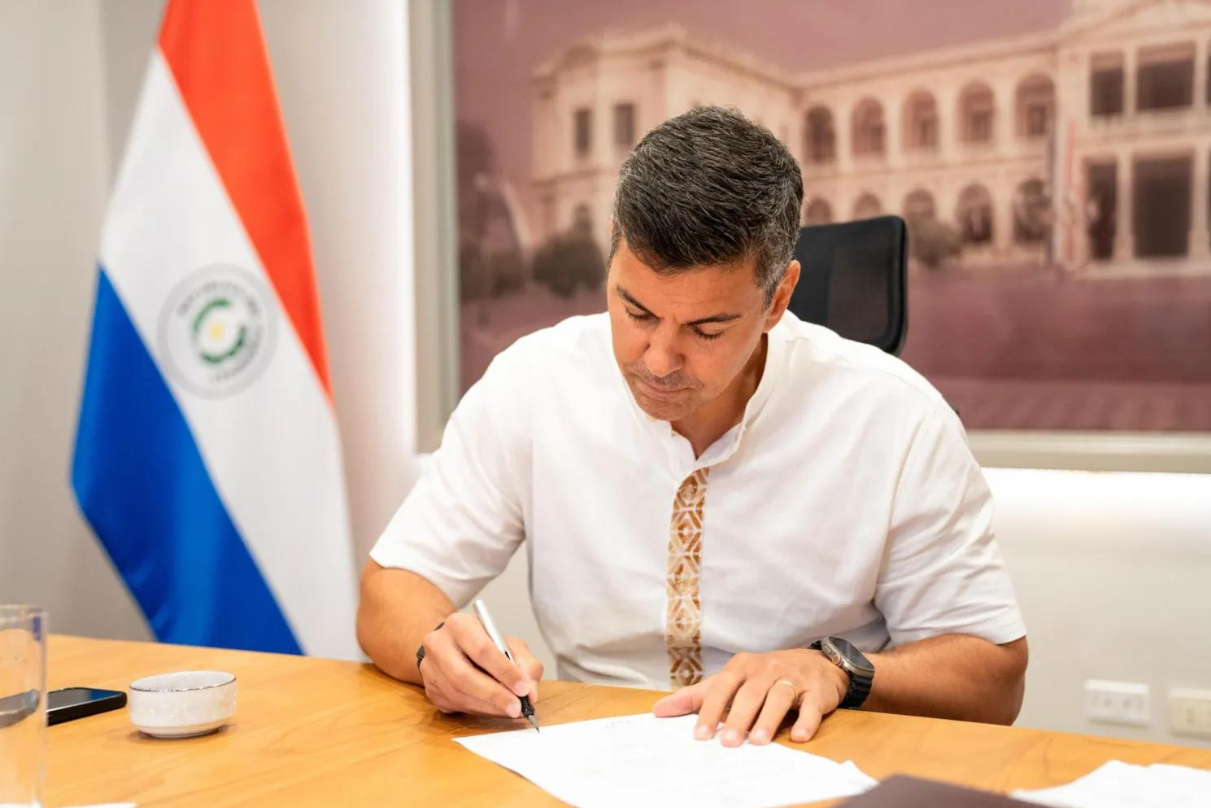
Paraguay’s leadership at a crossroads as banking collapse triggers presidential resignation
The future of Paraguay’s government now hangs in the balance after President Santiago Peña announced his resignation on November 5, 2026. The decision came under relentless pressure from the collapse of Ueno Bank, a financial institution that had become a cornerstone of the country’s banking system—and a growing public outcry over the loss of access to life savings for nearly half of Paraguay’s population.
Why Ueno Bank’s collapse became a national catastrophe
What began as a regulatory intervention in Ueno Bank quickly escalated into a full-blown economic and political emergency. The Central Bank of Paraguay froze the bank’s operations after discovering its capital adequacy ratio had plunged below the critical 50% threshold, rendering it unable to meet withdrawal demands or honor financial obligations.
With Ueno Bank serving nearly 3 million depositors—roughly half of Paraguay’s adult population—the closure left millions scrambling to retrieve their funds. The crisis was further compounded by the bank’s role in managing public pension and social security funds, estimated in the hundreds of millions of dollars, now frozen in legal limbo.
Public anger surged in Asunción, where thousands of depositors, retirees, and workers took to the streets in protest. The demonstrations were not just about lost savings; they reflected a deep erosion of trust in institutions meant to safeguard financial stability.
What links Santiago Peña to the Ueno Bank scandal?
The opposition’s allegations center on Peña’s past financial ties to the conglomerate that once controlled Ueno Bank. While the president divested his shares in 2025, questions persist about whether his prior involvement influenced regulatory decisions or oversight of the bank. Critics accuse him of enabling risky financial practices and failing to act on early warning signs that could have prevented the collapse.
The controversy deepened when the Central Bank’s former governor, Carlos Carvallo—who had previously led Ueno Bank—resigned amid accusations of conflicted supervision. The departure of a key ally in Peña’s administration signaled crumbling support within his own party, the Colorado Party, which began withdrawing its backing.
Impeachment looms as the final blow
Political pressure reached a boiling point when opposition lawmakers initiated impeachment proceedings against Peña and Vice President Pedro Alliana. The move gained momentum after high-ranking Colorado Party members abandoned the president, leaving Peña with negligible political capital. Hours before the Chamber of Deputies was set to vote on impeachment, Peña announced his resignation, effectively ending his presidency.
While the Senate must still ratify the impeachment charges in a formal process, the outcome appears inevitable. Alliana now faces an unprecedented challenge: stabilizing a country reeling from financial chaos and restoring public confidence in its institutions.
Pedro Alliana’s urgent to-do list: restoring trust and accountability
The new administration must act swiftly to address multiple crises. Critical priorities include:
- Accelerating depositor reimbursements through emergency liquidity measures and asset recovery programs.
- Conducting transparent investigations into Ueno Bank’s collapse, focusing on fraud, mismanagement, and regulatory failures.
- Reassessing banking oversight to prevent future collapses and rebuild stakeholder confidence.
- Clarifying the status of frozen public funds tied to pensions and social security.
The challenge is monumental: Paraguay, once hailed as a model of economic resilience in South America, now faces a reckoning over its financial governance. How the country navigates this crisis will determine whether its reputation as a stable investment destination can survive the fallout.
A turning point for Paraguay’s institutions
For Santiago Peña, resignation marks the abrupt end of a presidency overshadowed by scandal. For Paraguay, it signals a pivotal moment where rebuilding trust may prove as difficult as stabilizing the economy. The path forward requires more than financial recovery—it demands a fundamental restoration of credibility in a system that has failed its citizens.
The consequences of this crisis are not confined to balance sheets. They could reshape Paraguay’s political landscape for years to come, testing the resilience of its democracy in the face of unprecedented challenges.