
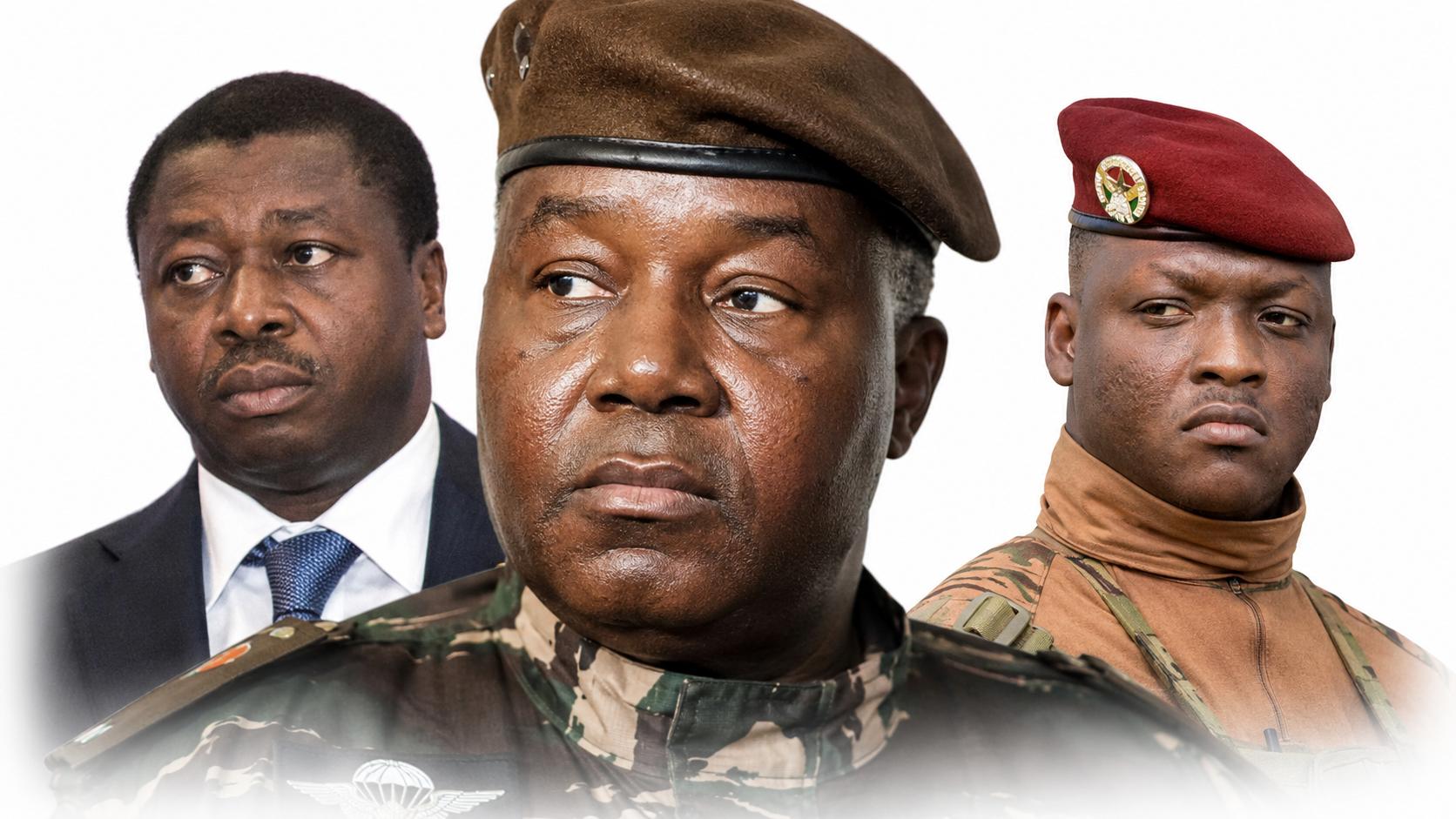
West Africa’s political landscape continues to expose the harsh reality that those who sow instability often reap its consequences. Just as regional observers scrutinized the financial and operational ties linking Niamey’s regime to a failed coup plot in Cotonou, a dramatic turn unfolded back home. In the early hours of August 29, Niger’s capital, Niamey, echoed with gunfire and artillery blasts near the 101st Air Base and the presidential palace—a stark reminder that the tables can swiftly turn in the high-stakes game of Sahelian power.
From Niamey to Lomé to Ouagadougou: exporting instability
The National Council for the Safeguarding of the Homeland (CNSP) in Niamey, under General Abdourahamane Tiani’s leadership, had spent months shoring up its fragile position. A key strategy involved forging a tight alliance with Burkina Faso’s Captain Ibrahim Traoré and Togo’s Faure Gnassingbé. This trio sought to financially back destabilization efforts in neighboring Benin, convinced that weakening a perceived rival would consolidate their own grip on power.
Their collaboration wasn’t merely opportunistic—it was a calculated gamble to export internal contradictions and promote a new model of authoritarian control across the region. Yet, as history has repeatedly shown, financing chaos abroad while ignoring domestic fractures is a gamble few regimes survive.
Military rule’s structural weaknesses laid bare
The violent unrest in Niamey on August 29 wasn’t an isolated incident; it was the inevitable consequence of a system built on shaky foundations. When General Tiani and his allies resorted to force to seize power in July 2023, they dismantled constitutional order—and in doing so, they legitimized the very instability they now face.
The CNSP’s decision to divert critical resources toward regional destabilization, while neglecting the fight against terrorism and internal cohesion, has left the Nigerien military exposed. Key weaknesses include:
- Resource misallocation: Funds and military assets meant for counterterrorism and troop morale were redirected toward political subterfuge in Benin, leaving frontline units under-resourced and demoralized.
- Command fragmentation: The army, once a symbol of national unity, now reflects the divisions within the junta itself. When officers see their leaders bankrolling coups abroad, the message is clear: power in Niamey is up for grabs by the boldest armed faction.
- Erosion of trust: With no clear electoral roadmap and mixed results on the security front, the rank-and-file soldiers’ frustration has grown. After three years of opaque transition, promises of stability ring hollow.
The irony of political retribution
The Sahel’s turbulent political history offers a brutal lesson: regimes cannot build their strength on the ruins of neighboring states. By bankrolling instability in Cotonou alongside Ibrahim Traoré and Faure Gnassingbé, the Tiani regime inadvertently hastened its own unraveling. The weapons, funding, and networks used to destabilize others are the same ones that eventually turn inward.
The August 29 upheaval in Niamey is not a standalone event—it’s the latest symptom of a system stretched to its breaking point. General Tiani is now confronting the harsh truth that the very tools he used to project power beyond Niger’s borders have now been turned against him. As the dust settles on this dramatic night, a pressing question looms over the region: could Ibrahim Traoré and Faure Gnassingbé soon face the same reckoning?